
Understanding href=”https://pearldecoded.com/freshwater-pearl-jewelry-buying-guide/” title=”The Ultimate Freshwater Pearl Jewelry Buying Guide”> href=”https://pearldecoded.com/best-freshwater-pearl-necklace/” title=”Best Freshwater Pearl Necklaces for Every Budget: 7 Stunning Picks for 2026″>freshwater pearl types is the fastest way to stop overpaying and start buying with confidence. The freshwater pearl market has exploded in variety over the last decade, and the names (Edison, coin, feather, Keshi) can feel like a secret language.
But the logic behind these types is simple: it all comes down to how the pearl was nucleated (what was placed inside the mollusk to start growth) and how long it was left to grow. Those two decisions determine everything: size, shape, luster, price, and durability.
This guide breaks down seven freshwater pearl types, explains the nucleation method behind each one, and tells you exactly which type to choose for your budget and style.
The Two Nucleation Methods That Create All Freshwater Pearl Types
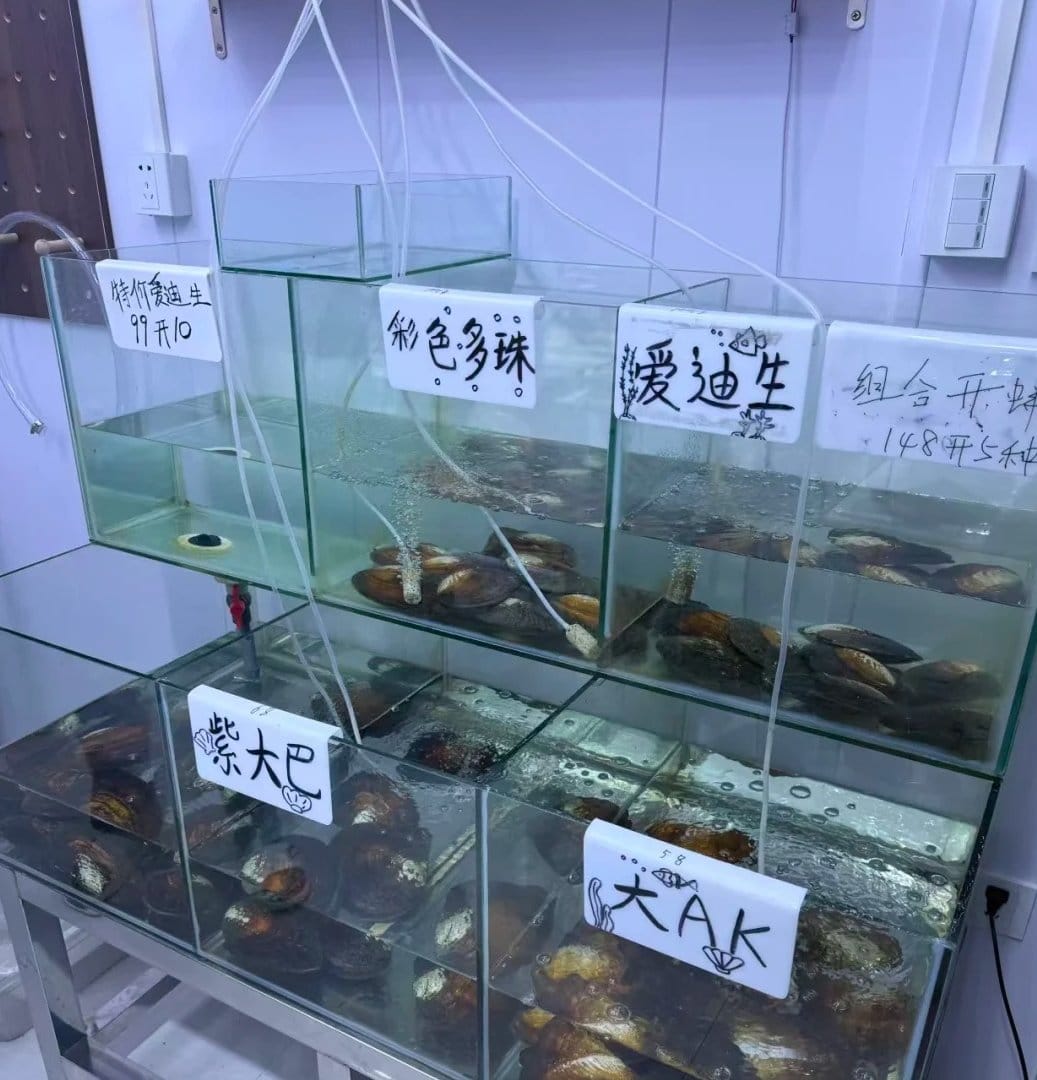
Wholesale reference from Zhuji: Large Edison pearls about 80 yuan ($11), Akoya-style 80 yuan ($11), rice-grain (Bazi) pearls 60 yuan ($8), small pearls 30 yuan ($4). These are factory-gate prices, not retail, and they reflect the two nucleation methods that create all freshwater pearl types.
Every cultured freshwater pearl starts with human intervention. A farmer inserts something into the mussel to trigger pearl growth. That process is called nucleation. There are two methods, and they produce fundamentally different pearl types.
Tissue nucleation uses a tiny sliver of mantle tissue (the part of the mollusk that secretes nacre). No bead, no shape template. The mussel wraps nacre around the tissue freely, which means the resulting pearl is 100% solid nacre, with no filler inside.
This produces smaller pearls (typically 4–9mm) with organic, unpredictable shapes. According to the Pearlescence pearl encyclopedia, tissue nucleation allows multiple grafts per mussel, sometimes 20–40 at once.
Bead nucleation inserts a round shell bead plus a tissue sliver. The bead acts as a shape template, so the resulting pearl tends to be rounder and larger (10–16mm), with a bead nucleus surrounded by a nacre coating.
Only one bead-nucleated pearl can be grown per mussel, which drives the price higher. But the payoff is size and shape consistency that tissue nucleation can’t match.
Once you understand these two methods, every freshwater pearl type makes sense. Let’s meet the seven.
Type 1: Classic Tissue-Nucleated Pearls (The Everyday Standard)
These are what most people think of when they hear “freshwater pearl.” Small (4–9mm), mostly off-round or slightly oval, with a soft satiny luster. They’re 100% solid nacre, which makes them durable even though they’re not perfectly round.
Classic tissue-nucleated freshwater pearls are the most affordable entry point. Strands typically cost $20–80 for decent quality. They come in natural white, cream, pink, and lavender. Because they’re all-nacre, they won’t peel or wear thin over time, unlike some thin-nacre Akoya pearls.
Best for: everyday necklaces, casual earrings, and budget-friendly gifts. If you’re new to pearls, start here.
Type 2: Edison Freshwater Pearls (The Luxury Breakthrough)
Edison pearls are bead-nucleated freshwater pearls, and they changed the industry. First developed around 2011 in China, they grow up to 12–16mm, rivaling South Sea pearls in size at a fraction of the price.
Because a round bead nucleus sits inside, Edison pearls tend toward near-round or symmetrical baroque shapes. Their luster ranges from metallic (mirror-like reflection) to gloriously satiny. They come in natural colors: white, pink, peach, gold, purple, and even subtle greens.
We cover Edison pearls in depth in our dedicated Edison pearl guide, but the key takeaway is: Edison pearls give you big, bold, luxurious freshwater pearls that look like they cost five times what they actually do.
Best for: statement necklaces, bold rings, and anyone who wants South Sea size on a freshwater budget.
Type 3: Ming Freshwater Pearls (Edison’s Close Relative)
Ming pearls are also bead-nucleated freshwater pearls, very similar to Edison. The difference? “Edison” is a branded name from one company, while “Ming” is another brand’s name for essentially the same technique.
Ming pearls tend to have slightly more “ripple” texture on the surface, subtle grooves that give them an organic, artisan feel. Their luster is often metallic-grade, the highest luster category in pearl grading. Sizes range from 10–15mm.
Don’t get caught up in the Edison vs. Ming branding debate. Both are high-quality bead-nucleated freshwater pearls. The real decision is about the individual strand’s luster, surface, and shape, not the brand name on the certificate.
Best for: the same uses as Edison pearls. Choose based on the strand’s quality, not the label.
Type 4: Coin Freshwater Pearls (The Flat Disc Shape)
Coin pearls are bead-nucleated with a flat, disc-shaped bead instead of a round one. The result? A pearl that looks like a shiny coin, flat on two sides and round when viewed from the edge. They typically measure 10–12mm across.
Coin pearls add architectural interest to jewelry designs. They’re popular in drop earrings and modern pendant necklaces, where their flat profile catches light differently than round pearls. Their luster tends to be high because the flat surface reflects light efficiently.
Best for: modern earring designs, pendant necklaces, and anyone who wants geometric pearl jewelry that stands out.
Type 5: Baroque Freshwater Pearls (Organic and Irregular)
Baroque pearls are any pearl with an irregular, non-symmetric shape. In freshwater pearls, baroques are incredibly common. The majority of tissue-nucleated pearls turn out baroque because there’s no bead guiding the shape.
Baroque freshwater pearls are having a fashion moment. Their unique silhouettes (teardrops, potatoes, crosses, wings) make each piece one-of-a-kind. Designers love them because no two baroque pearls look alike.
The key to buying baroque pearls well is matching. Even though individual pearls are irregular, a skilled jeweler selects pearls that harmonize in size, luster, and color tone. Poorly matched baroque strands look messy; well-matched ones look artistic.
Best for: statement pieces, artistic jewelry, and buyers who value individuality over perfection. They’re also the most affordable large-size option since irregular shape lowers the price.
Type 6: Feather and Stick Freshwater Pearls (Narrow and Elongated)
These elongated freshwater pearls are nucleated with a narrow stick-shaped bead, producing pearls that look like feathers, sticks, or rice grains. They’re typically 8–14mm long but only 3–5mm wide.
Feather pearls create elegant, linear movement in jewelry. Think cascading earrings or layered necklace designs. Their narrow profile works beautifully in multi-strand arrangements where round pearls would feel too bulky.
Stick pearls (sometimes called “rice pearls” when smaller) are the more casual cousin. They’re affordable, lightweight, and perfect for long strand necklaces you can wrap twice around your neck.
Best for: cascading earrings, layered necklaces, and designs that need vertical or diagonal movement.
Type 7: Keshi Freshwater Pearls (The Accidental Beauty)
Keshi pearls are the wild card in freshwater pearl types. They form when the mollusk rejects the nucleus (either tissue or bead) but continues producing nacre in the empty pearl sac. The result is a pearl made of 100% solid nacre, with no nucleus inside, just pure, layered luster.
Because there’s no shape template, Keshi pearls are always baroque, often cornflake-shaped, petal-like, or wildly irregular. But their luster is exceptional: since they’re all-nacre with no bead interrupting the layers, the surface glow is unusually intense.
Keshi pearls are rare and increasingly hard to find, because modern farming techniques have reduced the rejection rate. That scarcity, combined with their extraordinary luster, makes genuine Keshi pearls surprisingly valuable.
Best for: collectors, artistic jewelry designers, and anyone who appreciates luster above perfect shape.
Quick Comparison: 7 Freshwater Pearl Types at a Glance
Here’s the cheat sheet you’ll want to bookmark.
| Classic | Tissue | 4–9mm | Off-round/oval | Soft satiny | $20–80/strand | Everyday wear |
| Edison | Bead | 12–16mm | Near-round/sym. baroque | Metallic to satiny | $100–400/strand | Statement pieces |
| Ming | Bead | 10–15mm | Near-round + ripple | Metallic | $100–350/strand | Bold jewelry |
| Coin | Flat bead | 10–12mm | Flat disc | High reflective | $50–150/strand | Modern earrings |
| Baroque | Tissue or bead | 7–14mm | Irregular, unique | Variable | $30–200/strand | Artistic designs |
| Feather/Stick | Stick bead | 8–14mm long | Narrow, elongated | Good | $40–120/strand | Cascading earrings |
| Keshi | None (rejected) | 5–10mm | Wildly irregular | Exceptional | $80–300/strand | Collectors |
In industry terms, Edison pearls mark a genuine turning point. Before they reached the market around 2011, large, round, high-luster pearls were considered the exclusive territory of saltwater varieties such as South Sea and Tahitian. Edison pearls proved that bead-nucleation, long thought impractical in freshwater mussels, could deliver sizes from about 9mm up to 20mm, with thick nacre built up over three to four growth years. That single shift is why freshwater pearls now hold their own in the high-end jewelry segment.
Which Freshwater Pearl Type Should You Buy?
The right type depends on your budget and what you want the jewelry to do. Here’s a simple decision framework.
Budget under $50: Classic tissue-nucleated pearls. You’ll get solid-nacre durability and genuine pearl luster, even if the shape isn’t perfect. These are the smartest entry point.
Our freshwater pearl price guide shows exactly what to expect at each price level, so you know you’re not overpaying.
Budget $50–150: Coin freshwater pearls for modern designs, or well-matched baroque strands for artistic impact. At this range, shape becomes interesting.
You’re paying for distinctiveness, not just “pearl-ness”, and both types deliver that personality at a mid-range price.
Budget $150–400: Edison or Ming pearls. This is where freshwater pearls start competing with South Sea and Tahitian pearls on visual impact. The grading guide will help you evaluate luster and surface quality at this price point.
Collector or designer: Keshi pearls for their unmatched luster, or large baroque Edison pearls with metallic luster and fascinating shapes.
Frequently Asked Questions About Freshwater Pearl Types
Are Edison pearls better than regular freshwater pearls?
“Better” depends on what you value. Edison freshwater pearls are larger, rounder, and more lustrous, but they have a bead nucleus inside, so the nacre coating can be thin.
Regular tissue-nucleated freshwater pearls are 100% solid nacre, which makes them more durable. Edison wins on visual impact; classic wins on durability.
What is the difference between Edison and Ming pearls?
Essentially the same technique. Both are bead-nucleated freshwater pearls grown in China. “Edison” and “Ming” are brand names from different companies. Ming pearls tend to have slightly more surface ripple texture. Quality varies by individual strand, not by brand name.
Why are baroque pearls cheaper than round ones?
Roundness is the hardest shape to achieve in pearls, and perfectly round specimens are rare. Baroque shapes are far more common, so supply is higher and prices are lower. But baroque pearls aren’t “inferior”. They simply offer different aesthetics at a lower price.
Can freshwater pearls be perfectly round?
Yes, but it’s rare for tissue-nucleated pearls. Bead-nucleated pearls (Edison, Ming) achieve near-round more consistently. For truly perfect round freshwater pearls, expect to pay premium prices and accept that most “round” freshwater pearls are actually near-round.
Are Keshi pearls natural or cultured?
Keshi pearls are cultured but unintentional. They form when the mollusk rejects the inserted nucleus and continues producing nacre on its own. They’re 100% solid nacre with no nucleus, which is why their luster is so exceptional. The GIA has classified them as cultured pearl by-products.
Choose the Freshwater Pearl Type That Matches Your Style
Seven types, one simple rule: the nucleation method determines everything else. Tissue-nucleated gives you solid nacre and organic shapes at lower prices. Bead-nucleated gives you size, roundness, and luxury impact at higher prices.
Don’t let the brand names and terminology intimidate you. Whether it’s called Edison, Ming, coin, or baroque, the pearl in front of you either has a bead inside or it doesn’t. That’s the question to ask, and now you know how to ask it.
Start with what fits your budget and style. The best freshwater pearl type is the one you’ll actually wear. Pearls that sit in a drawer don’t develop the natural luster that comes from gentle, regular contact with your skin.
Get the Free Pearl Buying Checklist
7 quality checks, real price benchmarks, 5 traps to avoid , one 16-page PDF.
Free download. No spam. Unsubscribe anytime.