
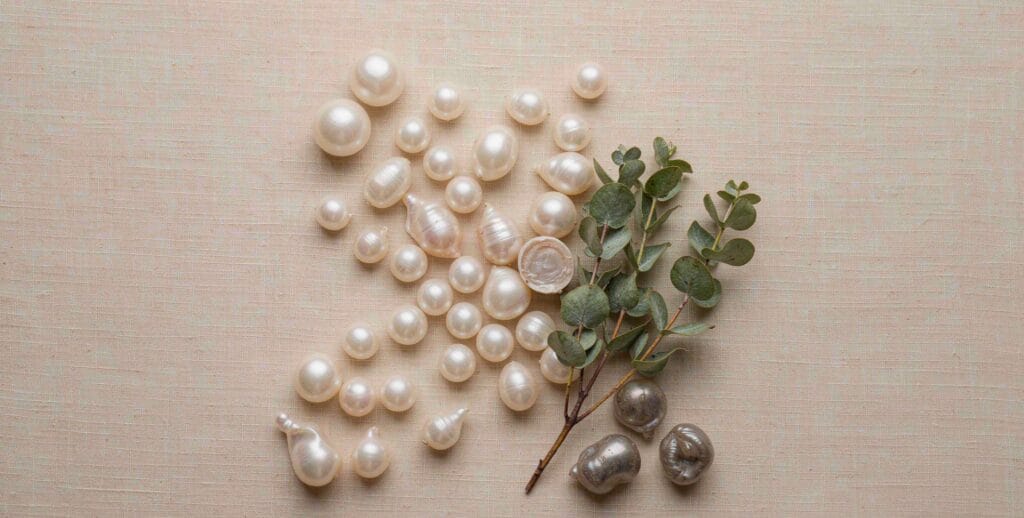
Why Most People Can’t Spot Fake Pearls
From Zhuji market research: Under bright light, real pearls show a slight yellowish undertone while fakes look uniformly white, and real nacre shows layered luster versus a fake’s single surface shine. Bead pearls cost only 20-30 yuan ($3-4) yet sell for 70-80 yuan ($10-11). Watch for AB-grade scams where a seller shows premium pieces on camera but ships inferior ones, and remember that 99-yuan “natural pearl” deals are usually plastic.
The counterfeit pearl industry has advanced considerably. We are no longer living in an era where fake pearls are obviously clunky plastic beads covered in cheap paint. Today, imitations are crafted from glass, ceramics, and even crushed shell powder that mimic the weight and appearance of natural gems. Faux pearls, often sold as costume jewelry, can have the exact original look at first glance.
A major reason people get tricked is that they expect real pearls to look flawlessly perfect. When they see a strand of perfectly spherical, blemish-free pearls with a mirror-like shine, they assume they are looking at top-tier luxury. Nature rarely produces perfection. Genuine href=”https://pearldecoded.com/why-8mm-freshwater-pearls-cost-double/” title=”Why 8mm Freshwater Pearls Cost Double: The Pricing Formula”> href=”https://pearldecoded.com/best-place-to-buy-freshwater-pearls-online/” title=”Best Place to Buy Freshwater Pearls Online: 5 Trusted Routes”>freshwater pearls, which are cultured gems grown inside mussels in rivers, lakes, and ponds, are rarely perfect. They come in various shapes (oval, button, drop, or baroque), and perfectly round freshwater pearls are quite rare and expensive.
Another point of confusion is the word “cultured.” Many buyers see “cultured” and incorrectly assume it means “fake.” Cultured simply means that a pearl grower carefully initiated the pearl creation process by introducing a small irritant into the mollusk, after which the oyster or mussel does all the work, secreting layer upon layer of nacre to form the gem.
Both natural and cultured pearls are genuine pearls; the alternative is “faux,” which are entirely man-made from materials like plastic or glass. Because modern fakes can look the part, you have to rely on the subtle physical properties of nacre, like texture, weight, and thermal conductivity, to uncover the truth.
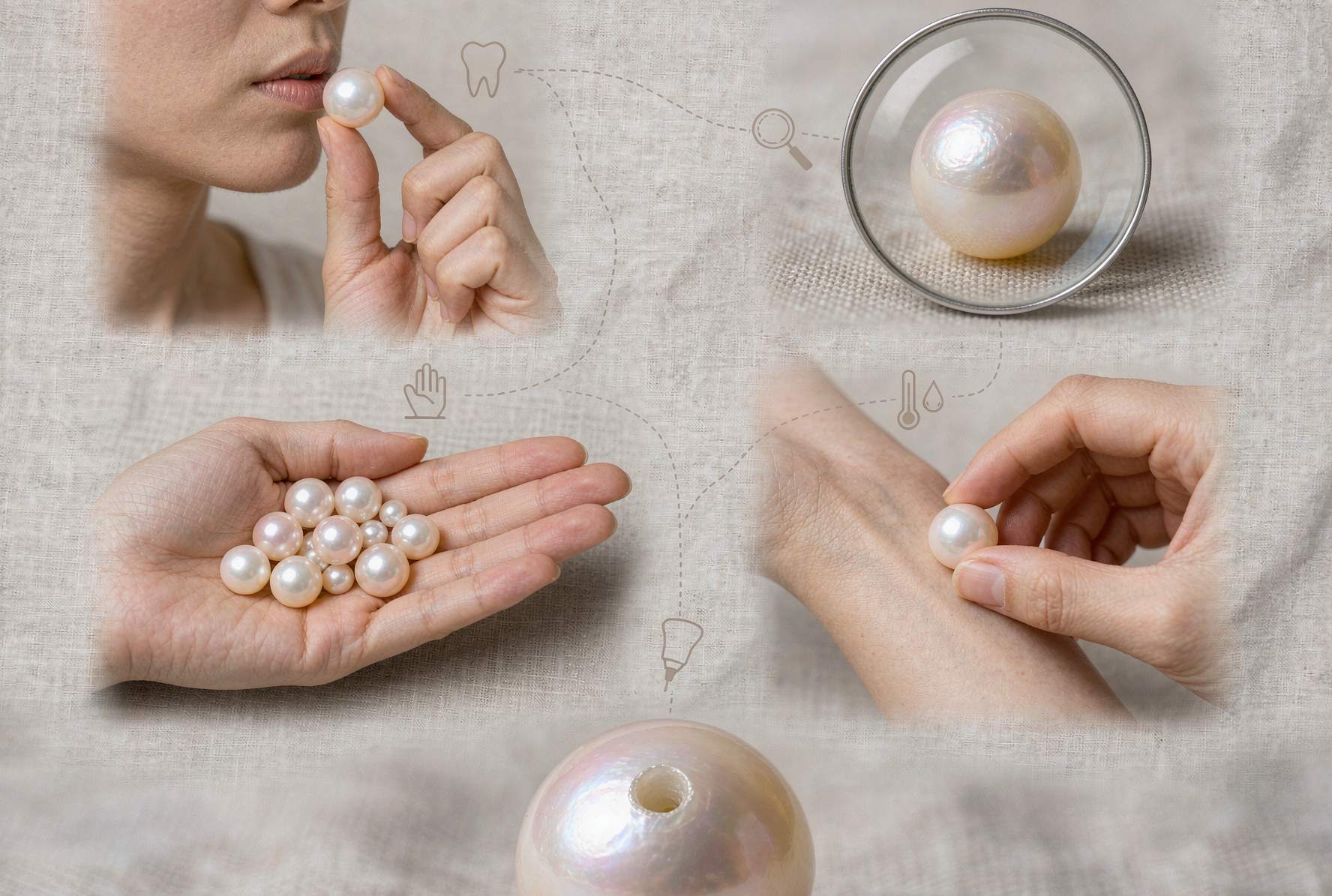
Test 1: The Tooth Test
The tooth test is the most reliable at-home method because it directly tests the physical structure of nacre. Pearls are formed when a mussel secretes calcium carbonate (specifically aragonite and calcite) and a small amount of organic matter around an irritant. These aragonite crystals overlap like tiny shingles on a roof, creating a microscopic texture that you can actually feel.
How to Perform the Tooth Test:
- Clean the pearl: Wipe the pearl with a soft, damp cloth. You want to make sure there is no dirt, oil, or residue on the surface, as external grit could mimic the feeling of nacre and give you a false positive.
- Assess the sensation: A real pearl will feel distinctly gritty or sandy, much like rubbing a tiny grain of sandpaper across your enamel. That friction comes from the overlapping layers of aragonite crystals. A fake pearl, made of smooth plastic or glass, will feel perfectly slick and slippery, gliding effortlessly across your tooth. Once you learn what to look for, you really can’t miss that gritty sensation.
While this test is fantastic for a quick check, proceed with a tiny bit of caution. Some very high-end fakes made from ground shell powder pressed into beads can also produce a gritty feeling, as they contain actual shell material. Use the tooth test as your first line of defense, but pair it with other tests to be absolutely certain.
Test 2: The Surface Examination
Nature leaves fingerprints, and a real pearl will always reveal its organic origins if you look closely enough. Faux pearls, no matter how well-crafted, look unnaturally smooth, which gives them away under scrutiny.
To examine the surface, you will need good lighting (natural daylight is best) or a magnifying glass. If you don’t have a loupe, the macro zoom on your smartphone camera works wonderfully.
Identifying a Real Pearl
Look for tiny bumps, ridges, slight concave spots, or subtle variations in surface texture. These marks show natural origin, not a defect. Think of them like the whorls of a fingerprint; no two real pearls are exactly alike. The luster is another tell. Genuine pearls exhibit a deep, radiant glow with a soft, inner shimmer. The light doesn’t just sit on the surface; it seems to emanate from within the layers of nacre.
Spotting a Fake Pearl
Imitations look uniformly smooth. Their surface lacks the tiny variations you find in natural pearls. Look closely and you may spot mold lines, a dead giveaway that the “pearl” was cast in a machine. The luster of a fake is typically superficial and dazzling, lacking the multi-dimensional depth of a natural gem. Fake pearls will have a shine only on the surface, while genuine pearls always shine from within. If every pearl on a strand looks identical in shape, color, and flawlessness, you are likely looking at manufactured fakes.
Test 3: The Weight Test
Our brains are easily fooled by appearances, but our hands detect density well. That makes the weight test useful. Real pearls are composed of solid calcium carbonate nacre, which is a relatively dense material. The density of natural pearls is approximately 2.6 to 2.8 g/cm³.
On the other hand, faux pearls are typically constructed from much lighter materials. (Wondering how these compare to their ocean-grown cousins? See our freshwater vs saltwater pearls comparison.) Plastic pearls, the most common cheap imitation, have a density usually lower than 2.0 g/cm³. Glass pearls are heavier than plastic but still often feel lighter than a solid nacre pearl of the same size.
To perform this test, simply hold the pearls in your hand and bounce them gently in your palm, or compare the weight of the suspected fake to a pearl you already know is real. Genuine pearls feel heavier, denser, and more substantial in your hand. Fakes tend to feel light, hollow, and flimsy. If a large strand of pearls feels like it weighs almost nothing, your alarm bells should start ringing.
Test 4: The Temperature Test
Gemstones and organic gems react to temperature differently than synthetic plastics and glass. This test relies on the thermodynamic properties of nacre, which acts as a thermal insulator.
Pick up the pearl and place it against the sensitive skin of your inner wrist or cheek. Authentic pearls will feel distinctly cool to the touch when you first pick them up. They will hold this cool temperature for a few moments before slowly warming up against your skin.
Fake pearls, particularly those made of plastic or resin, are completely different. They will essentially match room temperature immediately. They lack that initial chilling sensation and will feel tepid or lukewarm the second you touch them. While this test can be subtle depending on the climate you are in, the initial “coolness” of a real pearl is a classic indicator of its authentic composition.
Test 5: The Drill Hole Test
The point where a pearl is drilled for stringing is the most vulnerable part of the gem, and it is also the place where fakes most frequently reveal their true colors. You will need a magnifying glass or your smartphone camera zoom for this one.
Inspecting a Fake Pearl’s Drill Hole
Because real pearls are solid nacre (or nacre over a bead nucleus), drilling into them creates a clean, sharp boundary. The hole will be small and cleanly drilled, sometimes appearing just slightly irregular because it is piercing an organic surface. You won’t see any layers peeling away from the edge of the hole.
Inspecting a fake pearl’s drill hole:
Imitation pearls are often glass or plastic beads coated in a pearlescent paint or lacquer. When the drill goes through, it often damages this coating. Look closely, and you might see chipped paint, flaking edges, or overly large holes where the coating has peeled away from the base material. You might even see the glossy surface of the underlying glass or plastic inside the hole, exposing the fakery. If the hole looks perfectly smooth with a visible plastic or glass ring inside, it is definitely a fake. Knowing how to tell if freshwater pearls are real often comes down to examining these tiny structural details. Mastering these five tests gives you a complete toolkit for how to tell if freshwater pearls are real without any special equipment. For a deeper dive into pearl origins, check our insider guide to Chinese freshwater pearls.
A recurring theme in buyer field notes is the livestream “open-shell” show. Several shoppers described bidding on a mussel, watching it crack open on camera, and receiving a strand that, once under a phone macro lens, looked suspiciously uniform. Every bead was the same size, the same color, the same flawless sheen. One buyer who paid a few hundred yuan for a “natural seawater pearl” strand realized something was off only when a coworker laughed that the beads looked like plastic. Magnified, the surface looked perfectly smooth with no growth lines. Another common letdown is a necklace that starts flaking or fading after a few wears, which almost always points to a coated glass or resin bead rather than solid nacre. The lesson buyers keep repeating is simple. Run the tooth and surface tests the moment a strand arrives, before trusting any certificate or “limited live deal.”
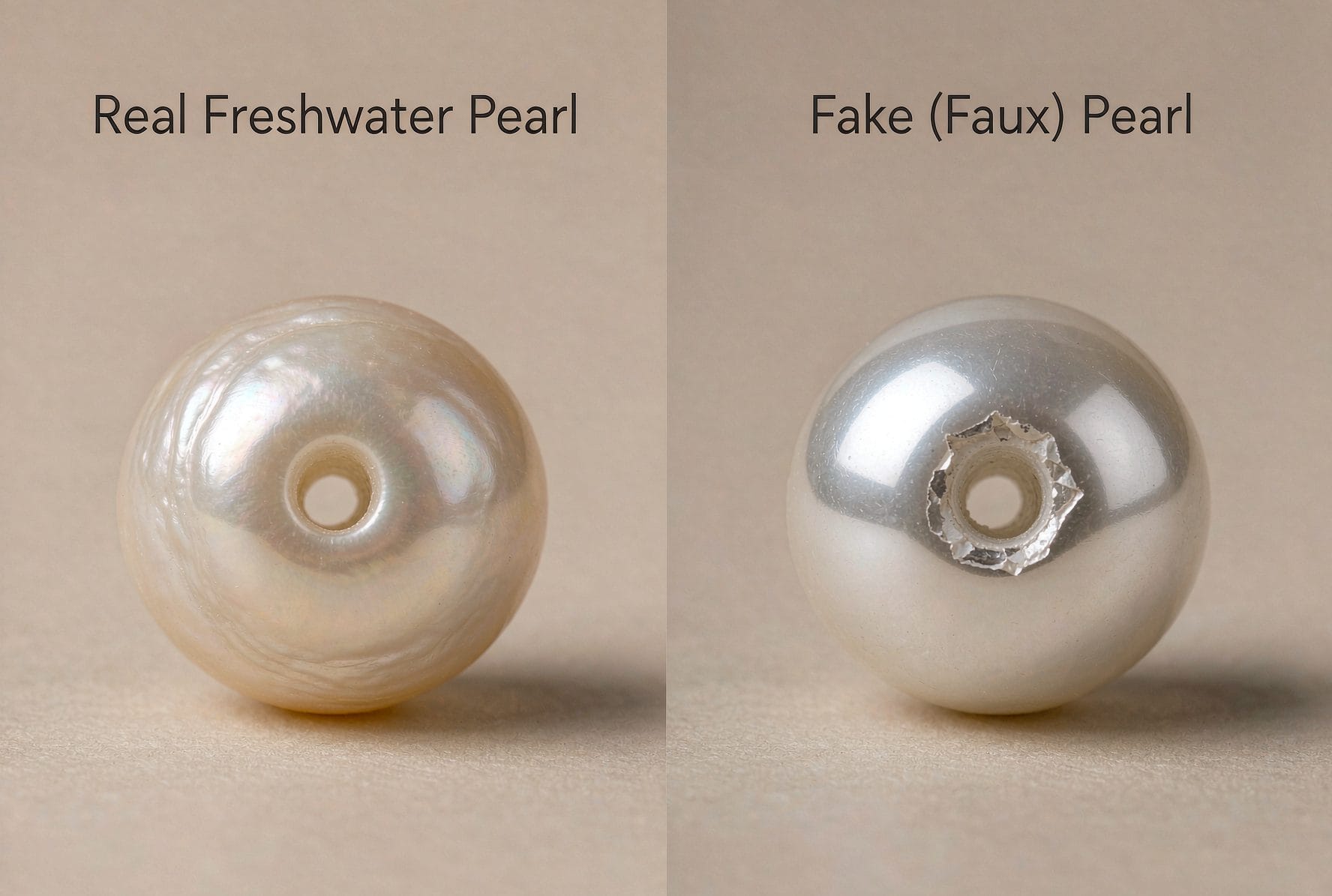
Real vs. Fake Pearls: Quick Reference Table
| Feature | Real Freshwater Pearl | Fake (Faux) Pearl |
|---|---|---|
| Tooth Test | Gritty, sandy friction | Smooth, slippery glide |
| Surface | Tiny ridges, slight blemishes, organic | Suspiciously flawless, possible mold lines |
| Luster | Deep, inner glow, multi-dimensional | Superficial shine, dazzling but flat |
| Weight | Dense, substantial, heavier | Light, hollow, flimsy |
| Temperature | Cool to the touch initially | Matches room temperature quickly |
| Drill Hole | Clean, small edges, no peeling | Chipped paint, peeling coating, large holes |
What About Pearl Grading?
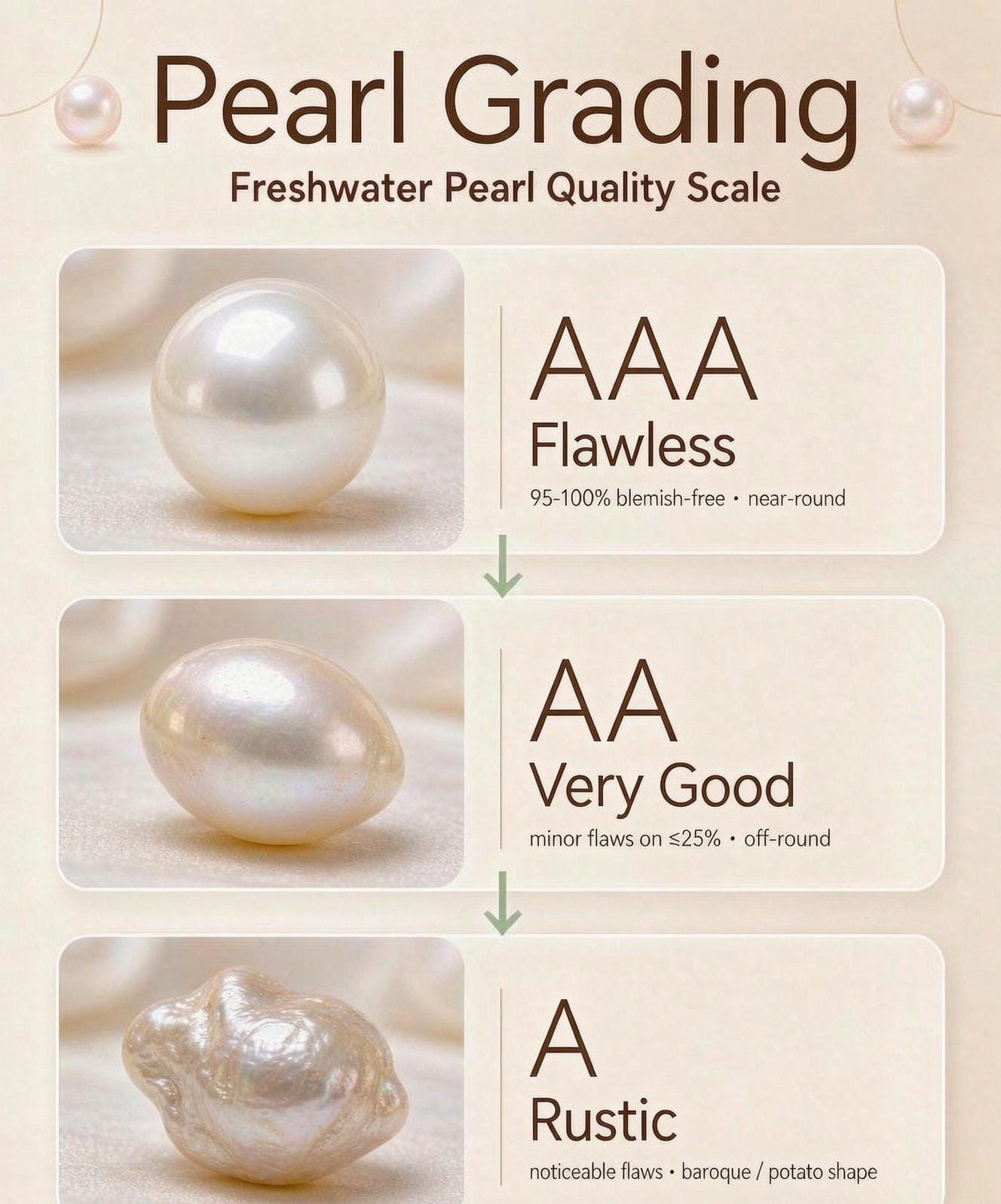
Once you confirm your freshwater pearls are real, the next question is quality. Pearl grading addresses that. While there is no universally standardized grading system for pearls, the industry widely uses the AAA to A scale to denote quality (see the GIA Pearl Quality Factors for authoritative grading standards). Our freshwater pearl buying guide covers grading in detail. Understanding this helps you know whether your real pearls are of average quality or exceptional.
- AAA Quality: The highest grade. AAA freshwater pearls have the highest luster, a sharp, almost mirror-like reflective quality, and a surface that is 95% to 100% free of blemishes. They are typically perfectly round or very near round.
- AA Quality: AA pearls still possess very good luster, but they may have minor imperfections or blemishes on up to 25% of their surface. Their shape might be slightly off-round.
- A Quality: A-grade pearls have lower luster and noticeable imperfections on more than 25% of their surface. They are often heavily baroque or potato-shaped.
Remember that freshwater pearls are primarily tissue-nucleated, meaning they lack a core bead and are made up entirely of mother-of-pearl. This makes them incredibly durable and offers a softer, more satiny luster that many people find incredibly attractive, even if the pearls fall outside the AAA grade. Beauty is subjective; some collectors actively seek out baroque or potato pearls for their unique artistic shapes.
Frequently Asked Questions
Can real freshwater pearls have imperfections?
Yes, absolutely. Tiny flaws, slight pits, or growth lines actually add to their uniqueness. They are a definitive sign of natural origin, not a defect. Expecting a real pearl to be flawless is a common misconception that leads people straight into buying fakes.
Are freshwater pearls less valuable than saltwater pearls?
Generally, yes. The main reason behind this price difference is the absence of a core bead and the fact that freshwater mussels can produce multiple pearls at once, making extraction easier and costs lower. High-quality freshwater pearls, especially large round ones or baroque shapes, can still be quite valuable.
How long do freshwater pearls last?
With proper care, freshwater pearls can last a lifetime. Because they are entirely composed of nacre, there is no core to wear through. Just protect them from harsh chemicals, wipe them with a soft cloth after wearing, and store them flat in a fabric-lined box away from sharp objects.
How can I store my pearls properly?
Lay them flat in a fabric-lined jewelry box. Never hang a pearl necklace, as this stretches the silk thread. Avoid storing them in plastic bags, as plastic can emit chemicals that damage the nacre over time, and keep them away from high heat.
Are cultured freshwater pearls considered genuine?
Yes. “Cultured” is not the opposite of “real”; it is the opposite of “natural.” Both natural and cultured pearls are grown by mollusks and are genuine organic gems. Cultured simply means humans kickstarted the process.
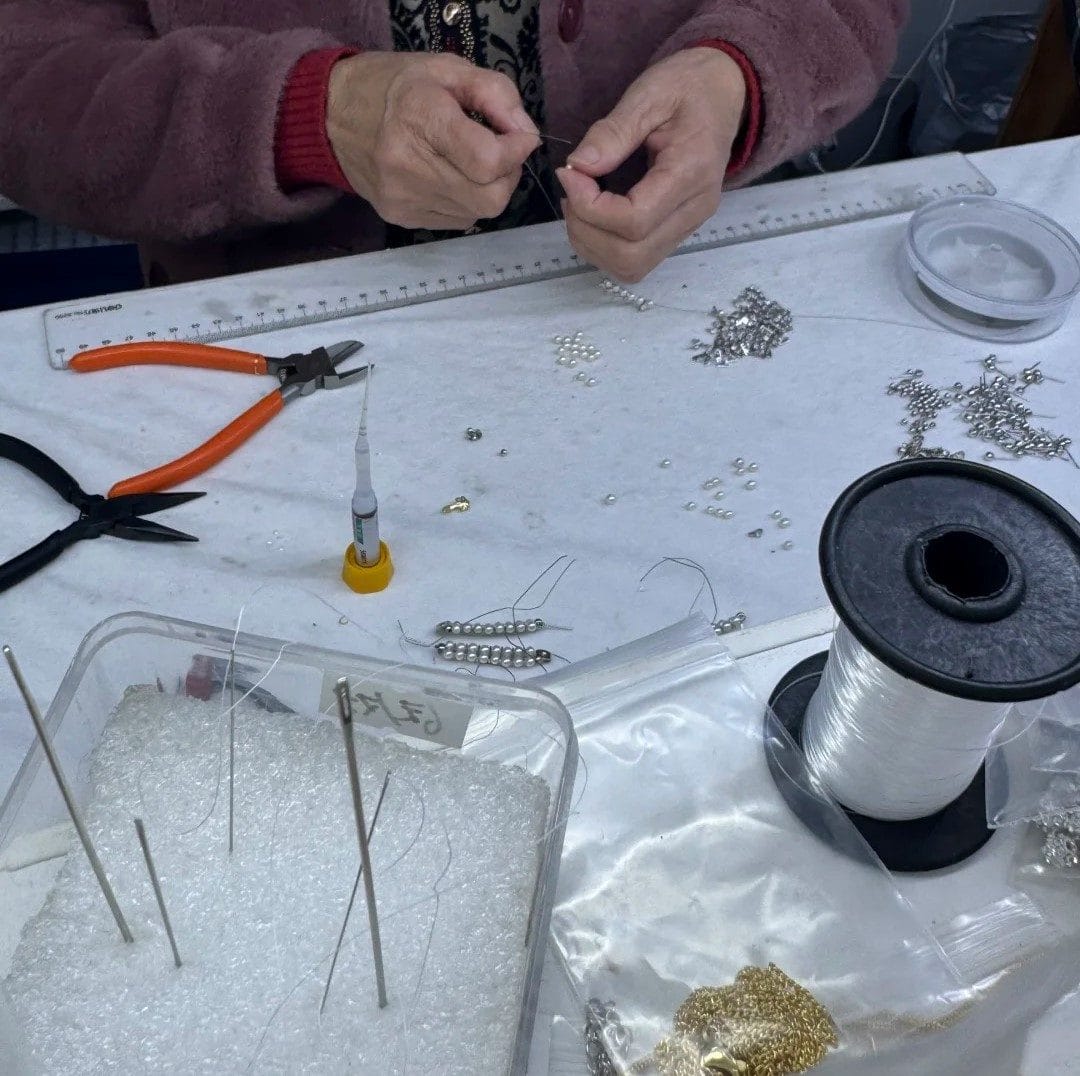
Finding Authenticity You Can Trust
Now that you know how to tell if freshwater pearls are real, spotting a fake pearl is empowering. But finding a source you never have to doubt is even better. The market is tricky, but you don’t have to navigate it blindly. Freshwater pearls carry an understated beauty. To find good pearls, look for sources built on transparency and expertise.
When you are ready to invest, look toward trusted Chinese freshwater pearl sources. Start with our comprehensive freshwater pearl jewelry buying guide to learn exactly what to look for. China is the undisputed global epicenter of freshwater pearl cultivation, particularly in regions like Jiangxi, where family-owned farms have been refining sustainable and ethical practices since the 1980s. Buying directly from trusted Chinese suppliers means you bypass the massive retail markups while securing ethically sourced pearls with exceptional nacre thickness and radiant luster. For perspective, a genuine freshwater pearl necklace from Zhuji can cost as little as $15 (explore our freshwater pearl necklace buying guide for specific recommendations), whereas a comparable piece at a Western boutique might easily set you back over $100. These farmers know their craft, following strict environmental guidelines to ensure the mussels (and the pearls they produce) are of the highest caliber.
Don’t settle for plastic imitations or overpriced middlemen. Trust your newfound knowledge, run the tests, and buy from the source that honors the pearl’s natural journey.
Q: Can I use the tooth test to check if pearls are real?
Yes, the tooth test is one of the most reliable at-home tests. Gently rub the pearl against the front of your teeth (not the biting edge). Real pearls feel slightly gritty or sandy. Imitation pearls feel completely smooth like glass or plastic. This works because real pearls have microscopic crystalline structure in the nacre layers.
Q: Are there fake freshwater pearls made from glass or plastic?
Yes, common fakes include: glass beads coated with pearlescent paint (Mallorca pearls), solid plastic beads, and shell fragments pressed and shaped into pearl-like forms. Glass fakes feel cold to the touch and have a hollow sound if shaken. Plastic fakes are very lightweight and have an unnaturally perfect surface.
Q: How can I tell the difference between freshwater and saltwater pearls?
Visually, freshwater pearls tend to have warmer, more varied luster with subtle orient (rainbow) overtones. Saltwater Akoya pearls have sharper, more mirror-like luster. Freshwater pearls reveal concentric growth rings in the nacre when magnified, while Akoya pearls show a distinct nucleus boundary. However, this distinction has blurred as Chinese farming techniques have improved.
Q: Does a flawless pearl surface mean it’s fake?
Not necessarily, but total perfection is rare in nature. Completely blemish-free pearls can be real but are extraordinarily expensive. If a strand of affordable pearls appears 100% perfect under close inspection, be cautious. Real freshwater pearls typically show tiny blemishes, growth lines, or slight texture variations that are proof of natural origin.
Q: What is the ‘burn test’ for pearls?
The burn test involves holding a pearl briefly near a flame. Real pearls will not scorch or melt but may darken slightly at very high heat. Plastic fakes will melt, deform, or produce a chemical smell. Only use this test as a last resort – heat can damage pearl nacre. The tooth test and visual inspection are safer and equally effective.
Get the Free Pearl Buying Checklist
7 quality checks, real price benchmarks, 5 traps to avoid , one 16-page PDF.
Free download. No spam. Unsubscribe anytime.