

Freshwater vs saltwater pearls is the comparison every new buyer faces, and the third name, gold, only adds confusion. This guide settles it by comparing what each type costs, how it wears, and which one holds value when you want to resell or pass it on. If you have five minutes, read it before you spend a dollar, because the most expensive mistake in pearls is paying a saltwater price for a freshwater bead.
The short version most sellers won’t tell you: freshwater gives you the most value per dollar, saltwater gives you the steadiest resale, and “gold” is usually a color, not a separate kind of pearl. Below we unpack each claim with numbers, not marketing.
If you are still learning the basics, our freshwater pearl types guide maps out the families before you compare them head to head.
Freshwater vs Saltwater Pearls : The Core Difference
From Zhuji stall visits: 18K gold is typically marked to about 10% of list (a 90% discount) while 925 silver sits at 4-4.5% of marked price. In summer 2025, 18K gold ran around 650 yuan ($90) per gram, a useful baseline for judging the metal cost inside pearl jewelry.
The split is about where the mussel or oyster lives, not the color. Freshwater pearls grow in lakes and rivers, mostly in China, and are usually nucleated with tissue rather than a bead. Saltwater pearls grow in ocean oysters and are bead-nucleated, which is why Akoya, Tahitian, and South Sea pearls tend to be rounder and pricier. The farming method decides the price far more than the shine does.
Here is the part that surprises first-time buyers: a freshwater mussel can host 20–50 pearls at once, while a saltwater oyster usually grows just one or two. That single fact explains most of the price gap. More pearls per shell means lower cost, which is why a decent freshwater strand can sell for under $100 while a single Akoya of similar size costs three times as much.
The trade-off is roundness and mirror shine. Bead-nucleated saltwater pearls form a more perfect sphere and a sharper, more reflective luster. Freshwater pearls have improved dramatically. Edison pearls now reach 10–16mm with strong luster, but on average saltwater still wins on the “wow” factor, and you pay for that wow.
For most buyers the practical question is value per dollar. Freshwater gives you more beads for less; saltwater gives you rounder, rarer, and more expensive. Neither is “better.” They serve different budgets, and confusing the two is how people overpay.
Where Gold Pearls Fit In (Freshwater vs Saltwater vs Gold)
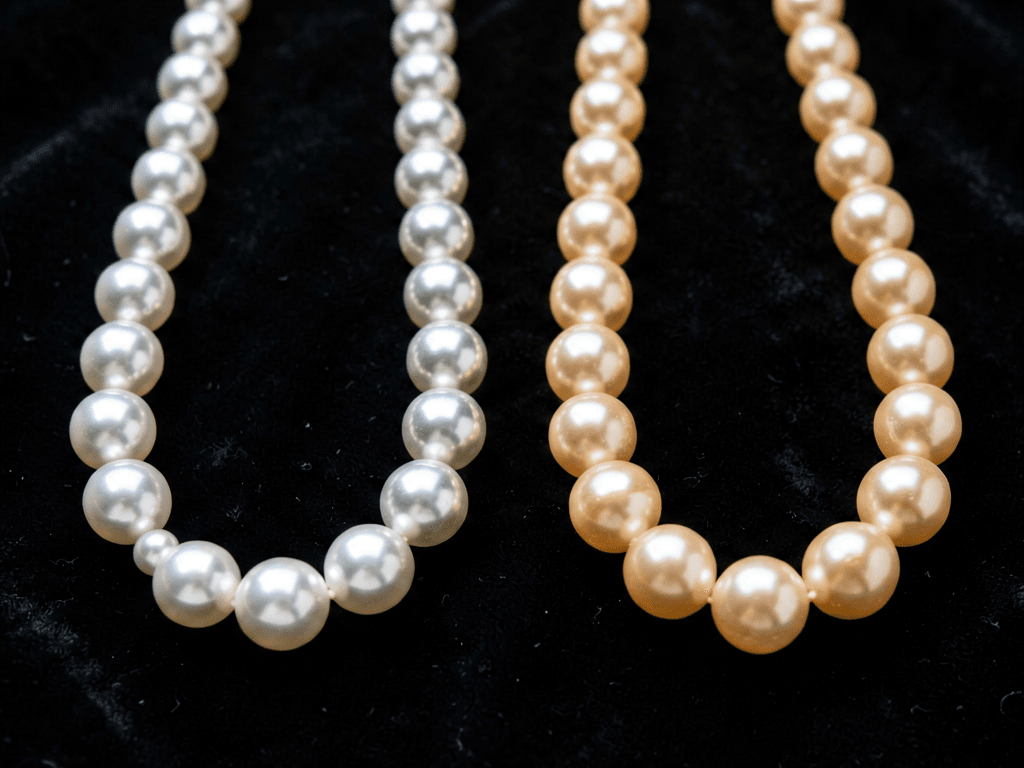
Gold pearls are not a third species. They are a color. The famous golden pearl is the South Sea gold-lipped oyster’s natural color, a saltwater pearl. You will rarely see a true gold freshwater pearl; most “gold” freshwaters are dyed. So in the freshwater vs saltwater vs gold debate, gold usually means a premium saltwater South Sea pearl with a naturally golden hue.
This matters for value: a natural gold South Sea pearl commands a high price because the color is real and scarce. A dyed “gold” freshwater strand costs a fraction and should be priced like one. The single easiest way to avoid the trap is to ask the seller one question: “is the gold natural or treated?” Then watch whether they answer directly.
For buyers who want the golden look without the South Sea price, an undyed champagne or cream freshwater pearl is an honest alternative. It will not be “gold,” but it will not pretend to be something it is not, and you keep your money for a strand you wear.
Which Pearl Type Holds Value Best (Freshwater vs Saltwater vs Gold)
Value means different things: resale price, durability, or bang for your buck. Here is how the three stack up, with real price ranges rather than vague promises.
Freshwater Pearls and Value
Freshwater pearls offer the strongest entry value. A good 7–8mm near-round strand runs $45–$130 and looks like jewelry, not craft supply. High-grade Edison freshwaters close the gap with saltwater on size and luster, but standard freshwaters resell for little, often 20–30% of retail at best. Buy them to wear, not to invest. The exception is large, well-matched Edison strands, which can hold 50% or more of their value if the luster is strong.
Saltwater Pearls and Value
Saltwater pearls hold value best among common types. Akoya keeps a steady resale floor thanks to brand recognition; a matched 7–8mm Akoya strand often resells at 40–60% of retail. Tahitian and South Sea pearls hold value through rarity and size. A graduated South Sea necklace can resell near or above its original price if the pearls are undamaged and well matched. A well-matched South Sea strand can appreciate, which freshwater rarely does.
Gold Pearls and Value
Natural gold South Sea pearls sit at the top of the value curve. The golden hue is scarce, large sizes are harder to farm, and demand stays strong in Asian markets. If any pearl “holds value,” it is a matched, undyed gold South Sea strand, provided you verify the color is natural. Expect to pay $800–$3,000+ for a quality strand, and treat any “gold South Sea” under $300 as almost certainly mislabeled or dyed.
A Side-by-Side Comparison (Freshwater vs Saltwater vs Gold)
Numbers beat adjectives. Use this table as a quick reference when a listing blurs the lines:
| Factor | Freshwater | Saltwater (Akoya/Tahitian/South Sea) | Gold (South Sea, natural) |
|---|---|---|---|
| Typical price (strand) | $45–$130 | $150–$1,500+ | $800–$3,000+ |
| Nucleation | Tissue (solid nacre) | Bead (thinner nacre) | Bead (gold-lipped oyster) |
| Roundness | Good to very good | Excellent (Akoya/South Sea) | Excellent |
| Durability | High (thick nacre) | Moderate (thin nacre) | Moderate |
| Resale | Low (20–30%) | Good (40–60%+) | High (near retail if matched) |
| Best for | Daily wear, value | Gifts, occasions | Investment, statement |
For an independent read on how pearl value is assessed, the GIA pearl guide is the standard reference sellers cite, and the one buyers should read first.
Durability : Freshwater vs Saltwater vs Gold in Daily Wear
Durability tracks nacre thickness. Freshwater pearls are solid nacre, so they tolerate daily wear and occasional knocks better than thin-nucleated types. Saltwater Akoya has a thinner nacre layer and chips more easily if hit. Gold South Sea pearls share saltwater fragility despite the tough-sounding name. For everyday pieces, freshwater wins on toughness; for occasion wear, saltwater and gold win on presence.
Practically: if you want a necklace you can wear through a busy day, freshwater is forgiving. If you want a strand for weddings and dinners, saltwater and gold deliver the drama but need a jewelry pouch and a gentle hand.
How to Choose Between Freshwater and Saltwater Pearls by Budget
Under $100, freshwater is the only sensible answer. Our best freshwater pearl necklace guide covers the sweet spots. From $200–$800, Akoya gives you saltwater roundness and shine. Above $1,000, South Sea white or gold pearls enter investment territory. Match the type to the budget instead of chasing a label you cannot afford to wear.
If price transparency matters to you, our freshwater pearl price guide breaks down what each size and grade should cost, so a “gold” claim never surprises your wallet.
Freshwater vs Saltwater Pearls by Size and Shape
Size is where the two types diverge most visibly. Freshwater pearls traditionally ran smaller, 5–8mm, but Edison farming now produces 10–16mm freshwaters with bold presence. Saltwater Akoya stays in the 6–10mm sweet spot; South Sea pearls are the giants at 10–16mm. If you want a big, round, white pearl under $200, you are almost certainly looking at freshwater, not Akoya.
Shape tells the same story. Saltwater bead-nucleation produces more perfect spheres, which is why Akoya and South Sea strands look so uniform. Freshwater tissue nucleation yields more baroque, oval, and off-round shapes. Charming, but never as geometrically perfect. When a listing shows flawlessly round 12mm pearls at a low price, check the label; the roundness usually betrays a freshwater or a mislabeled saltwater.
The practical takeaway: a single millimeter changes the price more than most buyers expect. An 8mm Akoya and a 9mm Akoya of equal quality can differ by 30–50% in price, while freshwater scales more gently with size. So if size is your priority and budget is tight, freshwater gives you millimeters for free that saltwater makes you pay for.
Common Traps When Comparing Freshwater vs Saltwater vs Gold Pearls
Three traps account for most lost money. First, the “Akoya” label on a $40 strand. Almost always freshwater. Second, the “gold” strand at a bargain price. Almost always dyed. Third, the certificate that proves a lab looked at a pearl but says nothing about whether the seller told the truth. A certificate is not a character reference for the seller.
The fix is boring but effective: buy from sellers who state the type, treatment, and origin plainly, show unedited daylight photos, and offer a real return window. The return policy is your only enforceable promise. Everything else is marketing.
FAQ : Freshwater vs Saltwater vs Gold Pearls
Are gold pearls freshwater or saltwater?
Natural gold pearls are saltwater South Sea pearls. True gold freshwater pearls are extremely rare; most gold freshwaters are dyed and should be priced as treated.
Which pearl is most durable for daily wear?
Freshwater pearls, because they are solid nacre. Saltwater types like Akoya have thinner nacre and need gentler handling.
Do saltwater pearls hold value better than freshwater?
Yes for resale. Akoya, Tahitian, and South Sea pearls keep a resale floor; standard freshwater strands resell for little. Edison freshwaters are the exception that narrows the gap.
Why are gold pearls so expensive?
Natural gold South Sea pearls are scarce, hard to farm at large sizes, and in steady demand in Asian markets, so the price reflects real rarity, not just branding.
Can I wear freshwater pearls every day?
Yes. Their thick nacre tolerates daily wear far better than thin-nucleated saltwater types, which are better saved for occasions.
Conclusion
Freshwater vs saltwater vs gold is not a contest of “better.” It is a match of purpose to budget. Freshwater wins on value and durability for daily wear; saltwater wins on roundness, presence, and resale; natural gold South Sea sits at the top for scarcity and investment. Pick the type that fits how you will wear it and what you can honestly afford, and ignore the label that does not match the price. The right pearl is the one you reach for, not the one that impresses a stranger.
Get the Free Pearl Buying Checklist
7 quality checks, real price benchmarks, 5 traps to avoid , one 16-page PDF.
Free download. No spam. Unsubscribe anytime.
This pearl and gold comparison topic has practical implications for buyers who want to make informed decisions.
When evaluating pearl and gold comparison, consider multiple factors rather than relying on a single criterion.
The market for pearl and gold comparison continues to evolve, with new trends emerging regularly.