
Many shoppers meet the terms freshwater pearls vs cultured pearls and feel lost. The words sound like two opposite kinds of jewelry, but they are not. A freshwater pearl is a type of cultured pearl. The real split is between wild natural pearls and farmed cultured pearls, and then between freshwater farms and saltwater farms. This guide clears up the confusion in plain English and shows what actually affects price and quality. Stores and live streams use these words in ways that sound expert and say little. After reading this, the terms will do useful work instead of causing doubt.
The Short Answer: Freshwater Pearls vs Cultured Pearls
Freshwater pearls vs cultured pearls is not a versus at all. Every freshwater pearl on the market is cultured, because almost no wild freshwater pearls are sold today. The honest framing is freshwater cultured pearls against saltwater cultured pearls. Both are real, both are farmed, and the label “cultured” tells you how the pearl was grown, not whether it is genuine. Think of “cultured” as the farming step and “freshwater” as the home water. The two describe different things, so they cannot sit on opposite sides of a choice.
What “Cultured” Actually Means
The phrase freshwater pearls vs cultured pearls only makes sense once you know the word cultured describes a farming method. A person places a small piece of tissue or a bead inside a living mollusk to start pearl formation. The animal does the rest. This is the opposite of a wild pearl, which forms by chance with no human help.
Cultured means farmed, not fake
A cultured pearl is a real pearl. It is made of the same nacre that a wild pearl is made of. The only difference is that a farmer started the process instead of leaving it to luck. Natural wild pearls are extremely rare and cost a fortune when they appear at auction. For everyday buying, cultured is the normal and honest choice.
Almost everything sold is cultured
Walk into any jewelry shop or browse any online store and the pearls on offer are cultured. Freshwater, Akoya, Tahitian, and South Sea pearls are all farmed. The Gemological Institute of America explains that cultured pearls account for essentially all pearls in commerce today. Knowing this removes half the confusion: the question is never “real or fake” but “which farm, which method, which quality”.
Bead-nucleated versus tissue-nucleated
Cultured pearls split into two building methods. Saltwater types such as Akoya, Tahitian, and South Sea usually start with a round bead placed in the mollusk, so the pearl grows around that bead. Freshwater pearls are usually started with a small piece of donor tissue and no bead, so the whole pearl is solid nacre. Solid nacre is one reason well made freshwater pearls wear well and keep their glow for years. A bead-nucleated pearl can show a thin nacre layer over the bead, while a tissue-nucleated pearl has nacre from the surface to the center. For daily wear, thicker nacre resists chipping and keeps the shine through years of use.
Freshwater vs Saltwater Cultured
Once the cultured label is clear, the useful comparison is freshwater against saltwater. Both are cultured, but they grow in different animals, places, and price bands.
Freshwater farming
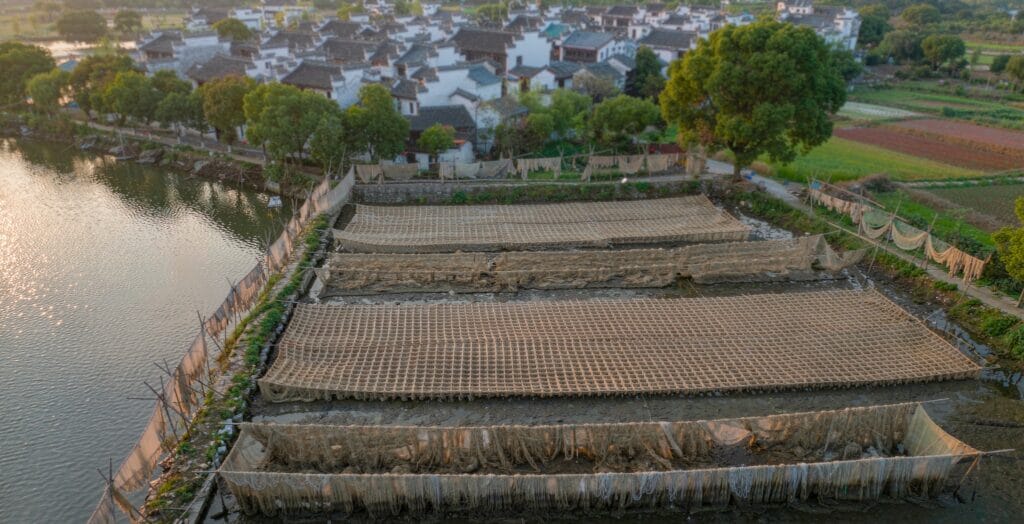
Freshwater pearls grow in mussels that live in lakes and rivers. China produces roughly 95 percent of the world’s freshwater pearls as of 2026, with Zhuji in Zhejiang as the best known hub. Freshwater mussels can host several nuclei at once, so a single mussel may yield many pearls. That higher yield is why freshwater strands often sit at friendlier prices than saltwater strands of similar size. The same high yield also lets farms experiment with shape and tone, which is why freshwater lines now include baroque, potato, and near round styles at many price points.
Saltwater farming
Saltwater pearls grow in oysters in coastal or lagoon waters. Akoya comes from Japan and China, Tahitian from French Polynesia, and South Sea from Australia and nearby waters. These oysters typically host one nucleus each, so output per shell is lower. The result is often a very round, bright bead-nucleated pearl that commands a premium.
Why price and look differ
Price follows rarity, labor, and visual traits. Saltwater Akoya can show a sharp mirror bright reflection. Freshwater pearls now reach strong luster too, especially well graded lots, and they offer more shape and color variety. The gap that mattered ten years ago has narrowed. A buyer who learns to read luster and surface will make a better choice than a buyer who only chases the word “saltwater”. Color also plays a role. White and cream remain the baseline, while lavender, peach, and near black freshwater tones now appear in graded lots without a big price jump. Size matters too, yet a smaller pearl with strong luster often beats a larger one with a dull surface. Treat size as a preference, not a rank.
Why Sellers Confuse You
The term confusion is not always an accident. Some listings use “cultured” and “natural” in ways that nudge a shopper toward a pricier cart. A clear view of the tricks helps you stay in control.
“Cultured” sold as a premium tag
A few listings present “cultured pearl” as if it were a superior class above ordinary pearls. In fact cultured is the baseline for everything sold. Calling it premium is like calling a farmed apple “premium fruit” while hinting wild apples are something else. It sounds special and adds no real value.
Freshwater called “just cultured” to imply low end
The flip trick is to say a freshwater pearl is “only cultured” and hint it is lesser. Freshwater pearls are cultured, yes, but so is every Akoya. The honest comparison is freshwater cultured against saltwater cultured, not “cultured versus quality”. Good freshwater pearls hold their own on luster, shape, and durability.
The “natural pearl” price trap
A listing that leads with “natural pearl” can imply a wild pearl and a higher price. Most buyers never see a true wild pearl. If a seller cannot show provenance for a wild pearl, the word “natural” is doing marketing work, not describing the stone. Ask what method grew it, then judge the pearl in front of you. A honest seller states the method up front: freshwater cultured, Akoya cultured, and so on. When the listing hides the method and leans on vague words, that is a signal to slow down. Provenance matters more than adjectives.
What You’re Actually Buying
Forget the labels for a moment and look at the object. A pearl earns its price through a short list of visible traits.
Read luster and nacre, not the label
Luster is the sharpness of reflection on the surface. A strong mirror like shine beats a dull one at any price point. Nacre thickness matters because thin nacre can wear or peel. Surface cleanliness, shape, and matching across a strand round out the grade. A buyer who learns these four traits can shop any label with confidence. A quick test is to hold the pearl near text or a window. A sharp reflected edge on the pearl points to strong luster, while a soft or blurred reflection points to weaker nacre. This simple check works in any shop.
A quick label to object map
| Label you see | What it usually means | What to check instead |
|---|---|---|
| Cultured freshwater | Farmed in river mussels, solid nacre | Luster, surface, shape |
| Cultured Akoya | Farmed in oysters, bead nucleus | Brightness, blemishes |
| “Natural” pearl | Claim of wild origin, rare | Provenance proof |
| Freshwater “just cultured” | Same as cultured freshwater | Grade, not slogan |
See the freshwater pearl price guide for real benchmarks across these grades. For a deeper read on the grading scale itself, the freshwater pearl grading guide breaks down the letters and what they mean in daily wear.

How to Avoid Getting Ripped Off
The term gap is where bad deals hide. A few field notes from Zhuji’s pearl markets help a buyer spot the routine plays.
Information tricks with the words cultured and natural
Some live stream sellers flip “cultured” and “natural” to sound authoritative while saying little. A line such as “these are natural, those are only cultured” sounds like expertise and carries no facts. Based on insights from Zhuji market buyers, Pearl Decoded found that the most confident sounding pitch is often the one with the least proof. Ask one question: how was this pearl grown, and what is the grade?
Fake certificates and self made grades
Another routine play is a certificate with no recognized lab name, or a grade invented by the shop. A real grade traces to a known system, not a pretty card. Zhuji buyers who shop the wholesale lanes learn to trust the pearl in hand over the paper beside it. When a grade seems too good for the price, slow down and compare with a neutral source. A useful habit is to compare a claimed grade against a few independent listings of the same grade. If one shop’s “AAA” looks like another shop’s “A”, the letters mean nothing. Steady comparison builds a feel for fair price that no certificate can replace.
FAQ
Are cultured pearls real pearls?
Yes. A cultured pearl is grown by a mollusk from nacre, the same material as a wild pearl. A farmer only starts the process. The pearl is genuine, not a glass or plastic imitation.
Is a freshwater pearl a cultured pearl?
Yes. Essentially every freshwater pearl sold today is cultured. The useful comparison is freshwater cultured against saltwater cultured, not freshwater against cultured.
Are cultured pearls worth anything?
They are worth plenty when the quality is strong. Luster, surface, shape, and nacre decide value. A well graded freshwater strand can outshine a poorly graded saltwater one, so judge the pearl, not just the origin word.
What is the difference between natural and cultured pearls?
Natural pearls form by chance in the wild with no human help. Cultured pearls start when a farmer places tissue or a bead in the mollusk. Both are real nacre, but natural pearls are rare and costly, while cultured pearls are the standard in the market.
Which is better, freshwater or cultured pearls?
The question mixes two ideas. Freshwater pearls are a kind of cultured pearl. The fair choice is freshwater cultured versus saltwater cultured. Pick by luster, surface, and budget, not by the word “cultured” alone.
Are cultured pearls fake?
No. “Cultured” is a farming method, not a fake. Imitation pearls are made of glass or plastic and feel light and warm. A cultured pearl is a real pearl with real nacre.
Conclusion: Learn the Term, Then Forget It
The phrase freshwater pearls vs cultured pearls stops being scary once you see the structure. Cultured means farmed. Freshwater means a river mussel. The two sit inside the same family, not on opposite teams. Shop by luster, surface, shape, and provenance, and the marketing words lose their power.
| Term | Plain meaning | What to do |
|---|---|---|
| Cultured | Farmed with human start | Normal, real, buy with confidence |
| Natural | Wild, no human help | Rare, ask for provenance |
| Freshwater | River mussel, solid nacre | Great value, check luster |
| Saltwater | Ocean oyster, bead nucleus | Premium look, higher price |
| Fake | Glass or plastic copy | Avoid, feels light and warm |
For a full material comparison that includes gold and how each holds value, see the freshwater vs saltwater vs gold guide. And to tell the varieties apart before you buy, the freshwater pearl types guide covers the shapes worth knowing.