
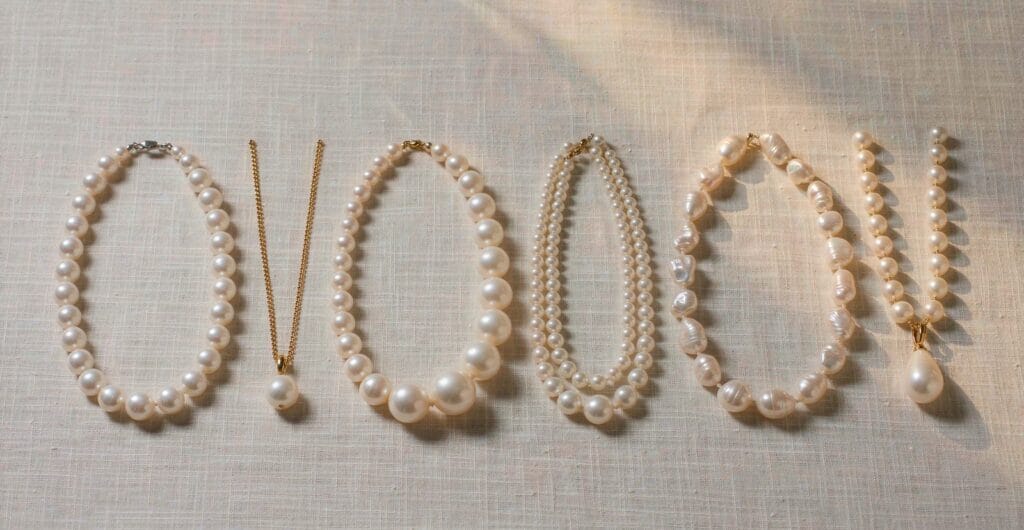
Buying pearl jewelry means telling the brand apart from the pearl. This guide does not rank a top ten list of names. It explains what brand markup actually buys, which pearl jewelry brands are worth the money, and which are mostly packaging.

The Honest Framing
A pearl’s value lives in the bead itself, not in the name on the box. Luster, nacre thickness, and size decide what you get.
Three kinds of “brand” sit in this market. International luxury houses sell design and service. Specialist pearl retailers focus on the stone. Origin-direct sellers cut the middle layer and pass savings to you, if you can judge quality yourself.
Branding is not worthless. A known name can mean consistent sorting, a real return policy, and someone to call if a clasp fails. The mistake is paying a pearl premium for a name while ignoring the bead. A label can also signal a steady supply chain, which matters more for a matched set than for a single stud.
Three Tiers of Pearl Brands
International Luxury and Jewelry Houses
These names carry the highest markup. You pay for design, store experience, and service, not for a better bead. A strand from a famous house can cost several times what the same pearls cost loose.
What the premium buys here is taste and presentation. For a gift where the recipient values the name, that can be worth it. For your own wear, the bead rarely changes with the logo.
Specialist Pearl Retailers
Shops that focus on pearls tend to price more fairly. They sort stock, stand behind returns, and explain grades in plain terms. The markup covers curation and trust, which has real value for new buyers.
The best of this tier acts like a translator between the market and you. They filter weak stock, match strands, and tell you what you are looking at. That service is why many buyers stay loyal.
Origin-Direct and Online Sources
Buying closer to the source gives the lowest price. The trade-off is that you must inspect the pearl yourself. Without that skill, the low price can hide weak nacre or poor matching.
Online source sellers range from careful small shops to bulk resellers. The saving is real, but so is the risk. This tier rewards buyers who already know how to read a pearl.
What You Are Actually Paying For
The Parts of Brand Markup
A brand price usually bundles four things. Design and craft. Retail and staff. Marketing. After-sales service. Only the last two help you after purchase; the first two are taste, not pearl quality.
Marketing deserves a close look. A large share of a famous name’s price can be the cost of being famous. That cost is real to the seller, but it adds nothing to the bead in your hand. Two houses with similar pearls can still price miles apart, yet the stone in the box is often the same.
The Same Bead at Different Prices
The same loose pearls can show very different tags across channels. A strand that sells for one price at a market stall can appear at a much higher price in a branded case. China supplies about 95 percent of the world’s freshwater pearls as of 2026, so most “brands” draw from the same upstream pool.
Pearl value follows a few clear factors that GIA explains in detail: GIA pearl quality factors. Luster leads, then surface, shape, and size. A brand cannot change those facts, only present them.
When a Brand Is Worth the Money
A brand earns its premium when it guarantees sorting, matching, and a real return policy. If two offers show identical pearls and one adds a verified certificate plus easy returns, the extra cost can be fair.
A brand is not worth the money when the bead is ordinary and the price rides on the logo alone. That gap is where most buyers overpay. Learn the factors, then decide if the name adds proof you trust.
How to Judge a Pearl Brand
Do They Show Nacre and Luster Grades?
A trustworthy seller states nacre thickness and luster, not just a vague “AAA” label. “AAA” has no single standard across the trade, so it proves little on its own. See the pearl quality checklist before you buy.
Pearls rank 2.5 to 4.5 on the Mohs hardness scale, so they scratch easily and need care. Luster is the first thing GIA teaches buyers to judge, because it shows pearl quality at a glance.
Can You Verify Returns and Certificates?
Read the return window and check whether certificates come from a named lab. A brand that hides these details is harder to trust than one that shows them plainly. A short or unclear return policy is a quiet warning sign.
Certificates help, but only when the lab is named and checkable. A card with a logo and no verifiable issuer proves nothing. Ask before you buy, and walk away if the answer is vague.
Do They Disclose Origin and Sourcing?
Brands that name their origin and sourcing method invite accountability. Those that dodge the question often resell generic stock under a private label. Open sourcing is a cheap signal of confidence.
A brand that says exactly where its pearls come from and how they were sorted is easier to hold to its word. One that waves at “fine pearls” with no detail asks you to trust a story instead of facts.
Where the Value Hides
Mid-Tier Lines From Specialist Retailers
Specialist shops often have a mid-price line that uses decent beads without luxury overhead. This is where many buyers find the best balance of quality and price. You skip the logo tax but keep the curation.
The trick is to compare the mid-tier bead to the luxury bead side by side. Often the difference is finishing and packaging, not the pearl. That comparison is where value becomes visible. Ask to see the mid-tier strand next to the top tier; the glow gap is usually smaller than the price gap.
Origin-Direct Plus Self-Check Skill
If you learn to read luster and nacre, buying near the source can save the most. The saving only holds when your own eye replaces the brand’s promise. Skill turns a risky channel into the best deal.
Start with one or two pieces and learn as you go. The first origin-direct buy should be small, so a mistake costs little. Experience is what makes this tier pay off.
Secondhand and No-Name Pearls
Pre-owned or unbranded pearls with good bodies can beat new branded pieces at the same price. You trade the box and warranty for a better stone. For confident buyers, this is a strong path.
Estate and secondhand strands often show pearls that would cost far more new. The catch is condition: check for cracks, heavy wear, and re-stringing needs before you commit.
How to Avoid Getting Ripped Off
Private-Label and Fake “Origin” Brands
Some sellers attach a foreign-sounding name to ordinary stock. The label implies an origin it does not have. Buy the pearl, not the story. A name on a card proves nothing about the bead.
These labels spread fast on marketplaces because they sound established. Look past the logo to the actual pearl and the actual return terms. The stone, not the story, should close the sale.
Padding Grades With the Brand Name
A famous name does not raise a pearl’s grade. Some listings use brand prestige to justify a higher tier that the bead does not support. Judge the grade by the pearl, then see if the name adds proof.
When a listing leans on the brand to explain price instead of the bead, slow down. A strong pearl stands on its own facts. A weak one hides behind the logo.
Livestream “Same Factory as Big Brands” Tactics
Live sellers often claim their goods come from the same workshop as famous houses. That claim is almost never verifiable and usually false. Based on real buyer shares from Chinese social media, shared here as community field notes rather than first-hand purchases, the most common complaint in pearl buyer groups is exactly this “same factory” line.
The pitch works because it borrows trust the seller has not earned. Treat any “same factory” claim as marketing until a verifiable link appears. Most never do.
FAQ
Are expensive pearl brands worth it?
Not always. You pay for design and service, not a better bead. Spend more only when the seller proves sorting, returns, and certification. For a gift, the name can carry its own worth to the receiver, which is a fair reason to pay.
What is the best pearl jewelry brand?
There is no single best. Specialist pearl retailers suit most buyers. Luxury houses suit gift buyers who value the name. Origin-direct suits confident self-buyers.
Do brand-name pearls cost more for the same quality?
Usually yes. The same loose pearls can carry a higher tag under a brand. Compare the bead, not the box, before paying the premium.
Is it better to buy pearls from a brand or a wholesaler?
A wholesaler is cheaper but riskier. A brand adds curation and returns. Choose by your own skill: weak eye, choose the brand; strong eye, choose the source.
How do I know a pearl brand is trustworthy?
Check three things: stated nacre and luster grades, a real return policy, and named origin. Brands that hide these are weaker bets than plain sellers that show them.
Why are some pearl brands so cheap?
Cheap “brands” are often private labels on generic stock. Low price plus a fancy name usually means the name, not the pearl, is what you are buying.
Conclusion: Buy the Pearl, Not the Label
The smart move is to separate the bead from the branding. Spend on luster, nacre, and a seller you can hold to its word. The name should add proof, not replace it.
| Budget tier | Recommended channel | What to watch |
|---|---|---|
| Under 50 dollars | Origin-direct or no-name | Check nacre and matching yourself |
| 50 to 300 dollars | Specialist retailer mid-tier | Ask for stated grades and returns |
| Over 300 dollars | Luxury or verified specialist | Confirm certificate and service |
For necklaces, compare the best freshwater pearl necklace picks. For studs, see the best pearl stud earrings. To read quality yourself, start with the freshwater pearl grading guide.