
Can Freshwater Pearls Get Wet? (And 6 Things That Will Destroy Them)
Can freshwater pearls get wet? This is the question every pearl owner asks the first time they get caught in the rain wearing their favorite strand.
The short answer: yes, freshwater pearls can handle a little water, but regular exposure will quietly destroy them.
Most people learn this the hard way. They shower in their pearls, swim with them on vacation, or wipe them with a wet cloth and toss them back in the jewelry box. Six months later, the pearls look dull, the string feels loose, and they have no idea what went wrong.
This guide covers exactly what water does to freshwater pearls, which scenarios are safe and which are not, and the 7 care secrets that will keep your pearls glowing for years.
The Science: Why Freshwater Pearls Get Wet in Water but Hate Staying Wet
Freshwater pearls are born in water, and that is what makes this question so confusing. If pearls grow inside mussels submerged in lakes and rivers, why would water hurt them?
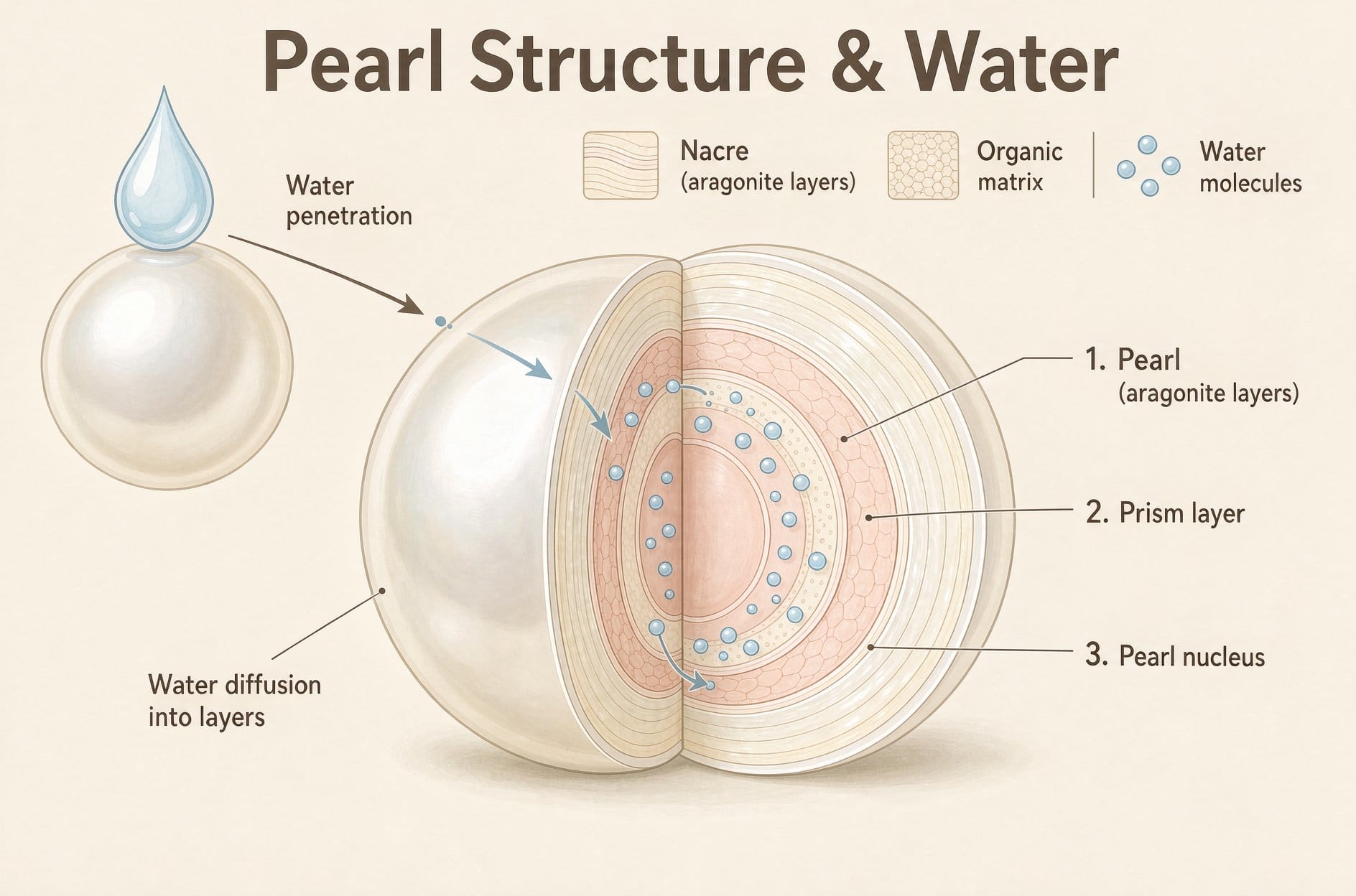
The answer lies in what happens after the pearl leaves the mussel.
A freshwater pearl is made of thousands of microscopic layers of nacre, the same iridescent material that lines the inside of a mussel shell. These layers are held together by a natural protein called conchiolin. The pearl also contains a small amount of internal water, about 2-4% of its weight. Pearl is a soft material, scoring only 2.5 on the Mohs hardness scale, which is one reason it scratches and reacts so easily.
When the pearl is still inside the mussel, it is surrounded by a protective organic coating. Once harvested, drilled, and strung into jewelry, that coating is gone. The nacre layers are now exposed.
Here is what water does to an unprotected pearl.
First, water seeps into the microscopic gaps between nacre layers. As it evaporates, it pulls the pearl’s internal moisture out with it. Over time, this dehydrates the nacre, causing microscopic cracks that scatter light differently, and the pearl loses its luster.
Second, the silk thread holding your pearl strand together absorbs water and stretches. When it dries, it does not shrink back perfectly. The knots loosen. Dirt and sweat get trapped in the stretched thread, grinding against the pearl from the inside.
Third, water is rarely just water. Tap water contains chlorine and minerals. Rainwater is acidic. Pool water has harsh disinfectants. Seawater is corrosive salt.
Sweat contains lactic acid. Each of these leaves a chemical residue on the pearl’s surface, slowly etching the nacre.
This is why freshwater pearls can survive a splash but cannot survive a lifestyle that treats them like stainless steel.
Can Freshwater Pearls Get Wet? A Scene-by-Scene Guide
Not all water exposure is equal. Here is exactly what happens in each real-world scenario.
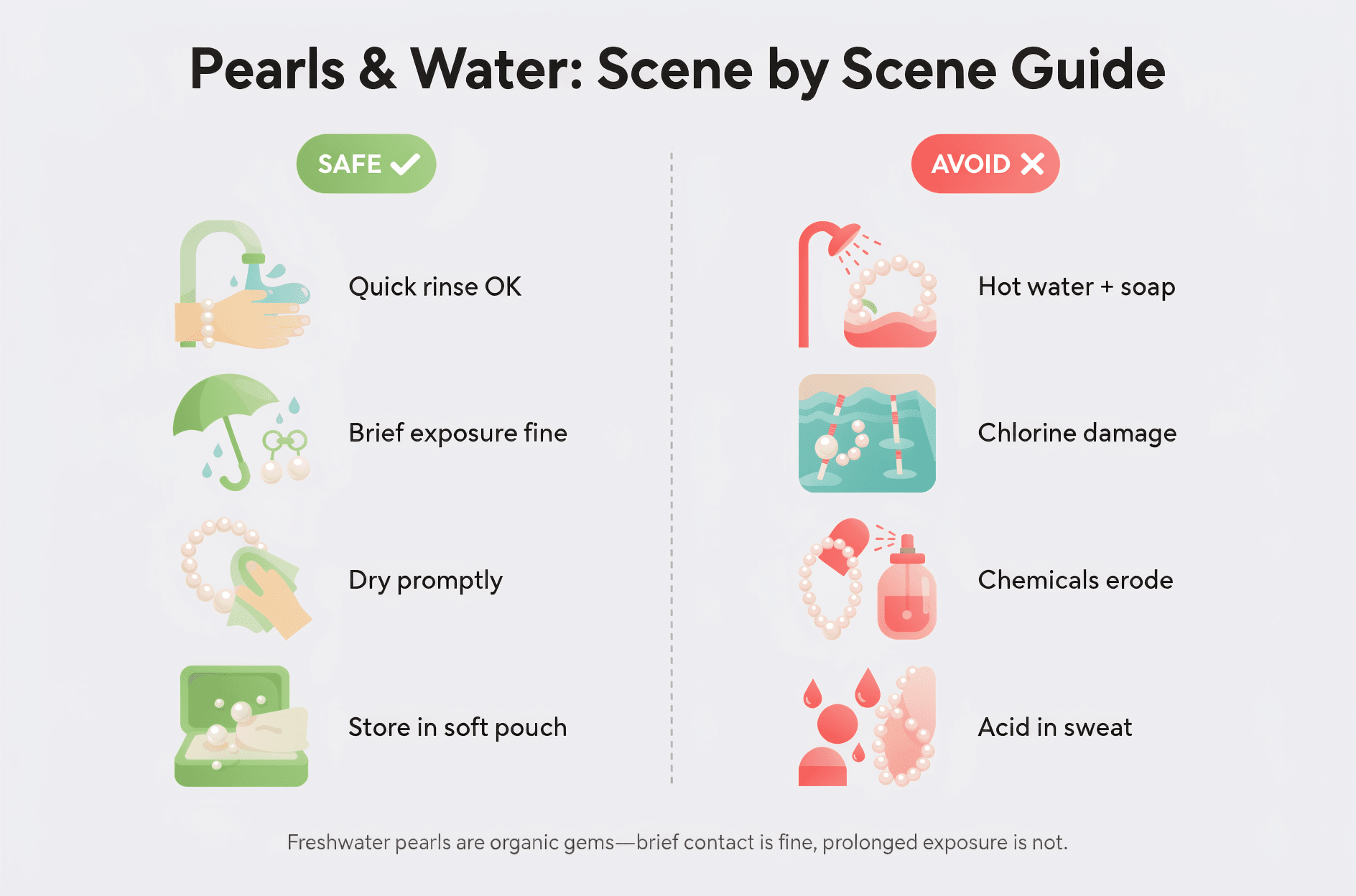
Rain and Hand-Washing Splashes: Generally Safe
A few drops of clean water will not harm your pearls.
If you get caught in light rain or splash water on your pearls while washing your hands, simply blot them dry with a soft, lint-free cloth. Do not rub, because rubbing pushes water and dirt deeper. Let them air-dry completely before putting them away.
One caveat: if you live in a city with heavy air pollution, rain can be acidic. In that case, wipe your pearls with a barely damp cloth after rain exposure, then dry immediately.
Showering: Absolutely Not
This is the number one mistake pearl owners make.
Hot shower water does three things at once: heat opens the microscopic gaps in the nacre, steam forces moisture deep inside, and shampoo residue deposits chemicals on the surface. The combination accelerates dehydration and chemical etching faster than any other scenario.
Take your pearls off before stepping into the shower. Always.
Swimming: Never: Chlorine and Salt Are Pearl Killers
Pool chlorine is designed to break down organic matter. Pearl nacre is organic matter. A single swim will not destroy your pearls, but repeated exposure will strip the luster layer by layer.
Seawater is just as bad. Salt crystals form in the nacre gaps as water evaporates, physically prying the layers apart. Plus, ocean water contains sand particles that scratch the surface.
If you accidentally swim with your pearls once, rinse them immediately with clean, lukewarm water, pat dry, and lay flat to dry overnight. Do not make it a habit.
Sweat and Exercise: Take Them Off
Sweat is mildly acidic (pH 4.5-7.0). Over months of daily wear during workouts or hot summer days, that acid steadily eats into the nacre.
You will not see the damage after one workout. You will see it after a year, when a pearl that used to glow now looks flat and chalky around the drill hole, where sweat concentrates.
Remove your freshwater pearls before exercise, gardening, or any activity that makes you sweat.
7 Essential Care Secrets for Freshwater Pearls
1. The Last-On, First-Off Rule
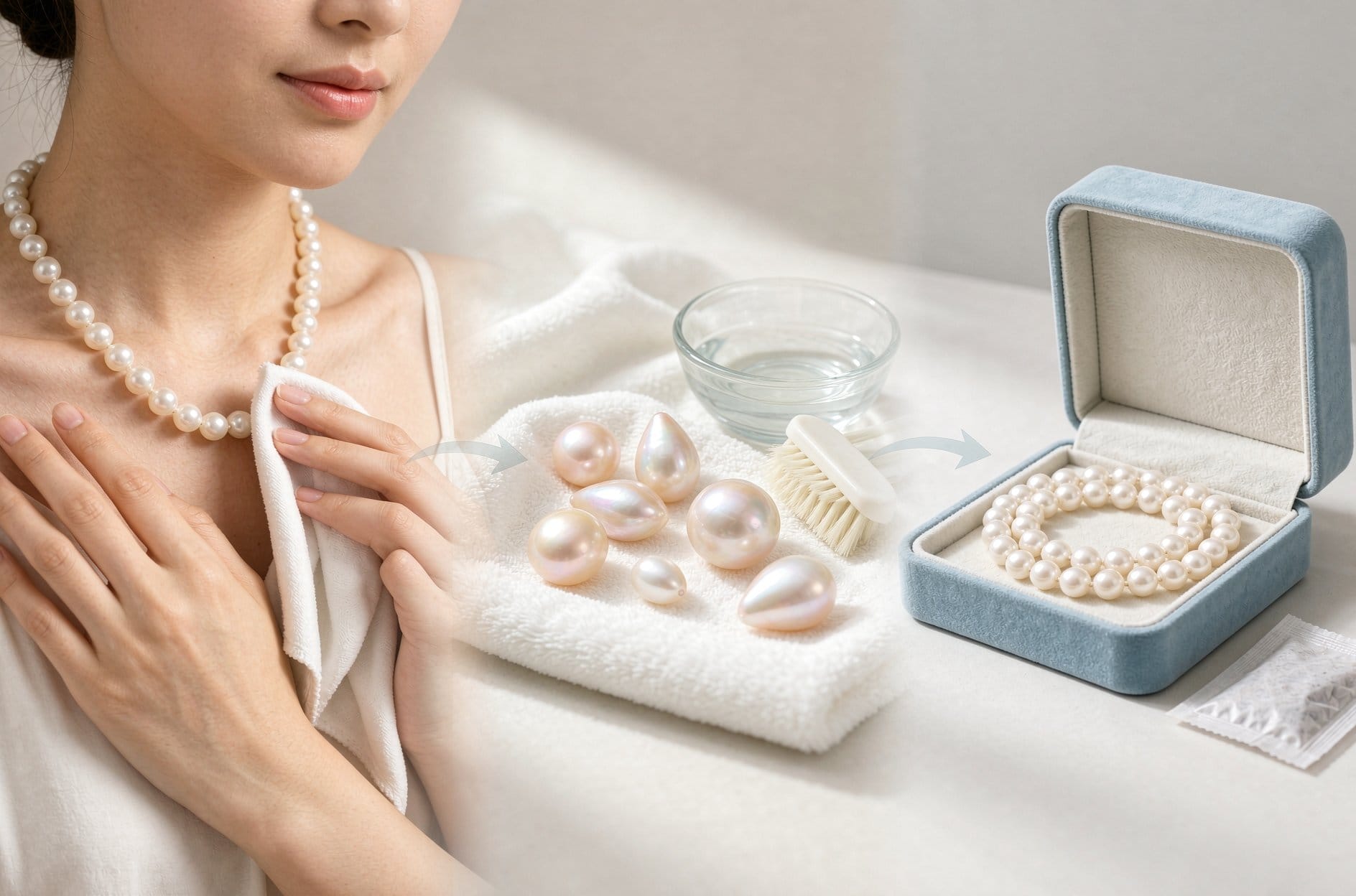
Put your pearls on after you have applied perfume, hairspray, lotion, and makeup. Take them off before you change out of your day clothes. This minimizes contact with chemicals and friction.
Chemicals are the silent enemy. Perfume contains alcohol that dries out nacre. Hairspray leaves a sticky film that traps dirt. Foundation and sunscreen contain oils that dull the surface. GIA notes that pearls can be damaged by many chemicals and all acids, a list that includes hair spray, perfume, cosmetics, and even perspiration.
2. Wipe After Every Wear
After each wearing, gently wipe your pearls with a soft, dry microfiber or jewelry cloth. This removes the thin layer of skin oil and sweat that accumulated during the day.
One wipe takes five seconds. It is the single highest-impact habit for extending your pearls’ life.
3. Clean Only When Needed, and Do It Gently
Pearls do not need frequent cleaning. When they do, use this method only:
Dampen a soft cloth with lukewarm water and a single drop of mild, unscented soap. Wipe each pearl individually. Immediately follow with a clean damp cloth to remove soap residue. Lay flat on a soft towel to dry for at least 24 hours before wearing or storing.
Never soak pearls. Never use ultrasonic cleaners. Never use steam cleaners. Never use jewelry cleaning dips. All of these will destroy the nacre.
4. Dry Completely, Then Store
Wet pearls should never go directly into a jewelry box or pouch. Trapped moisture is the fastest path to dulling and thread rot.
After cleaning or rain exposure, lay your pearls flat on a soft, dry cloth at room temperature. Do not use a hairdryer, do not place them in direct sunlight, do not store them until they feel completely dry to the touch, usually 2-4 hours for a light wipe, or overnight for a proper cleaning. GIA is specific on this point: if the pearls are strung, the string must be completely dry before you wear them again.
5. Store Pearls So They Can Breathe
Pearls contain water and need a stable humidity environment. Airtight plastic bags trap moisture and promote mold on the silk thread. Overly dry safes pull moisture out of the pearl.
The ideal storage: a soft fabric pouch or a lined jewelry box compartment, away from direct sunlight and heat sources. Keep pearls separate from harder jewelry, because diamonds, gold, and silver will scratch the nacre. GIA makes the same observation about storage, noting that pearls and opals both draw moisture from the air, so a very dry safe can do more harm than good.
6. Restring Your Pearl Necklace Annually
If you wear your freshwater pearl strand regularly, have it restrung once a year. Even with perfect care, the silk thread absorbs body oils and stretches over time.
A professional restringing costs $25-50 and includes a knot between each pearl. Those knots are not decorative, because they prevent all your pearls from sliding off if the strand breaks, and they stop pearls from rubbing against each other.
Consider this cheap insurance for a piece that should last decades.
7. Know When Pearls Are Beyond Home Care
If your pearls have turned chalky white, developed visible cracks, or lost all luster, home care will not fix them. The nacre damage is permanent.
In some cases, a professional jeweler can lightly polish the surface to restore some shine, but this removes a thin layer of nacre and can only be done once or twice in a pearl’s lifetime. For severely damaged pearls, replacement is the only option.
Frequently Asked Questions About Freshwater Pearls and Water
Can I wear freshwater pearls in the rain?
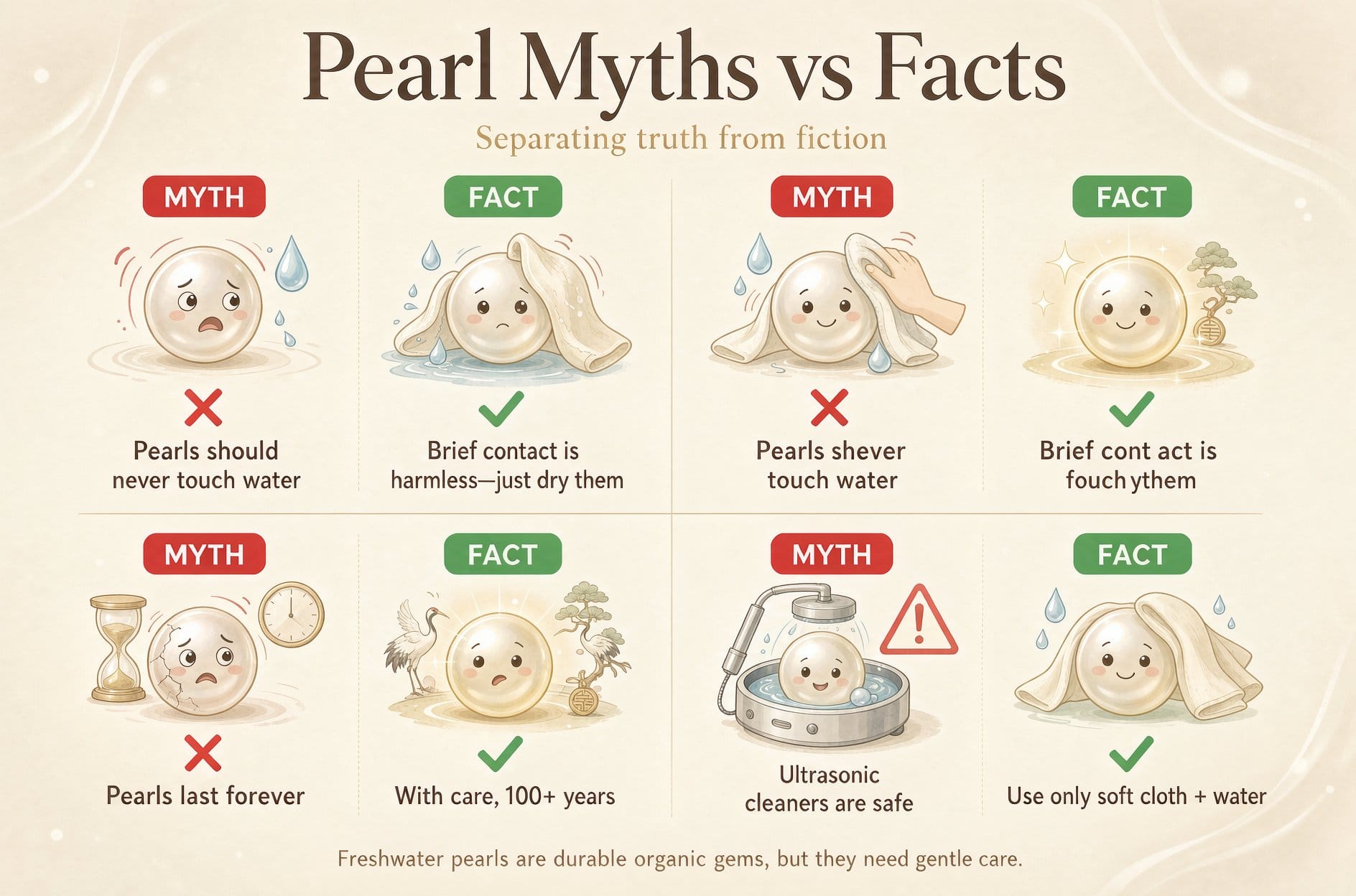
Light rain is fine. Dry them afterward. Heavy, sustained rain is a problem, so take them off.
What if I accidentally showered with my pearls on?
Do not panic. Rinse them quickly with clean lukewarm water to remove any shampoo or soap residue. Pat dry gently and lay flat to air-dry for 24 hours. One accident will not ruin them, just do not repeat it.
Can freshwater pearls get wet if they are set in gold or silver?
The metal setting does not protect the pearl from water damage. In fact, water trapped between the pearl and the metal setting is worse, because it sits there for hours, slowly eating into both the nacre and the glue holding the pearl in place.
Do different pearl types handle water differently?
Yes. Freshwater pearls are solid nacre, making them slightly more durable against water than Akoya or South Sea pearls, which have a thin nacre layer over a bead nucleus. But “more durable” does not mean “waterproof”, and the same rules apply to all pearl types.
How do I know if my pearls have water damage?
Early signs: dull or cloudy surface, loose string, pearls that rattle against each other. Advanced signs: peeling or flaking nacre, chalky white patches around drill holes, visible cracks in the surface.
Can I restore pearls damaged by water?
No. Nacre damage is permanent. Prevention is the only reliable strategy.
The Bottom Line: Freshwater Pearls Deserve Better Than Guesswork
Can freshwater pearls get wet? Yes, and that is exactly why you need to be careful.
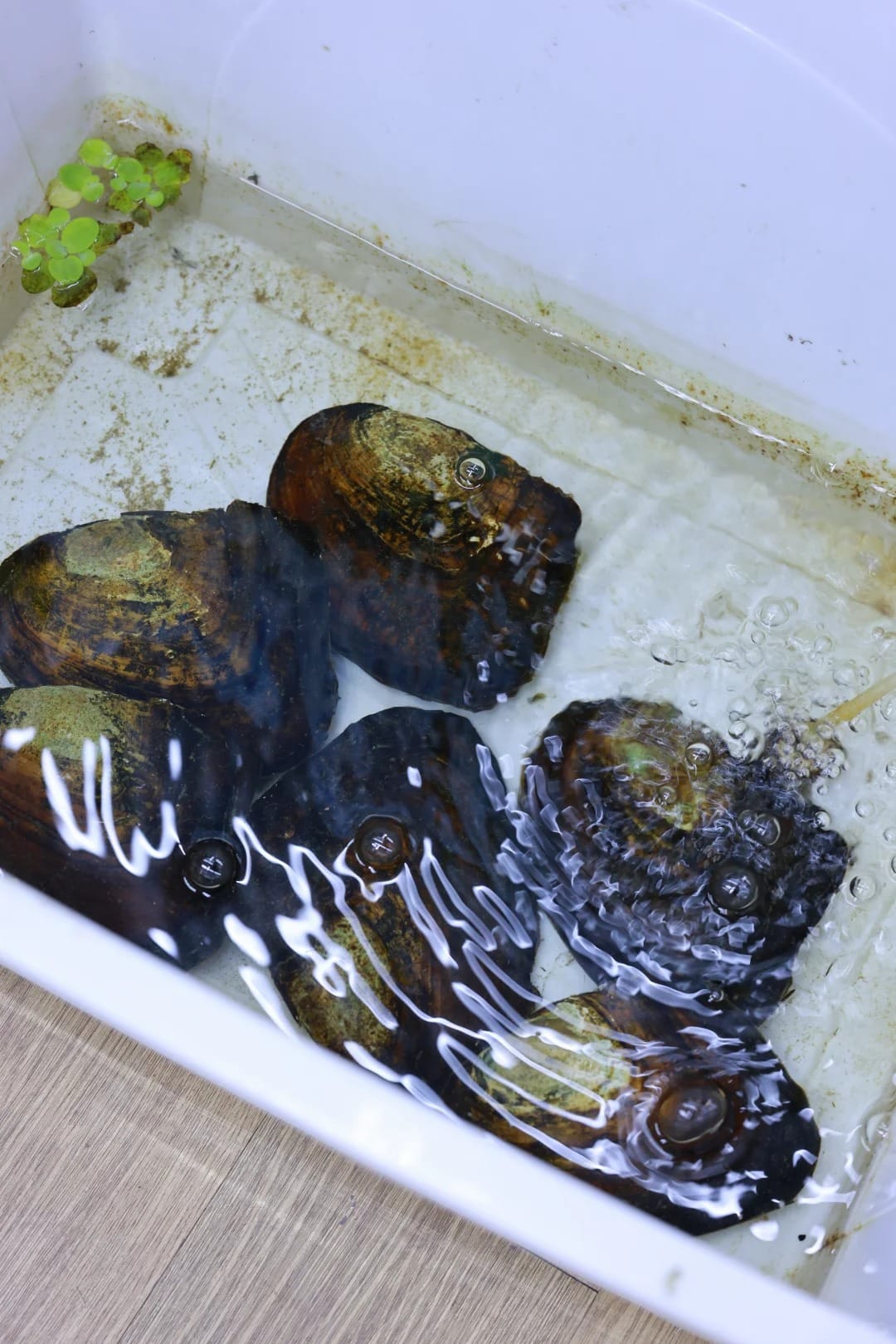
A splash of rain will not ruin them. A daily shower routine absolutely will.
The seven care secrets above are not complicated. Wipe after wearing. Shower without them. Store them dry. Restring them yearly.
That is 90% of pearl care.
The remaining 10% is just this: treat your pearls like the organic, living-origin treasures they are. They were formed inside a living creature over years. A little daily attention keeps them luminous for a lifetime.
If you are curious about what your pearls are actually worth, or how to pick your next strand, check out our freshwater pearl price guide.
Get the Free Pearl Buying Checklist
7 quality checks, real price benchmarks, 5 traps to avoid, one 16-page PDF.
Free download. No spam. Unsubscribe anytime.