
If you’ve ever shopped for freshwater pearl pricing, you’ve seen the jump: 7mm strands sit comfortably around $30–50, but 8mm strands leap to $60–100 or more. Same type, same luster. The price doubles. Why?
The answer isn’t markup. It’s biology, scarcity, and a pricing formula most jewelry sellers never explain. This article breaks down the real math behind freshwater pearl pricing so you can evaluate any strand against facts, not sales copy.
The Freshwater Pearl Pricing Rule: Size Is Everything
Zhuji market data: The price jump at 8mm is real. Near-perfect 6-7mm pearls sit at 2,000 yuan ($278) while 8mm+ variants often exceed 4,000 yuan ($556), confirming the double-cost pattern for larger sizes. For most wearers, 8-10mm reads as a statement size, which is part of why the jump exists.
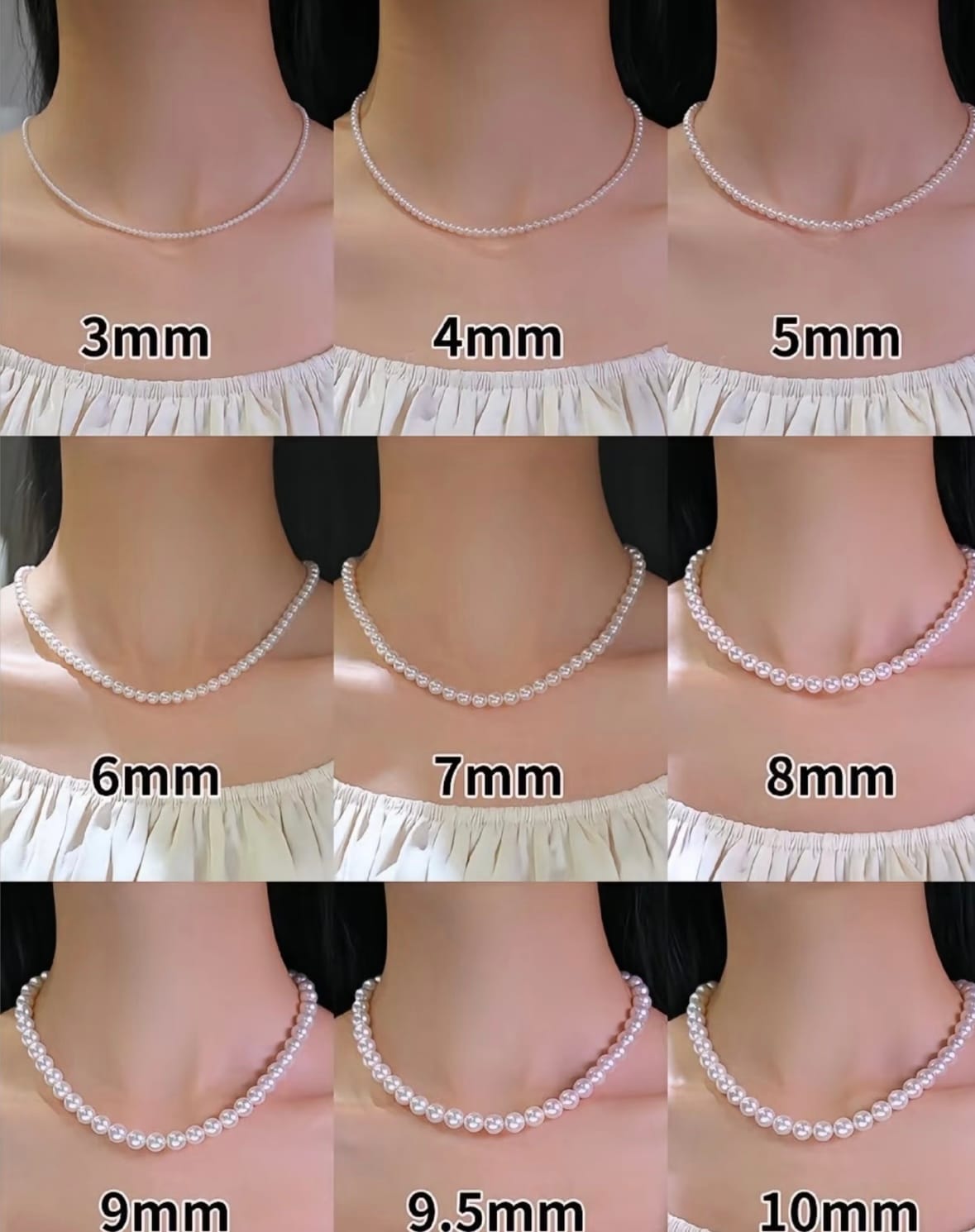
In freshwater pearl pricing, size dominates the cost equation more than any other single factor. A 1mm increase can double or triple the wholesale price of a pearl strand, and that multiplier isn’t arbitrary.
Here’s why: freshwater pearls grow inside a mussel over 2–5 years. The longer a mussel stays in the water, the bigger the pearl gets. But the longer it stays, the higher the risk of disease, pollution damage, or mussel death.
A mussel that produces a 10mm pearl has survived 5+ years of risk. That survival rate is low.
The result is an exponential drop in supply as size increases. Roughly speaking:
Supply curve (approximate, Zhuji wholesale floor 2025–2026):
6–7mm: abundant. Every healthy mussel can produce these. Supply far exceeds demand.
7–8mm: moderate. Most mussels reach this size. Pricing starts to reflect real farming cost.
8–9mm: scarce. Only about 30–40% of mussels survive long enough. Prices jump significantly.
9–10mm: rare. Perhaps 10–15% of mussels reach this range. You pay for the survivorship premium.
10–12mm: exceptional. These are the Edison pearls, a separate category with its own pricing logic. See our Edison pearls guide for that tier.
How Shape Changes the Freshwater Pearl Pricing Formula
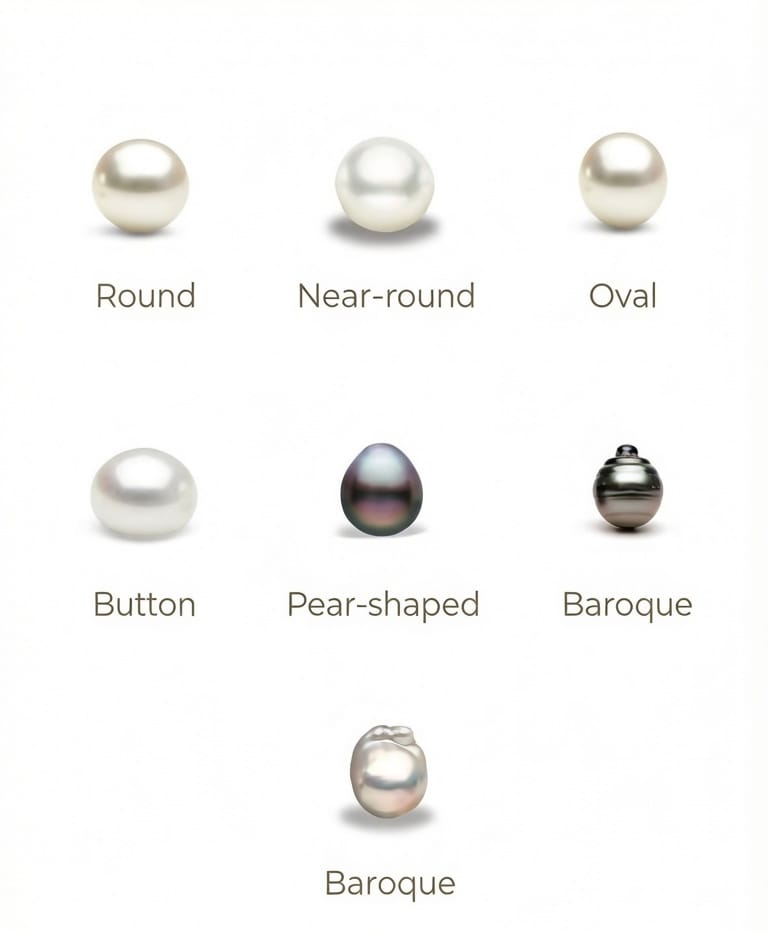
Size is the biggest multiplier, but shape is the second. And the interaction between size and shape is where freshwater pearl pricing gets genuinely surprising.
Perfectly round freshwater pearls are the most expensive shape at any size. But the roundness premium scales dramatically with size. A round 8mm pearl costs far more than a round 7mm, and the gap is wider than the size multiplier alone would suggest.
Why? Because as pearls grow larger, maintaining perfect roundness becomes harder. A mussel’s pearl sac stretches and deforms over time. Larger pearls are more likely to be oval, button-shaped, or baroque. So a perfectly round 8mm pearl represents a double rarity: size survival + shape consistency.
Here’s a rough pricing matrix at the Zhuji wholesale level:
7mm: Near-round: ¥40–80/strand | Round: ¥80–150/strand
8mm: Near-round: ¥100–200/strand | Round: ¥200–400/strand
9mm: Near-round: ¥250–500/strand | Round: ¥500–1000/strand
Notice the pattern: moving from near-round to round at the same size adds roughly 2x. Moving from 7mm round to 8mm round adds roughly 2.5x. These two multipliers stack.
An 8mm round pearl is about 5x the price of a 7mm near-round. That is why some strands feel surprisingly expensive compared to others.
What Luster Really Does to Freshwater Pearl Pricing
Luster is the third pillar of freshwater pearl pricing, and the one most buyers underestimate. Two pearls of identical size and shape can differ by 50% in price purely because of luster quality.
Luster measures how sharp and bright a pearl’s surface reflection is. High-luster pearls show mirror-like reflections with crisp edges. Low-luster pearls look chalky or milky, with blurry reflections. The difference is immediately visible once you know what to look for.
From a farming perspective, luster depends on nacre thickness and density. Thick, dense nacre creates sharp reflections. Thin nacre creates dull surfaces. And nacre quality is influenced by water conditions, mussel health, and harvest timing, factors that are hard to control at scale.
The practical result: high-luster pearls are disproportionately scarce at larger sizes. An 8mm round pearl with excellent luster is genuinely rare, while an 8mm round pearl with mediocre luster is merely uncommon.
That rarity gap shows up in pricing as a 30–50% premium on top of the size and shape multipliers.
Surface Quality: The Hidden Variable in Pearl Pricing
Surface blemishes (scratches, spots, ridges, or bumps) reduce a pearl’s value. But the impact of blemishes on freshwater pearl pricing is more nuanced than most guides admit.
Small, invisible blemishes (visible only under 10x magnification) have minimal price impact. Moderate blemishes (visible at arm’s length but not dominant) reduce price by 15–25%. Major blemishes (obvious marks covering significant surface area) can cut value by 40–60%.
The key insight: surface quality matters less for small pearls and more for large ones. A 7mm pearl with minor blemishes is still cheap enough that most buyers accept it. An 8mm pearl with the same blemishes feels like a waste. You’re paying for size but getting compromised quality.
This is why experienced pearl buyers often say: “never buy a large pearl with bad surface.” The price premium you pay for size gets undermined by the quality discount from blemishes. You end up paying more for less.
For a deeper understanding of quality assessment, see our freshwater pearl grading guide.
Color and Matching: Two Quiet Multipliers in Freshwater Pearl Pricing
Size, shape, luster, and surface get most of the attention. But two quieter factors quietly reshape freshwater pearl pricing: color and matching. Neither shows up in the basic formula, yet both can add 20–40% to a strand’s price without changing a single millimeter.
Color works through rarity, not preference. Natural white and the soft “rose” overtone are the most common and cheapest. Rare natural hues (deep lavender, vivid peach, and the metallic prototype colors from Edison farming) command premiums because the mussel produces them unpredictably. A treated color (dyed or irradiated) is worth less than a naturally occurring one, which is why honest sellers always state color origin. Our size guide covers how color interacts with size perception.
Matching is the hidden labor cost. A strand where every pearl is within a half-millimeter and shares identical luster and overtone takes hours to assemble from hundreds of loose pearls. Poorly matched strands are faster and cheaper to make, and the price reflects it. Two strands of identical size and grade can differ by 30% purely on how well the pearls were matched. Most buyers only notice that detail once they hold both side by side. This is exactly why a grading guide matters: it turns “they look similar” into measurable specifications you can compare before paying.
The Math Behind Why 8mm Freshwater Pearls Cost Double
Let’s put all the factors together with a concrete example. Here’s how freshwater pearl pricing stacks up for two real-world strands on the Zhuji wholesale floor:
Strand A: 7mm, near-round, good luster, minor blemishes
Size multiplier: baseline (7mm is abundant)
Shape multiplier: 1.0x (near-round is standard)
Luster multiplier: 1.2x (good, not excellent)
Surface multiplier: 0.9x (minor blemishes discount)
Estimated wholesale: ¥50–90 ($7–13)
Strand B: 8mm, round, excellent luster, clean surface
Size multiplier: 2.5x (8mm round is scarce)
Shape multiplier: 2.0x (round premium at this size)
Luster multiplier: 1.5x (excellent luster premium)
Surface multiplier: 1.0x (clean surface, no discount)
Estimated wholesale: ¥250–400 ($35–55)
The math: Strand B costs approximately 5x Strand A at wholesale. After export margins, brand markup, and retail pricing, that 5x gap becomes a 2–3x gap at consumer level. That is exactly what you see when 8mm strands cost “double” the 7mm.
Buyers who have walked the Zhuji wholesale market share a consistent tip: learn the wholesale price band for your target quality tier before you go, then compare across at least three shops before you name a price. The 8mm jump shows up sharply on the wholesale floor. Because bigger sizes carry a real wholesale price leap, a strand that looks only 1mm larger can cost far more per strand than the numbers suggest. Casual visitors rarely see first-hand wholesale quotes, since most vendors require minimum order quantities and the language barrier hides the real floor. The workable move is to haggle boldly and to buy loose pearls plus local findings separately, which often saves more than a finished piece. Local shops lean toward mature styling, but a custom design from a reference photo can be turned around the same day.
Freshwater Pearl Pricing Compared: What You Actually Pay Online
Wholesale pricing is one thing. What you pay as a consumer is another. Here’s a realistic comparison of what different pearl sizes and grades cost at Western retail in 2026:
7mm near-round, good luster: $30–50 online. Common, widely available. Good for everyday wear, but not impressive.
7mm round, excellent luster: $50–80 online. The “nice but affordable” tier, and the smart pick for budget-conscious buyers.
8mm near-round, good luster: $60–90 online. The size upgrade most people notice first. Better visual presence than 7mm.
8mm round, excellent luster: $100–180 online. This is the “double” zone, where freshwater pearl pricing starts to feel like saltwater territory. Worth it if you want statement jewelry.
9mm+ round, excellent luster: $200–500+ online. Premium territory. Compare carefully with Akoya at this price level.
For detailed pricing across all grades and sizes, see our complete freshwater pearl price guide.
FAQ About Freshwater Pearl Pricing
Why do freshwater pearls cost less than Akoya pearls?
Freshwater mussels produce multiple pearls per harvest (up to 20–30), while Akoya oysters produce only 1–2. This supply difference drives the base price gap. But top-grade freshwater pearls at 9mm+ can rival Akoya on price per pearl, and the cost advantage shrinks as quality rises.
Is a 8mm freshwater pearl worth double a 7mm?
At the same quality grade, yes. The 8mm represents genuine scarcity. Fewer mussels survive long enough to produce it. But if the 8mm has poor luster or visible blemishes while the 7mm is clean and bright, the 7mm is better value. Always compare quality before paying for size.
How can I tell if I’m overpaying for freshwater pearls?
Check three things: size-to-price ratio (compare against our pricing tiers above), luster quality (does the reflection look sharp or cloudy?), and surface cleanliness (are blemishes visible at arm’s length?). If a strand fails on two of these three but costs premium prices, you’re overpaying.
Do pearl prices change seasonally?
Yes. After the autumn harvest in Zhuji (October–November), supply peaks and wholesale prices dip slightly. Before major holidays (Christmas, Chinese New Year), demand surges and retail prices rise. Buying in late November–early December can save 10–15% at retail.
Will freshwater pearl pricing go up or down in 2026?
Likely up for quality grades. Zhuji production volumes have stabilized, but demand from live-stream commerce has grown dramatically since 2023. Mid-to-high grade pearls (8mm+ round, excellent luster) face rising demand against limited supply. Budget grades (7mm near-round) remain stable.
Community buyers also warn about red flags when a large pearl looks suspiciously cheap. The old pitch of “export leftovers” deserves skepticism. One frequently mentioned shop, DA1302, drew complaints for fragile jewelry, evasive after-sales service, and a risk of K-gold substitution. The safeguard buyers recommend is to demand material proof and keep a voice recording of the sale. The trade has its share of A/B goods, where the piece shown is real but the one shipped is not, and many “multi-color” freshwater strands are treated or color-adjusted on small beads. The rule experienced buyers repeat is simple: you get what you pay for. Top-grade goods sell fast and circulate little, so a large pearl priced well below the market usually has a reason.
Conclusion: Freshwater Pearl Pricing Is Formula, Not Mystery
When you see an 8mm strand priced at double a 7mm strand, it’s not arbitrary markup. It’s freshwater pearl pricing reflecting a real scarcity curve. Fewer mussels survive to produce larger sizes, fewer of those survivors produce round shapes, and fewer of those rounds achieve excellent luster.
Each factor multiplies the previous one. Understanding this formula means you can evaluate any strand against objective criteria instead of guessing.
Use our size guide to visualize what different millimeters look like on a neck, and our price guide for current market data across all grades.
Get the Free Pearl Buying Checklist
7 quality checks, real price benchmarks, 5 traps to avoid , one 16-page PDF.
Free download. No spam. Unsubscribe anytime.