
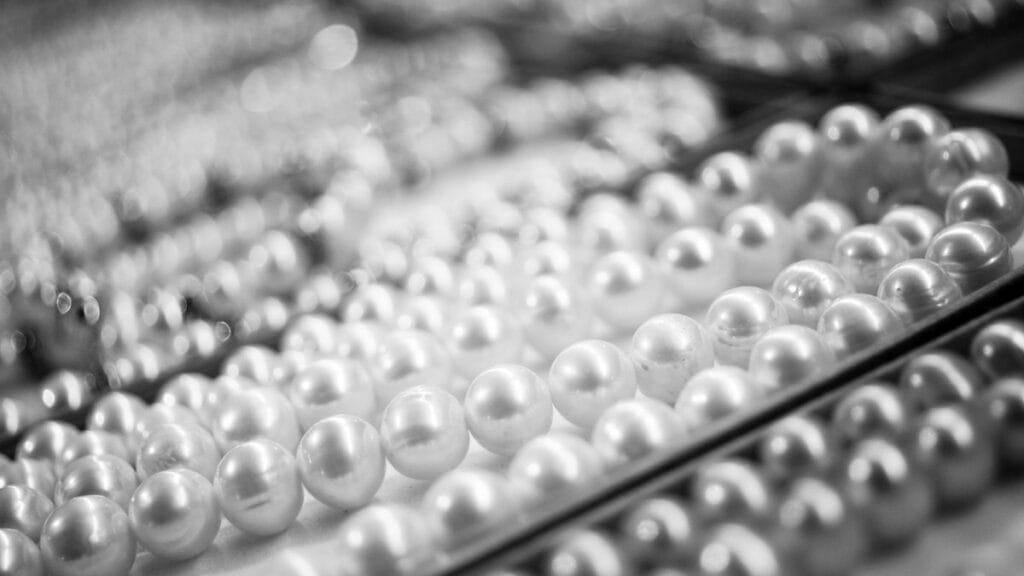
The market is organized into ABCD zones: A for finished jewelry, B for loose beads, C for wholesale core, and D for brand stores with testing services. First-time visitors should enter from the south side.
s simply don’t provide. When you see a “sale” price online, you can evaluate it against what the source market actually charges, not against an inflated MSRP.
Types of Buyers at Zhuji’s Pearl Market
From our market visits: The Zhuji pearl market is split into A (finished jewelry), B (loose beads), C (wholesale core), and D (brand stores with testing). Tourists are sometimes driven to fake shops. One victim was taken to a counterfeit store at 518 while the real one (Bengbengtang) is at 446, and paid 304 yuan ($42) at the wrong location. Recommended transparent stalls include Yihao (AB2603), Xinlei (higher-end), and Xingxin Pearl City (best value), and smaller shops away from the trendy front are cheaper.
From our market visits: The Zhuji pearl market is split into A (finished jewelry), B (loose beads), C (wholesale core), and D (brand stores with testing). Tourists are sometimes driven to fake shops. One victim was taken to a counterfeit store at 518 while the real one (Bengbengtang) is at 446, and paid 304 yuan ($42) at the wrong location. Recommended transparent stalls include Yihao (AB2603), Xinlei (higher-end), and Xingxin Pearl City (best value), and smaller shops away from the trendy front are cheaper.
The market serves four distinct buyer types, and knowing who is who explains a lot about pricing.
Factory representatives arrive early and leave fast. They buy in kilograms, not strands, and they negotiate based on lot quality, not individual pieces. These buyers set the floor price.
Export wholesalers buy in bulk but with specific grading requirements. They’re looking for matched strands, consistent color lots, and reliable supply lines for overseas clients. A Zhuji export buyer might inspect 50 strands before selecting 10.
Live-streamers and e-commerce sellers are the fastest-growing segment. Armed with ring lights and smartphones, they buy mixed lots and sell strand by strand to online audiences. Their presence has driven up demand for mid-grade pearls, pushing prices on those tiers noticeably higher since 2024.
Retail tourists and jewelry designers buy small quantities at higher per-unit prices. They get the convenience of picking individual pieces but pay a 30–50% premium over wholesale rates for the privilege.
How to Use Zhuji Pearl Market Prices as Your Shopping Baseline
The most useful thing the Zhuji Pearl Market gives you isn’t a cheap strand. It’s a reality check. Once you know a decent 7–8mm freshwater strand costs ¥80–150 ($11–21) at the wholesale floor, every “luxury” price tag online can be measured against a real number instead of a made-up MSRP.
Here’s the practical method. Take any strand you’re considering and strip away the branding. A fair Western retail price for mid-grade freshwater pearls typically runs 3–5x the Zhuji wholesale floor. That spread covers export handling, certification, shipping, returns, platform fees, and a reasonable business margin. When a seller asks 10x the wholesale floor for an ordinary near-round strand, you’re paying for marketing, not pearls. Our freshwater pearl price guide maps these tiers in detail, and the size guide shows how millimeters drive the math.
The flip side matters too. If a “bargain” strand online prices below the Zhuji floor, something is off. It’s likely shell-core, coated, or misgraded. Genuinely cheap pearls still cost what they cost at the source. Prices that defy the Zhuji baseline in either direction deserve a second look before you buy.
Before you shop, keep one distinction clear: the Zhuji baseline applies to loose and strand pearls, not finished jewelry. Once a strand is set into a gold or silver mounting, you’re also paying for metal, design, and craftsmanship. Don’t expect a finished pendant to match the wholesale pearl price per se. Use the baseline to judge the pearls themselves, then evaluate the setting as a separate cost. This separation keeps you from blaming the pearls when the real expense is the mount, or overpaying for a cheap strand dressed up in an expensive clasp. The Zhuji Pearl Market gives you the reference; how you apply it is what actually saves money.
Red Flags: When “Direct from Zhuji” Is Just a Sales Pitch
Every pearl seller online now claims to source “direct from Zhuji.” Most don’t, and the phrase has become a marketing placeholder rather than a supply-chain fact. Knowing the tells protects your wallet more than any discount code.
The first red flag is a lack of specifics. Real Zhuji-sourced sellers can name their grade tier, show consistent lot photos, and explain their quality standard. Vague claims like “factory direct, lowest price” with no grading detail usually mean the seller is one of a hundred middlemen, not the farm. For background on what genuine Chinese production looks like, see our Chinese freshwater pearls guide.
Real buyer shares describe a practical bargaining loop: first walk the fixed-price shops to learn the market and tell intense luster from strong luster, then take those quotes into the influencer-favorite stores and negotiate 20–40% down. Several note that openly admitting you’re a beginner often gets you patient teaching rather than a hard sell.
The second tell is mismatched pricing. A seller charging 8–10x wholesale while promising “direct” prices is collecting a retail premium and dressing it up as factory access. The third is no quality transparency. If a listing hides surface grade, luster level, or nacre thickness, assume the worst tier. Our pearl grading guide explains exactly which specifications a trustworthy seller should disclose. The Zhuji Pearl Market teaches you the floor price; your job is spotting who’s honestly near it.
A few more cautions from buyer field notes: be wary of the “export leftover” pitch (often just slow-moving stock relabeled); pearl-opening experiences yield lower luster than finished goods and are more play than bargain-hunting; and don’t worship the influencer stores, since the out-of-the-way shops are often the more honest deals.
Quality Levels You’ll Find at Zhuji Pearl Market
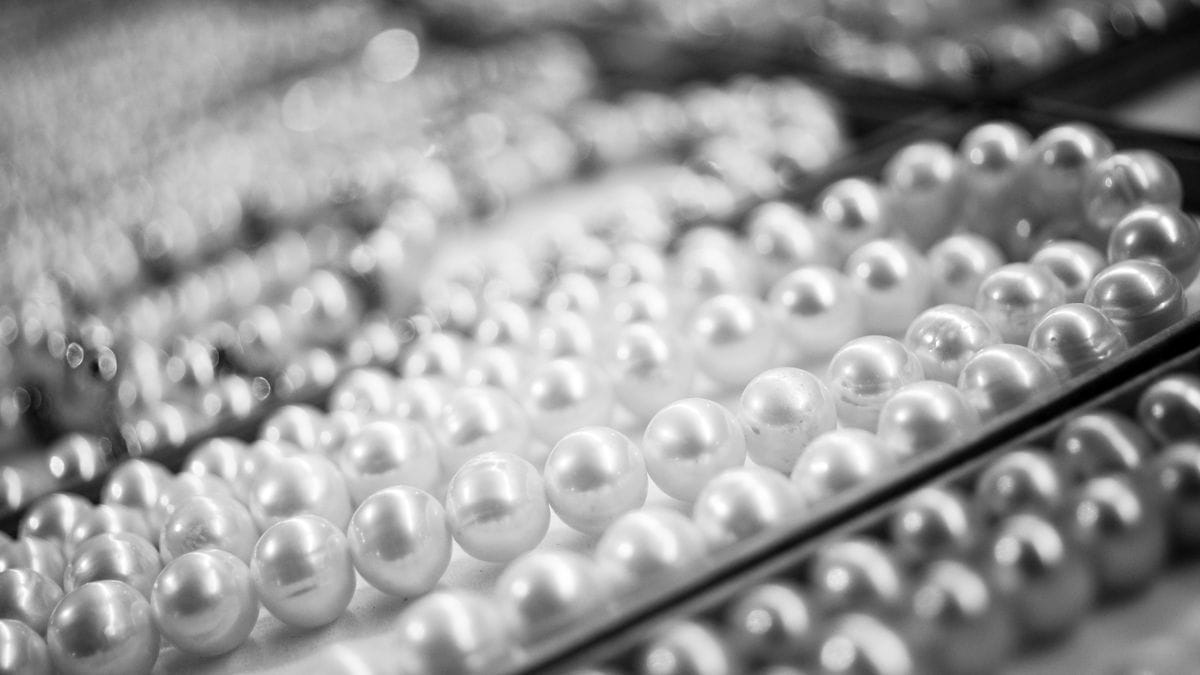
Not everything at Zhuji is a bargain. The market has its own internal quality spectrum that runs from “tourist trap” to “export grade.” Here’s what to understand.
Commercial grade (¥10–50/strand): Thin nacre, uneven shapes, chalky luster. These are the pearls that end up in craft projects and ultra-budget jewelry. Fine for costume pieces, but not what you want in something you’ll wear regularly.
Mid-grade (¥50–200/strand): Decent luster, mostly round, minor surface blemishes. This is the sweet spot for everyday jewelry and where Zhuji’s volume advantage really shows. Strands in this range compare favorably with $100–200 necklaces in Western stores.
Buyers also point out that slightly-imperfect (minor-blemish) strands often cost roughly half of clean-grade ones, and the flaws are invisible at social distance, making them the best value for everyday wear.
Export grade (¥200–800/strand): High luster, near-perfect roundness, clean surfaces. These are matched strands destined for jewelry brands and serious retailers. The best Edison pearls from Zhuji fall into this category.
Top-grade/Collector (¥800+/strand): Exceptional luster, perfect matching, mirror-like surfaces. These pearls are rare even at Zhuji. When you see freshwater pearls competing with Akoya on quality, this is the tier.
FAQ About Zhuji Pearl Market
Can individual buyers visit the Zhuji Pearl Market?
Yes, the Zhuji Pearl Market is open to the public. However, if you don’t speak Chinese and don’t know how to grade pearls, you’ll pay tourist prices, not wholesale. Individual buyers are better off using a trusted sourcing agent or buying from vetted online suppliers who source directly from Zhuji.
How much cheaper are pearls at Zhuji compared to Amazon?
On average, 60–75% cheaper at the wholesale level. But this comparison is slightly misleading because Amazon prices include shipping, returns, platform fees, and brand markup. A fairer comparison: Zhuji wholesale prices are roughly 3–5x lower than US retail prices for the same quality grade.
Do all freshwater pearls really come from Zhuji?
Not all, but the vast majority do. China produces roughly 95 percent of the world’s freshwater pearls, and Zhuji, together with its surrounding region, is the single largest source, handling about 70 percent of the global freshwater pearl trade. Even pearls sold as “Japanese freshwater” often trace back to Zhuji farms, where they were grown before being exported for finishing.
For a deeper dive, see our guide on Chinese freshwater pearls.
What’s the best time to buy at Zhuji Pearl Market?
Late autumn (October–November) after the annual harvest, when inventory is highest and prices are most competitive. Avoid Chinese New Year (January–February) when the market largely shuts down for 2–3 weeks.
Are Zhuji pearls the same quality as Japanese Akoya?
Different, not necessarily worse. Top-grade Edison pearls from Zhuji can match Akoya on luster and beat them on size and color variety.
But the two types have distinct characteristics. Akoya pearls are known for sharper luster and perfect roundness, while Zhuji freshwater pearls offer more size options and lower prices. Learn more in our Akoya vs Freshwater Pearls comparison.
Conclusion: Why Understanding Zhuji Pearl Market Matters for Your Next Purchase
The Zhuji Pearl Market is not a tourist destination. It’s the global engine of freshwater pearl production.
Knowing how it operates, who buys what, and what the actual wholesale price tiers look like gives you something most pearl buyers never get: a reference point grounded in reality, not marketing.
When you shop for pearls online, you’re not just buying a piece of jewelry. You’re paying for a supply chain. Zhuji is the beginning of that chain. The more you understand the source, the better your decisions at the checkout.
Check out our freshwater pearl price guide for current market data, or explore how freshwater pearls are formed to understand what happens before they ever reach the market floor.
Get the Free Pearl Buying Checklist
7 quality checks, real price benchmarks, 5 traps to avoid, one 16-page PDF.
Before You Visit Zhuji in Person
Western buyers who go to Zhuji directly should plan for three realities. Most wholesale stalls quote in Chinese yuan with minimum order quantities that assume resale, not a single gift. Bring a translator or a sourcing agent, because few stalls negotiate in English. And verify any “natural” claim on the spot with a loupe or a local gem lab, since the market moves fast and a good photo is easier to stage than a good pearl. The visit pays off when you buy with proof, not with trust.
Free download. No spam. Unsubscribe anytime.
This zhuji pearl market topic has practical implications for buyers who want to make informed decisions.
When evaluating zhuji pearl market, consider multiple factors rather than relying on a single criterion.
The market for zhuji pearl market continues to evolve, with new trends emerging regularly.
Understanding zhuji pearl market helps buyers avoid common pitfalls and make better choices.