
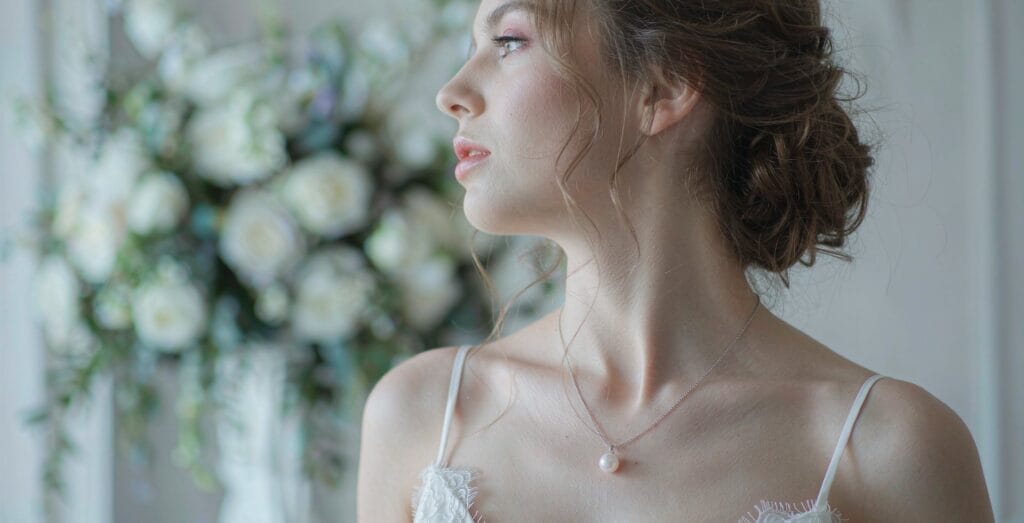
A wedding pearl necklace is not the same purchase for a bride and for a guest. The bride builds her whole look around the gown neckline and becomes the focal point of every photograph, while a guest needs something quiet that reads as respectful instead of competitive. Plenty of buyers grab the first pretty strand they see in a livestream and regret it once the pictures come back. This guide gives you two selection methods, one for the bride and one for the guest, then walks through the pitfalls that waste real money. We cover five necklace styles, how to match them to gown necklines, budget tiers from $50 to $500, and what to avoid when you are buying genuine href=”https://pearldecoded.com/best-freshwater-pearl-necklace/” title=”Best Freshwater Pearl Necklaces for Every Budget: 7 Stunning Picks for 2026″>freshwater pearls.
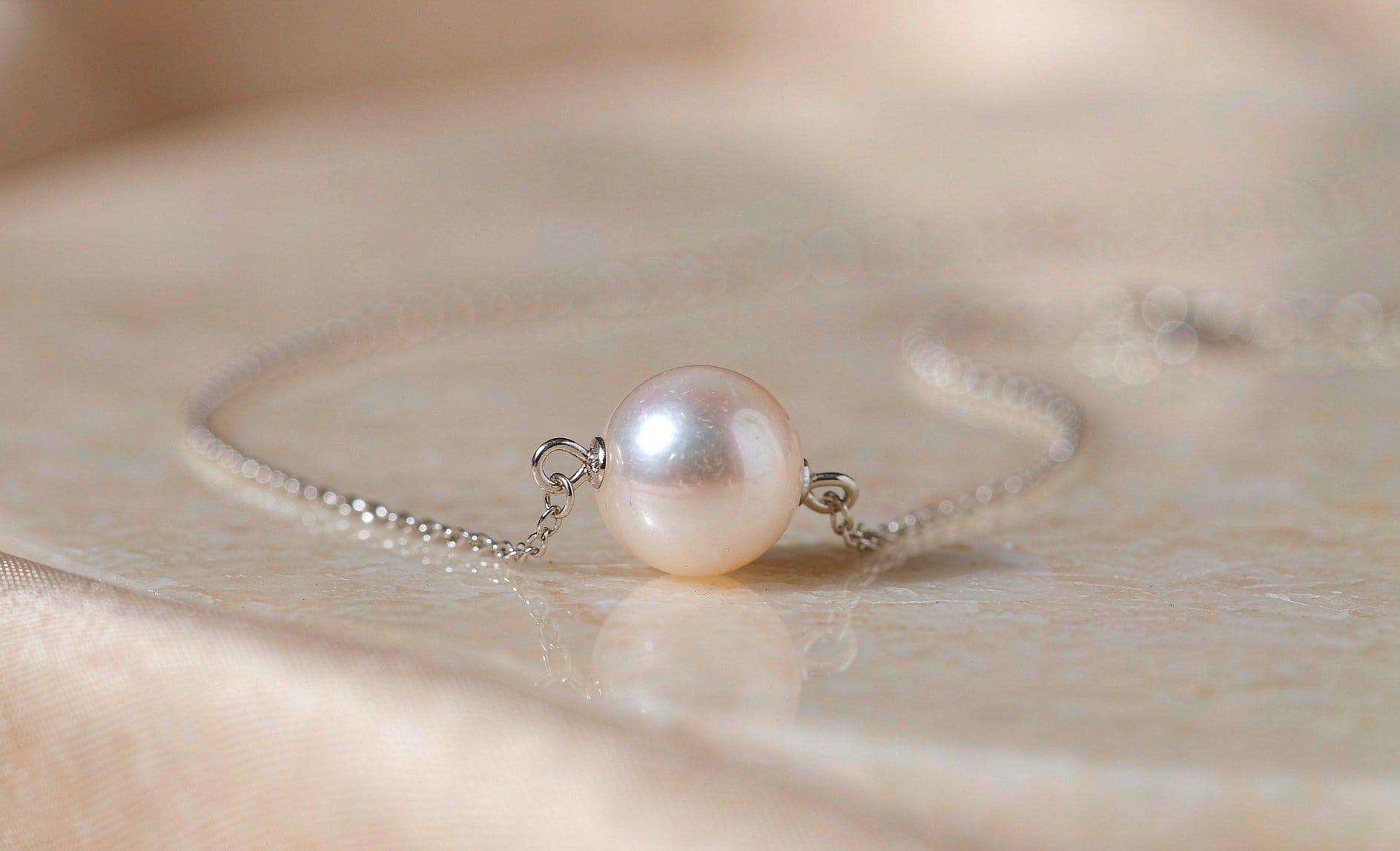
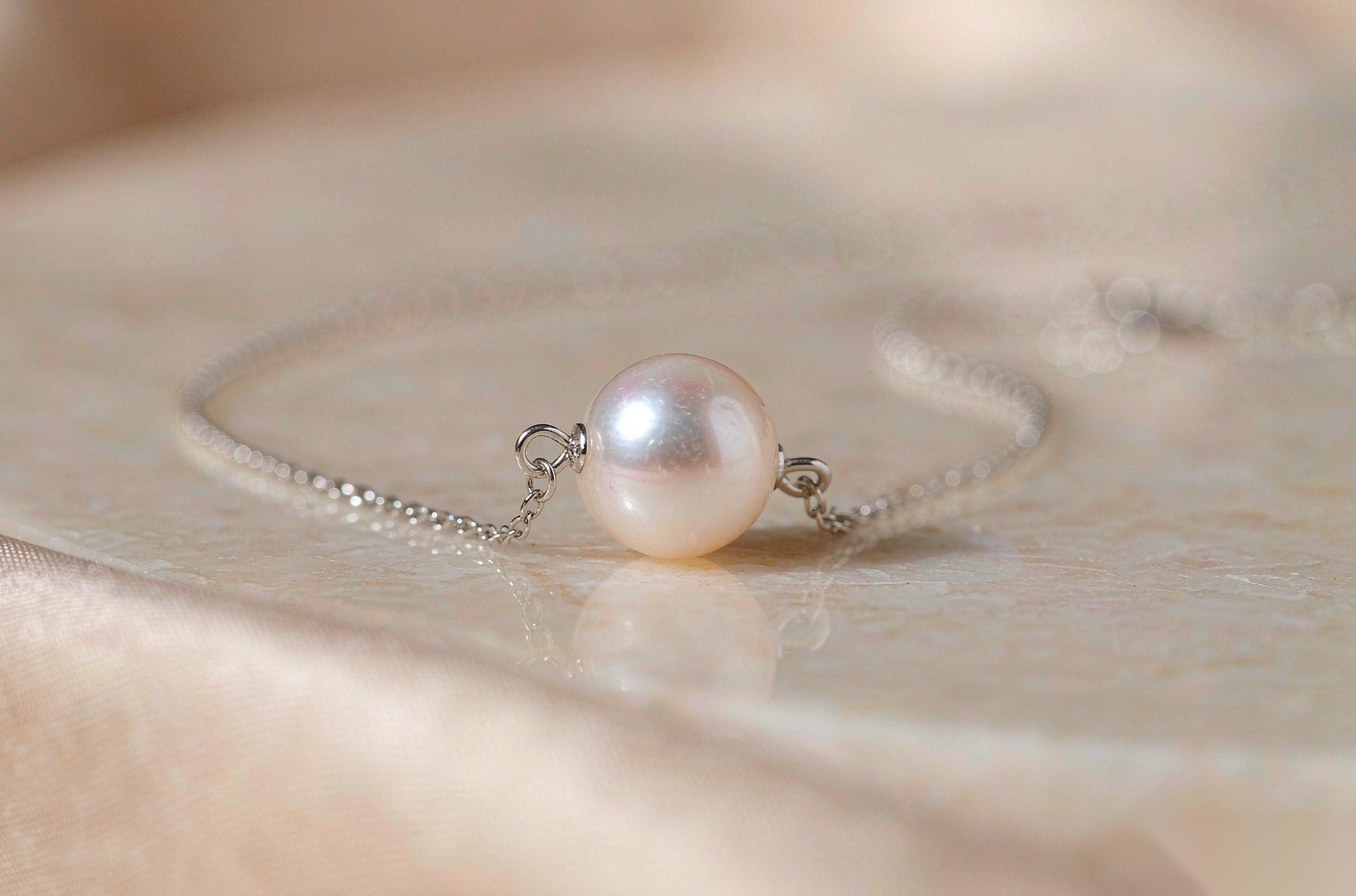
A single pearl on a thin chain is the safest bridal choice and the easiest to get right. At 18 inches the pendant rests just below the collarbone, which works with sweetheart and V neck gowns. The single pearl reads as clean and deliberate rather than busy. For a bride who is unsure, this is the pick that rarely misses. Choose a pearl between 8 and 10 millimeters so it shows in photos without looking heavy. Pair it with stud earrings and the look is complete.
The reason this style travels well is its neutrality. A solitaire pendant does not fight any neckline except a high collar, and it photographs as a clear point of light near the throat. Brides who change their hairstyle between ceremony and reception keep the pendant working in both looks. If you buy one piece for the day, make it this one.
Short chain or choker for strapless gowns
Strapless dresses leave the neck and collarbone open, so a choker or a 14 to 16 inch short strand fills that space the way the dress intends. A choker of 6 to 7 millimeter pearls hugs the base of the throat and gives a modern, structured feel. This style is the answer when the gown does the talking and you only need to frame the face. It also photographs well under bright ceremony lighting because the pearls sit close to the skin.
One caution from the buyer community: a choker that is too tight leaves a red line on the neck in close photos. Aim for a fit where you can slip one finger under the strand. The pearls should rest, not press. A 16 inch length is the safer default for most neck sizes, with 14 inch reserved for slender necks.
Multi-row and gradient chains for the vintage court bride
If your wedding is a formal or court style affair, a multi-row collar or a gradient chain adds the period feel that a simple strand cannot. A three row collar sits like a bib and reads as old world elegance. A gradient chain shifts from small pearls near the clasp to larger ones at the front, which gives movement without a pendant. These styles suit brides wearing long veils, cathedral settings, or heirloom style gowns.
They ask for a higher pearl grade because any dull bead shows across multiple rows. A single off pearl in a three row collar pulls the eye straight to the flaw. Budget for 8 millimeter near round freshwater pearls with strong luster if you go this route. The payoff is a necklace that looks like it came from a different era, which is the point of the court aesthetic.
18 inch simple strand, the guest’s safe pick
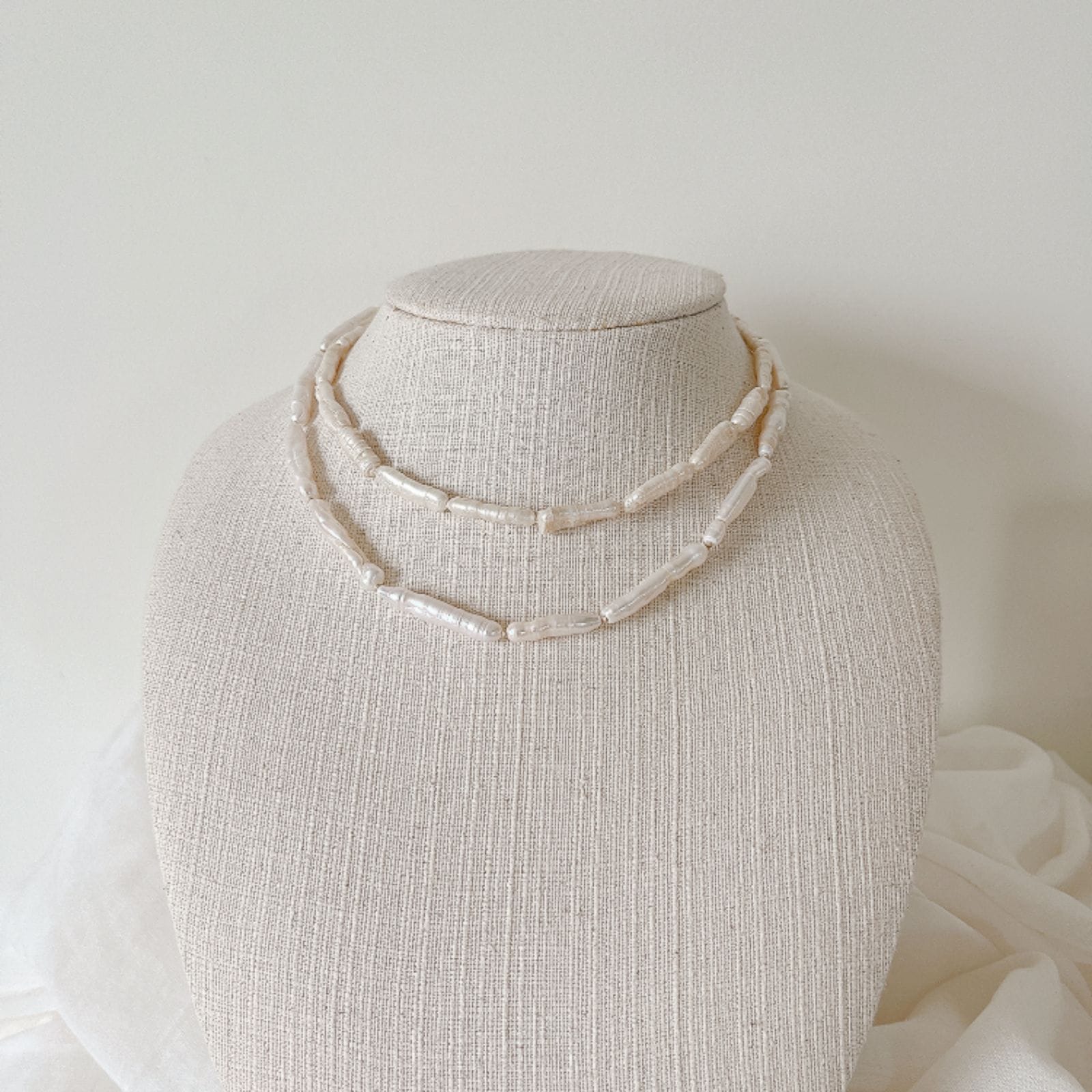
For a guest, an 18 inch strand of uniformly sized pearls is the lowest risk option in the catalog. It works over a crew neck, a wrap dress, or a modest V. The uniform strand says you made an effort without making a statement. Stay under 8 millimeters per pearl so the piece stays understated. Silver or white gold clasp, nothing that catches stage light. This is the necklace you can wear again to dinner and to the office.
Uniform strands are also the easiest to buy blind, which matters for guests ordering online. A consistent 6 to 7 millimeter freshwater strand with decent luster looks right in nearly every casual wedding photo. Keep expectations realistic on price. It is not heirloom grade and should not be presented as one, but it does the guest’s job completely.
Baroque design piece for the statement bride or guest
Baroque pearls are irregular and each one is unique, which makes them good for a design led piece rather than a classic strand. A baroque drop on a minimal chain reads as intentional and a little edgy. A bride who wants something apart from the standard round strand can use one baroque centerpiece to set her apart. A guest can wear a small baroque pendant to show personality while staying within the pearl tradition.
These pieces hide minor surface imperfections better than round pearls, so they can deliver strong value at mid budget. A baroque pearl with a slightly uneven surface still catches light in interesting ways, and the irregular shape reads as crafted rather than flawed. For a modern wedding with a relaxed dress code, baroque is the style that gets compliments without reading as costume.
Match the Neckline
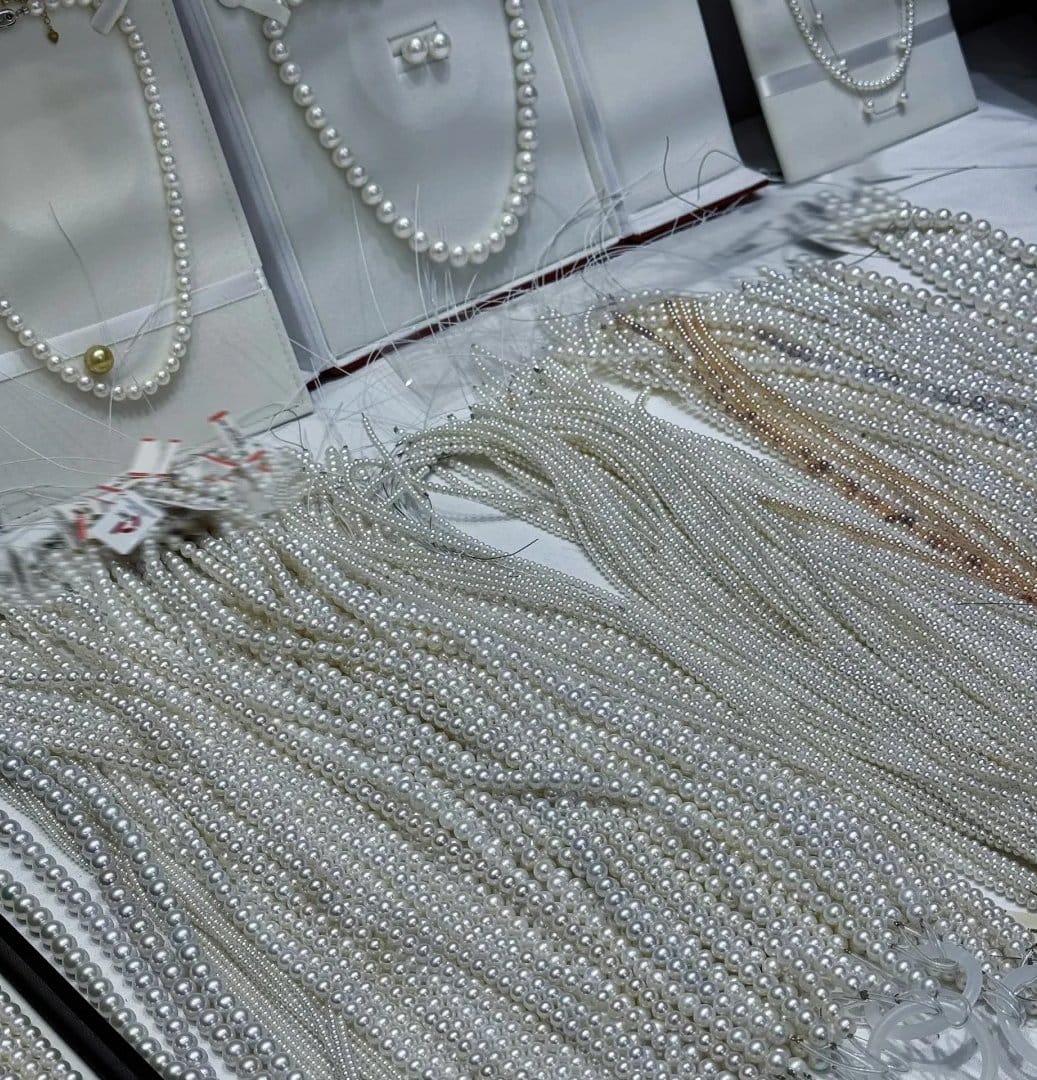
Neckline decides the length of your wedding pearl necklace more than trend does. Get this wrong and even good pearls look off. Here is the practical mapping we use when advising buyers.
Strapless leads to a choker
Strapless and sweetheart gowns expose the most skin up top, so the necklace should sit high and close. A 14 to 16 inch choker or a tight single row matches the line of the bodice. Long pendants drop into empty space and disconnect from the dress. Keep the pearls small to medium and let the open neckline be the feature. The choker frames the face the way the gown frames the shoulders.
Deep V calls for a pendant to elongate
A deep V pulls the eye downward, and a pendant continues that line instead of cutting across it. An 18 inch pendant with a single drop pearl extends the V and slims the torso in photos. Avoid a wide collar here because it blocks the neckline you paid for. The pendant should hang so its tip sits inside the V, not below the waist. The line should feel drawn by the dress, not interrupted by the jewelry.
High neck and vintage call for a long chain or nothing
High neck, halter, and heavy lace collars leave no room for a standard necklace. For these, either go with a long 30 inch rope worn over the dress or skip the necklace and use earrings instead. A long rope with a single pearl station can work if the fabric is plain. If the collar is busy, bare is better than busy. Forcing a choker over a high neck reads as a mismatch in every photo, and the bride ends up removing it before the ceremony anyway.
How guests pair everyday necklines
Guests rarely wear ball gowns, so the rules stay simple. Crew neck and boat neck outfits take an 18 inch strand. Wrap and knit tops take a 20 inch pendant. Off shoulder guest dresses take a choker the same way a strapless bride does. The guest just needs to keep the scale small and the color quiet, ivory or white rather than grey or black for a daytime event. Evening guests can move to grey or peach tones without breaking the dress code.
Budget Tiers
Price tracks pearl grade, metal, and whether the piece is mass assembled or individually matched. Here is how the tiers break down for a wedding. For a wider comparison across materials and lengths, see our best freshwater pearl necklaces guide.
Under $100 for guests and bride’s spare
Below $100 you get freshwater pearls in the 5 to 7 millimeter range on silver plated or stainless chain. For a guest this is enough. The pearls will be slightly uneven and the luster moderate, but at arm’s length they read fine. A bride can also keep one of these as a spare or as a gift for the bridal party. Keep expectations realistic at this price. It is not heirloom grade and should not be presented as one.
The risk at this tier is not the look but the metal. Plated chains flake and stainless can leave a grey mark on fair skin after a full day of wear. Spend the small difference for 925 silver if the wearer has sensitive skin. The pearls at this price are honest freshwater, just smaller and less uniform than the tiers above.
$100 to $300 for the bride’s mainstream choice
This is the bride’s realistic mainstream band. Here you find 7 to 9 millimeter pearls with good luster on 925 silver or 14K gold filled settings. The strands are more uniform and the surfaces cleaner. A solitaire pendant or an 18 inch strand in this range looks right in professional wedding photos. Most brides land here and stay happy. The metal matters at this tier because cheap plating tarnishes and shows in close shots.
Within this band, the jump from $100 to $200 buys you noticeably better luster and roundness. The jump from $200 to $300 mostly buys a better clasp and thicker gold layer. Decide what matters to you. If the necklace is for the day plus a few future wears, silver at $150 is rational. If you want gold that lasts, push to $280 for 14K gold filled.
$300 and up for collector grade worn after the wedding
Above $300 you reach collector grade freshwater pearls, often near round with strong mirror luster, set in solid 14K gold or platinum. These are the pieces you keep wearing after the wedding, to anniversaries and formal dinners. The cost is real but the value is in reuse. A bride who wants one wedding pearl necklace for the day and the next twenty years should save for this tier rather than buying twice.
At this level, buy from a seller who lists the pearl size, the luster grade in plain language, and the metal content, and who accepts returns. The piece should feel substantial in the hand and show a clear reflection when you hold it near a window. That reflection is the test that matters more than any printed grade on the box.
How to Avoid Getting Ripped Off
Before you buy any wedding pearl necklace for a ceremony, read the warnings below. They come from the Xiaohongshu Zhuji buyer community, where real shoppers post what actually arrived versus what was promised in the listing. None of these are our own purchases. They are field notes from buyers who learned the hard way.
Warm showroom lighting hides real quality
Sellers shoot and display pearls under warm, angled showroom lights that flatter luster and hide surface marks. A strand that glows in the listing can look flat in daylight. The community warns to always check pearls under natural daylight before you commit, not under the seller’s lamp. Ask for a photo taken near a window. If the seller only offers studio shots, that alone is a signal. Fake “AAA” grading is common because there is no single enforced standard for freshwater pearls, so a seller can stamp any grade on the box.
The useful habit is to request a short video in daylight, held in a hand, not on a velvet pad. Real pearls show slight variation across the strand. A flawless uniform glow under studio light, with no daylight proof, is the pattern buyers in Zhuji have learned to distrust.
Livestream “wedding special” scams
Livestream sellers push “wedding special” deals with a certificate included, promising natural pearls at a steep discount. Buyers in the Zhuji community report pieces arriving as plastic with a printed certificate. The certificate means little because it can be forged and is rarely tied to a verifiable lab. Treat any certificate that ships loose in the box with the same suspicion as the bead itself. Buy from a shop with a return window you can actually use, and test the piece the day it arrives.
A simple at home check helps. Rub the pearl gently against the edge of a front tooth. A real pearl feels slightly gritty from its layered nacre. Plastic feels smooth and warm. This is not a lab test, but it catches the obvious fakes that show up in these scam streams before the return clock runs out.
Shell pearl passed off as natural
Shell pearl is made by pressing pearl shell powder into a bead, then coating it. It is not a grown pearl and it does not age like one. The Zhuji buyers note shell pearl has a dull, lifeless luster that looks obviously fake once you zoom into HD wedding photos. Natural freshwater pearls show depth and slight variation; shell pearl looks like a uniform painted ball. If the price is too low for the size claimed, assume shell pearl until proven otherwise.
The tell is in the surface under a phone macro lens. Shell pearl shows a flat, even coating with no nacre lines. Natural freshwater pearl shows overlapping layers and tiny irregularities. Brides planning close up photography should insist on a macro shot of the pearl before purchase. The HD photos will reveal the truth either way, so learn it before the wedding, not after.
Complete the Set
A wedding pearl necklace rarely works alone on the wedding day. Build the rest of the look from pieces that match the metal and the pearl tone you already chose. Our guide to bridal pearl earrings shows which studs and drops pair with each necklace length, and it follows the same bride versus guest logic used above. For the full picture across rings, bracelets, and hair pieces, read our pearl wedding jewelry guide before you buy the set as a bundle. Match the earrings to the necklace clasp metal so the whole set reads as one decision, and keep the guest’s earrings as quiet as the necklace.
Frequently Asked Questions
Can a bride wear a wedding pearl necklace?
Yes. Pearls are a long standing choice for brides across many cultures and they pair with most gown styles. The key is matching the necklace to the neckline and keeping the scale appropriate to the dress. A bride in a strapless gown can wear a choker, while a bride in a V neck can wear a pendant. Pearls also photograph well in both bright outdoor light and dim indoor venues, which is why they remain a default for wedding jewelry.
What pearl necklace works for a strapless gown?
For a strapless gown, the wedding pearl necklace that works best is a choker or a 14 to 16 inch short strand, because it frames the open neckline. Small to medium pearls, 6 to 8 millimeters, keep the look modern and clean. Long pendants drop into the bare chest area and break the line of the bodice. The choker should sit at the base of the throat, not on the collarbone, and you should be able to slip one finger underneath.
How much should a bride spend on a wedding pearl necklace?
Most brides land in the $100 to $300 range for a genuine freshwater piece on 925 silver or 14K gold filled settings. Guests can spend under $100 and look appropriate. If the bride wants a piece to wear for years after the wedding, $300 and up buys near round pearls in solid gold that hold up over time. Spend according to how many times you will wear it, not according to the pressure of the day.
Can wedding guests wear pearls?
Yes, guests can wear pearls at most weddings, and they are a safe, respectful choice. The guest should keep the piece understated, an 18 inch simple strand or a small pendant. Heavy statement collars and stones that outshine the bridal jewelry are the wrong move for a guest. Pearls signal celebration without competing for attention, which is exactly what guest attire should do.
Necklace or pendant for a wedding?
A pendant suits V neck gowns and guests who want a single focal point, while a strand or choker suits strapless and high collar looks. The bride can use either depending on the gown, and the guest is usually safer with a pendant or a slim strand. Choose based on neckline first, then on how bold you want the piece to read. Both are valid, and the neckline decides which one wins.
Conclusion: Match the Necklace to the Role
The right wedding pearl necklace follows from three facts about the wearer: the role, the neckline, and the budget. A bride in a strapless gown at a $300 budget wants a choker of near round pearls in gold. A guest at a daytime ceremony under $100 wants an 18 inch simple strand in silver. Write those three answers down before you shop and most of the catalog drops away.
| Role | Neckline | Budget | Pick |
|---|---|---|---|
| Bride | Strapless | $100 to $300 | 16 inch choker, 7 to 8mm |
| Bride | Deep V | $300 plus | 18 inch pendant, near round |
| Bride | High neck | Any | Long rope or earrings only |
| Guest | Crew neck | Under $100 | 18 inch simple strand |
| Guest | V neck | $100 to $300 | 18 inch small pendant |
Use the two methods from this guide, bride and guest, and check every purchase against natural daylight before you pay. The necklace that matches the role is the one you will still be glad to wear in the photos years later.
Related reading: Pearl Gift for Girlfriend: 5 Honest Picks by Budget (2026)