
Pearl vs moissanite looks like a fair fight under showroom lights, because both sparkle and both sit in the “nice gift” price zone. They are not the same kind of object. One is grown by a mollusk, the other is grown in a lab from silicon carbide. This guide compares the four differences that matter when you buy: price, look, durability, and who should buy which.
For the broader material picture, the freshwater vs saltwater vs gold guide sets pearl against other jewelry materials, and the freshwater pearl price guide anchors what pearl really costs by type.
At a Glance
| Dimension | Pearl (freshwater or saltwater) | Moissanite |
|---|---|---|
| Material source | Grown by mollusks (cultured) | Lab-grown silicon carbide |
| Hardness (Mohs) | 2.5 to 4.5 | 9.25 |
| Light character | Soft glow from nacre layers | High fire, strong sparkle |
| Price range | Tens to thousands of dollars by type | Usually well below a diamond |
| Daily durability | Sensitive to acid, perfume, friction | Tough enough for daily wear |
Difference 1: Price
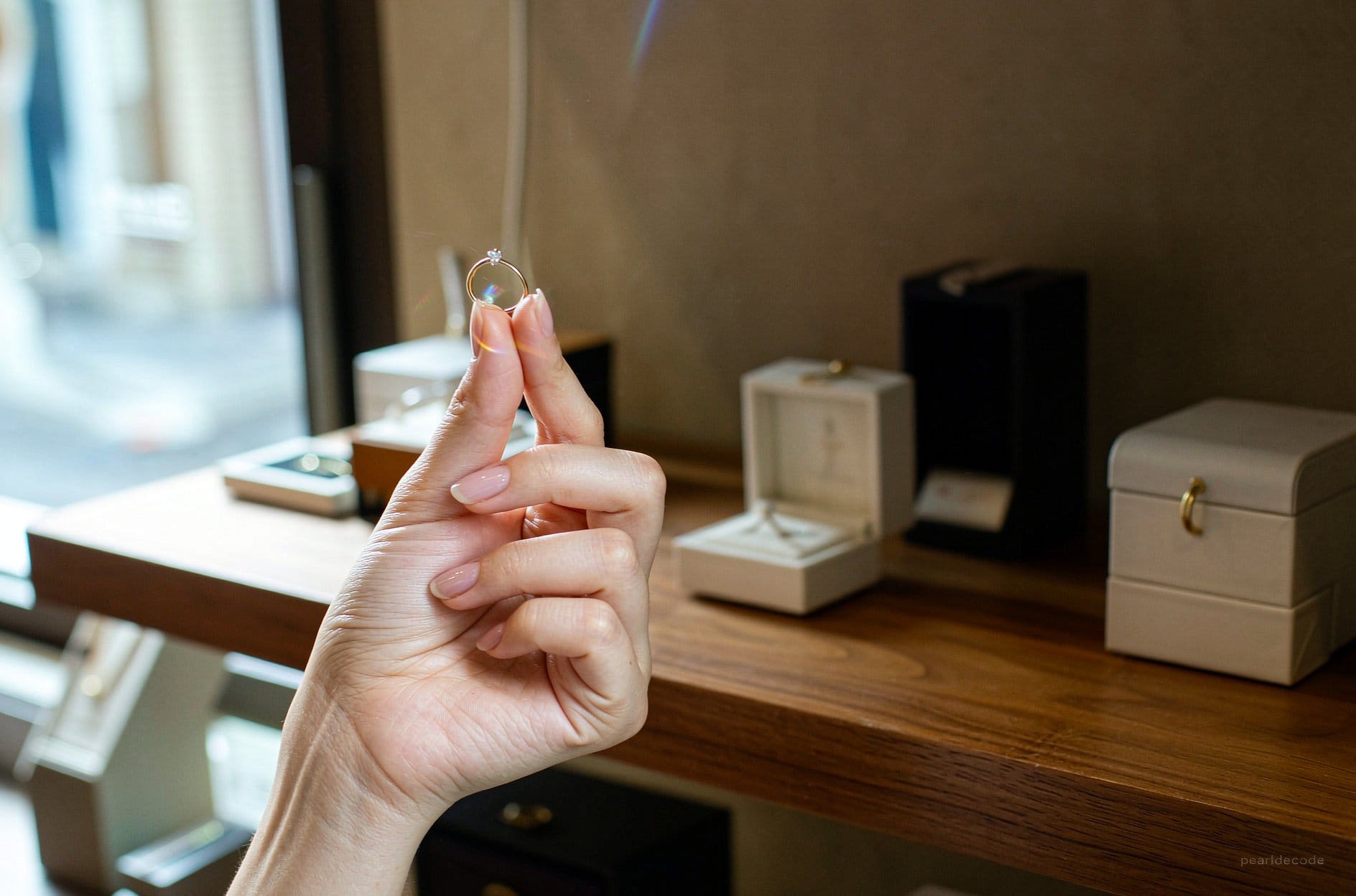
Moissanite is the cheaper buy at the low end. A moissanite stone of a given size costs a fraction of what a diamond of that size costs, because it is lab-grown and supply is not limited by nature.
Pearl price spans a wide band. Freshwater pearl is the affordable end. Akoya, Tahitian, and South Sea pearls move into the hundreds and thousands, driven by size, luster, and rarity. You are not paying for carats alone. You are paying for the pearl variety’s grade and the surface quality.
At a $100 budget, the realistic ceiling differs. $100 buys a credible moissanite piece with a sized center stone. The same $100 buys only a small or lower-grade freshwater pearl item. Spend up, and pearl pulls ahead on presence: a single South Sea pearl at the low end of its range looks like an object, while a $500 moissanite looks like a very good deal.
Size changes the math on both sides. A larger moissanite climbs less in price than a larger pearl, because lab growth scales more predictably than a mollusk does.
Resale is weak on both sides. A pearl sells for a fraction of retail if you ever liquidate it, and moissanite likewise holds little secondary value next to a natural diamond. Buy the stone you want to keep, not the one you hope to flip.
Difference 2: Look and Feel
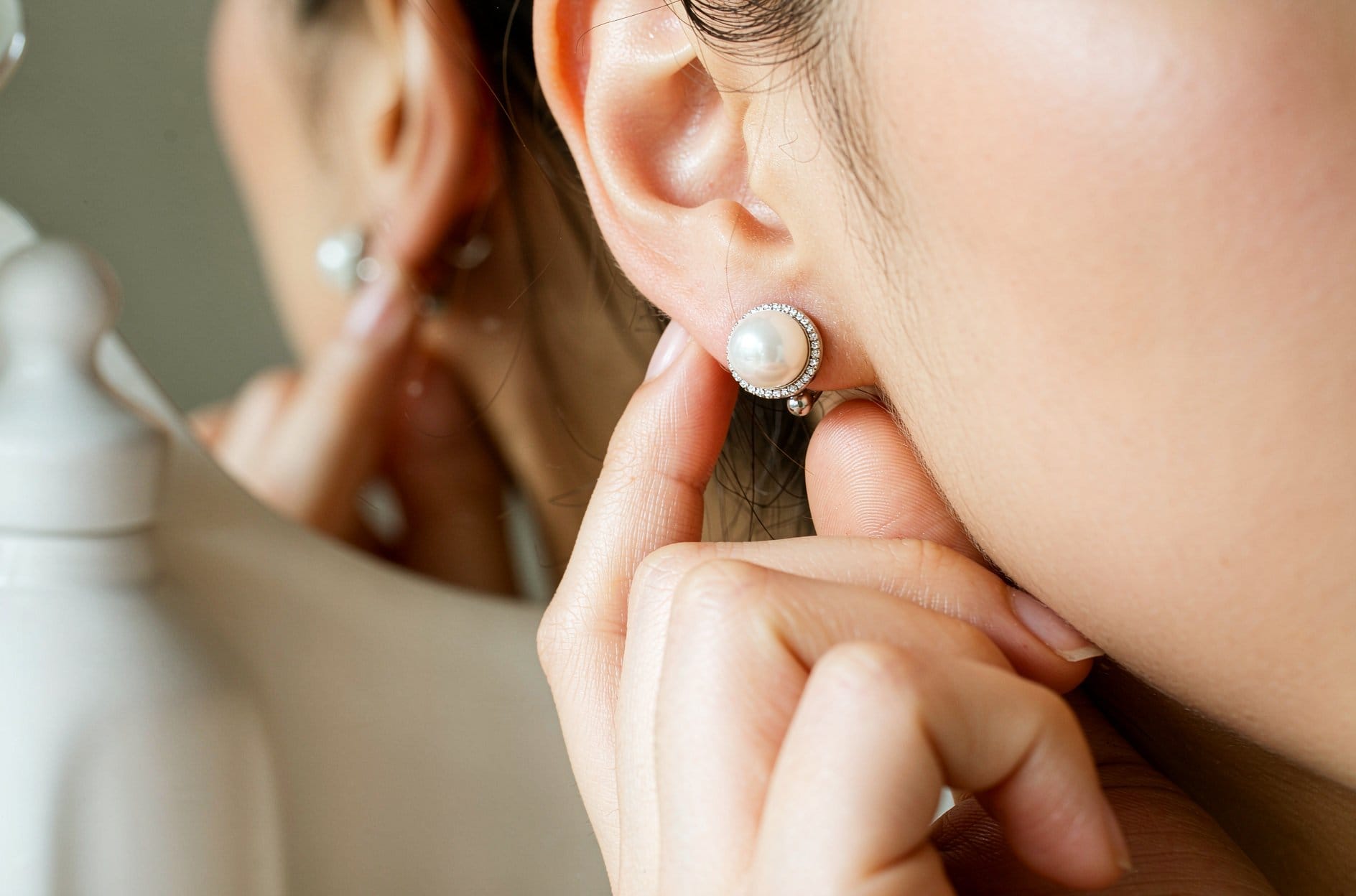
Pearl light is soft. The glow comes from nacre, the layered coating a mollusk builds around the nucleus. Nacre reflects light in a diffuse, skin-warming way that flatters the wearer. This is why pearl reads as classic rather than flashy.
Moissanite light is fire. With a high refractive index, it throws colored sparks and reads as bright, even loud, under direct light. It is the stone people notice across a room.
The setting shifts the read as well. A bezel-set moissanite looks restrained, while the same pearl in a halo reads as celebration rather than quiet wear.
Occasion follows the light. Pearl suits formal events, office wear, and the “quiet luxury” look. Moissanite suits daily wear and anyone who wants their jewelry to announce itself. Neither is wrong. They answer different questions.
Photography favors moissanite. Under phone flash a moissanite reads as bright and expensive, which is why it dominates social feeds. Pearl photographs softer and needs good light to show its glow, so a pearl gift can look plain in a rushed photo even when it looks rich in person. If the recipient posts jewelry online often, that tilt matters.
Difference 3: Durability and Wear
Moissanite wins on durability at 9.25 on the Mohs scale, while pearls sit at 2.5 to 4.5 (the GIA places pearl in this lower range) and need gentler handling. That gap settles most everyday-wear debates.
Moissanite at 9.25 scratches only against diamond and a few lab stones. You can wear it to the gym, the shower-adjacent routine, and years of handwashing without babying it. For a person who wants one ring they never take off, moissanite is the lower-stress choice.
Pearl at 2.5 to 4.5 is vulnerable. Perfume, hairspray, sweat, and even skin oil dull the nacre over time. Pearl should be the last thing you put on and the first you take off, stored away from other jewelry so it is not scratched. The “daily vs occasional” cost is real: a pearl worn every day needs more care and more frequent replacement than a moissanite worn the same way.
Travel tests the rule. A pearl on a beach trip faces sunscreen, salt, and sand; a moissanite shrugs those off. If the gift is for someone who lives outdoors or at the gym, moissanite removes a worry. If it is for someone who dresses for dinners, pearl fits the moment.
Difference 4: Who Should Buy Which
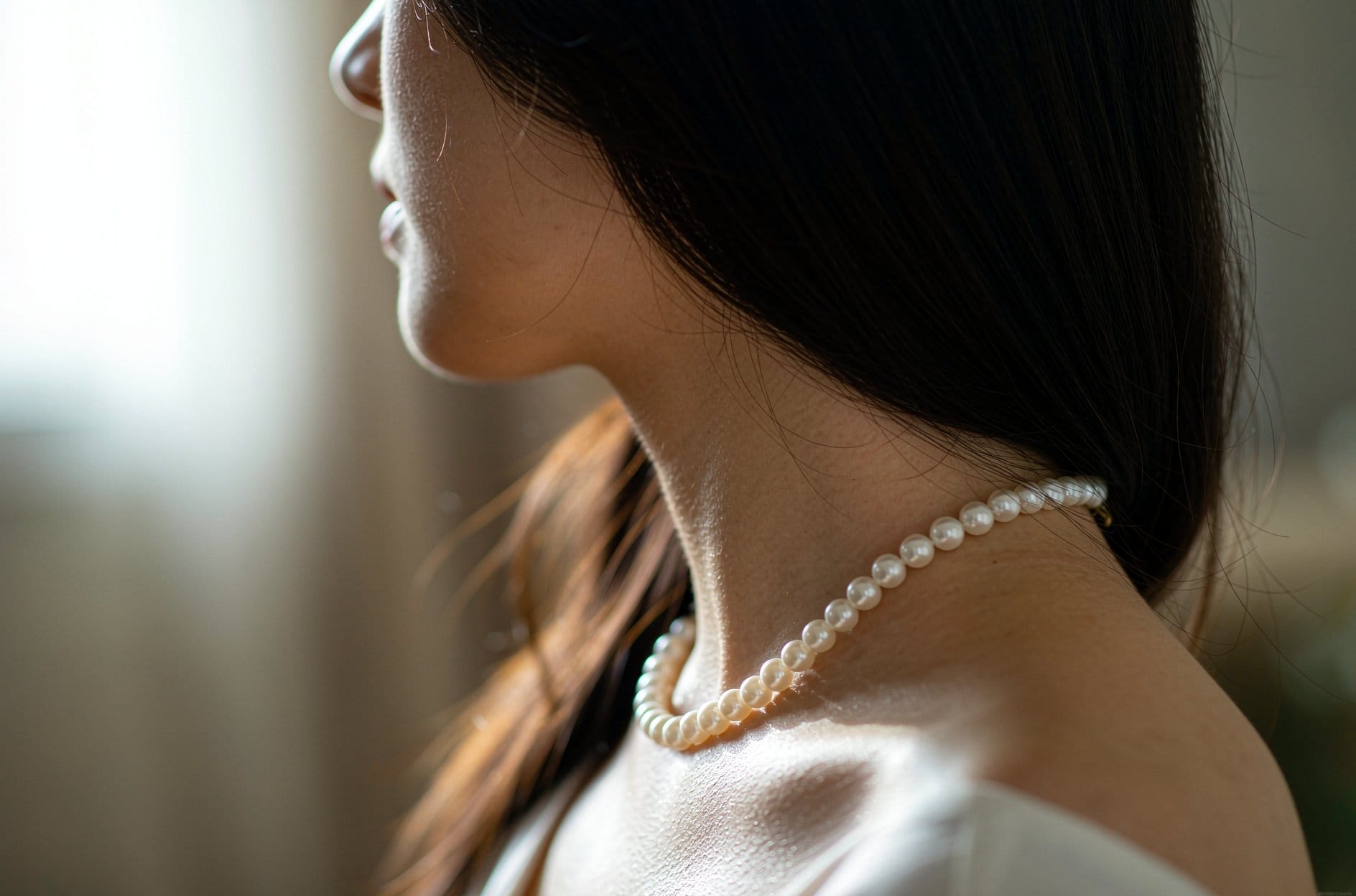
Choose pearl if the goal is classic, formal, or heirloom. Pearl carries a sense of occasion and, for many, a sense of continuity. A pearl strand or stud reads as a settled choice rather than a trend.
Choose moissanite if the goal is wear-it-and-forget-it sparkle. For a daily ring or a piece that has to survive a rough routine, moissanite takes the stress out of daily wear. It is the pragmatic bright stone.
For a gift, read the recipient’s week. A desk-bound person who never removes jewelry wants moissanite, while someone who dresses for events wants pearl.
The middle path is a split. A pearl stud for the ear and a moissanite ring for the hand, bought on one budget, gives both the soft glow and the tough sparkle. This is a common fix for a buyer who cannot pick a side.
Budget discipline helps. A pearl stud and a moissanite stud sit at similar entry prices, so the choice is about feel, not cost, at the low end. Move up, and pearl takes the lead on presence while moissanite stays ahead on toughness. Decide by the wearer’s week, not the wearer’s wish list.
The budget also shifts over time. A first pearl can start under $50 and grow into a South Sea piece as the wearer’s taste firms up, while a moissanite buy tends to stay in one zone: a good stone at a fair price, with little reason to trade up. Neither path is wrong; the question is whether the buyer wants a collection that grows or a single piece that simply lasts.
How to Avoid Getting Ripped Off
Both sides have their scams, and the tells are similar. The notes below come from real buyer experiences shared across Chinese social media, especially Xiaohongshu and the live-stream rooms around Zhuji, a major freshwater-pearl producing area in China.
Pearl side: fakes and inflated grades
Buyers describe shell pearl and plastic bead passed off as natural pearl, with a certificate that cannot be verified and a luster that looks flat in daylight. The shell-pearl tell is uniformity: every bead looks identical, while real pearls vary bead to bead. Grade inflation is common. A seller stamps AAA on a pearl that would not earn it under neutral light.
Moissanite side: confusion tactics
Moissanite has its own confusion problem. Some listings use “mosso diamond” or “moissanite diamond” wording to blur the line with diamond, and a few pass cubic zirconia off as moissanite. Cubic zirconia is softer and cheaper and lacks the fire. Ask for the stone identity in writing, and do not accept a “diamond” label on a moissanite listing.
The move that works for both
See the stone in natural light before paying, and ask for a certificate you can actually verify. Video can hide more than a photo: a seller can light a pearl to fake luster or spin a moissanite to fake fire, so a short clip is not proof. Ask for a still under plain daylight and a written stone identity before you pay. A real grading report names the material, not just a grade. Whether the stone is pearl or moissanite, a verifiable report beats a confident headline. To judge quality before you buy, see the full pearl quality checklist.
Care Basics

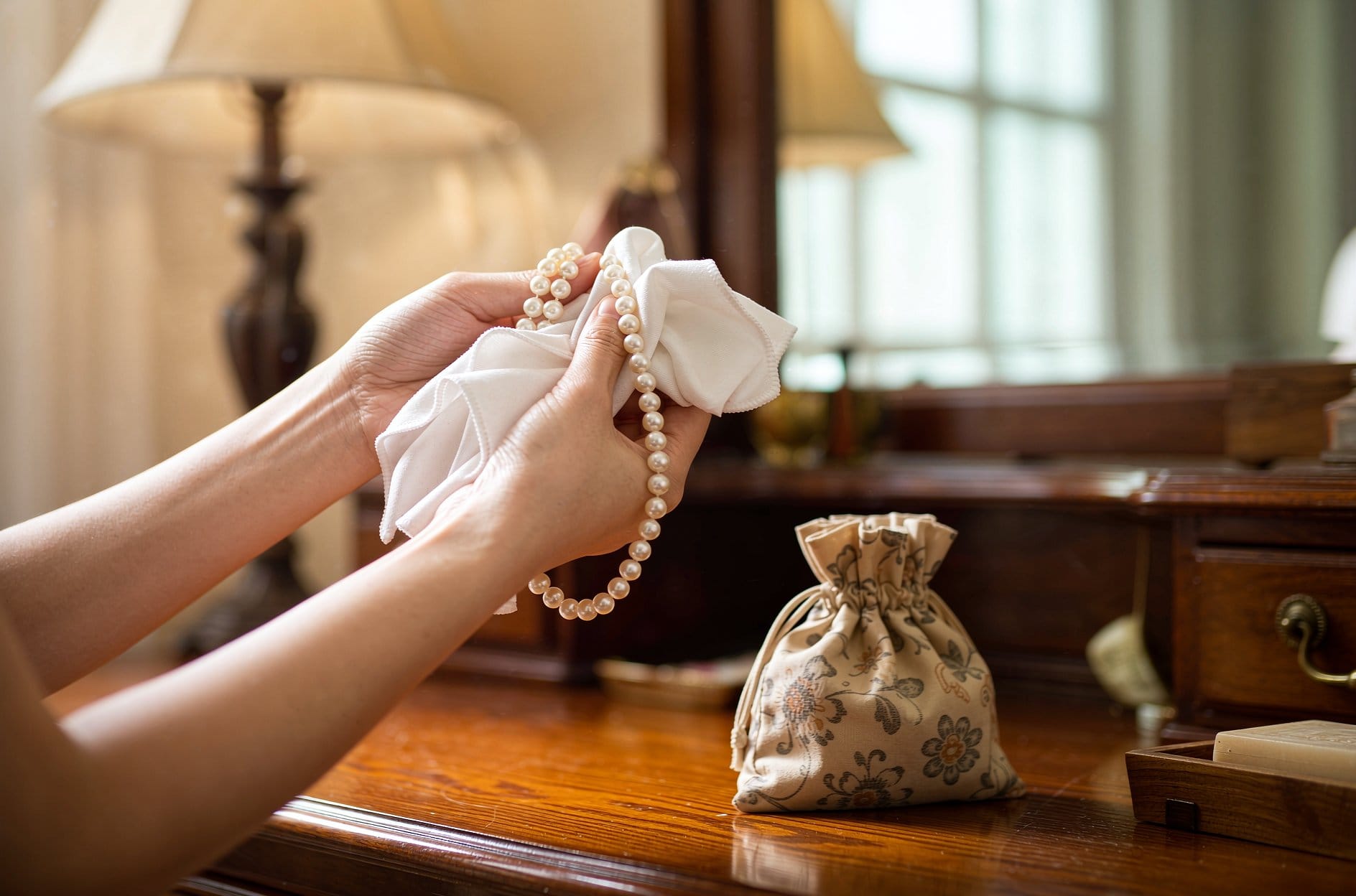
Pearl care is a routine. Wipe it with a soft cloth after wearing, store it flat and separate, and keep it away from chemicals. Pearls are organic and patient, not fragile, but they keep their glow only with basic habits.
Moissanite care is simple. Warm water, a little soap, and a soft brush are enough. It does not react to most everyday chemicals the way pearl does, so the upkeep is closer to a normal gem than a special case.
A moissanite set in prongs still wants a yearly check that the stones sit tight, the same as any mounted gem.
Storage matters more for pearl. Keep pearl away from direct sun and heat, which dry the nacre, and never store it in a sealed plastic bag where moisture can sit. Moissanite tolerates a drawer or a normal jewelry box without special care. If you own both, store the pearl separately so a harder stone cannot scratch its surface.
FAQ
Is moissanite more durable than pearl?
Yes, by a wide margin. Moissanite ranks 9.25 on the Mohs scale, while pearl ranks 2.5 to 4.5. Moissanite handles daily knocks and washing; pearl needs gentler handling and separate storage.
Is moissanite a fake diamond?
No. Moissanite is a distinct lab-grown gem made of silicon carbide, not a diamond and not a counterfeit. It is sold honestly as moissanite by reputable sellers. The confusion comes from loose “diamond” wording in some listings, not from the stone itself.
Which is cheaper, pearl or moissanite?
At the low end, moissanite is usually cheaper for a given visual size, because it is lab-grown. Pearl price climbs fast with type and grade, so a fine South Sea pearl costs far more than a moissanite of similar presence.
Can you wear pearls every day?
You can, but with care. Pearl at 2.5 to 4.5 on Mohs is sensitive to perfume, sweat, and friction, so daily pearl wearers should wipe it after use and store it separately. Moissanite is the lower-maintenance daily choice.
Which looks more expensive, pearl or moissanite?
Pearl reads as expensive through restraint and presence, especially at the South Sea and Tahitian end. Moissanite reads as expensive through brightness and size. “More expensive” depends on whether the viewer prizes subtlety or sparkle.
Is pearl or moissanite better for a gift?
Pearl suits a classic, occasion-led gift for someone who dresses softly. Moissanite suits a daily-wear gift for someone who wants sparkle without anxiety. The split set, a pearl stud plus a moissanite ring, covers both readers.
Conclusion: Pick by Wear Pattern, Not by Sparkle
The honest call is about routine, not shine. Choose moissanite as the daily driver when the piece has to survive a real life. Choose pearl for the occasion, the heirloom feel, and the soft glow that flatters skin. The combined buy, a pearl stud with a moissanite ring, gives both on one budget.
| Wear pattern | Better pick | Why |
|---|---|---|
| Wear it daily, no fuss | Moissanite | 9.25 Mohs, low maintenance |
| Formal or classic occasions | Pearl | Soft glow, occasion presence |
| Tight budget, max sparkle | Moissanite | Lab-grown price logic |
| Heirloom or gift for a soft dresser | Pearl | Presence over brightness |
| Cannot choose one | Split set | Pearl stud plus moissanite ring |