
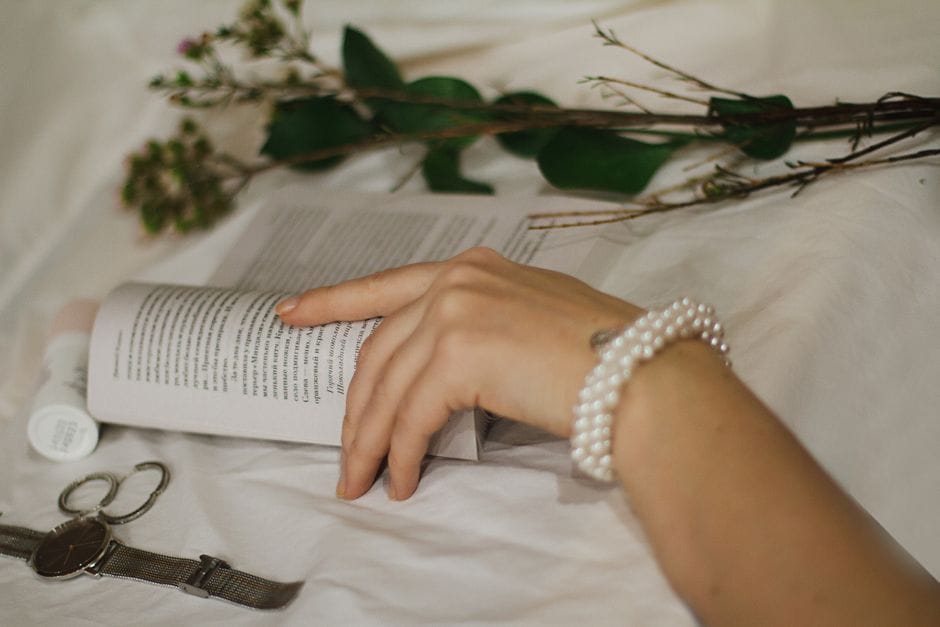
You have seen freshwater pearl bracelets everywhere: on influencers, in department stores, and on that friend who always looks effortlessly put together. But when you try one on, something feels off. It sits weird on your wrist. The pearls look dull next to your skin tone. Or the clasp keeps rotating so the pearls end up underneath where nobody can see them. The problem is not you. The problem is that most buying guides treat every wrist and every bracelet the same. This one does not.
Why a Freshwater Pearl Bracelet Is Harder to Buy Than a Necklace
A pearl necklace hangs. Gravity does the work. The pearls naturally fall into a smooth curve around your neck, and the clasp stays hidden at the back. A bracelet sits flat against your wrist and moves with every gesture. That means three things most buyers overlook:
Pearl rotation is unavoidable. Your wrist twists and turns all day. Unless the bracelet has a weighted clasp or a pearl keeper (a small bar that sits beside the clasp), the pearls will rotate underneath. You end up showing the clasp, not the pearls.
Skin contact is constant. Necklaces rest against your collarbone with minimal contact. Bracelets rub against your wrist skin. Sweat, lotion, perfume, and friction all attack the nacre daily. Freshwater pearls are more durable than Akoya for this reason (thicker nacre, as we explained in our Akoya vs freshwater comparison), but they still degrade faster when worn as bracelets.
Size proportion matters more. A 9mm pearl looks elegant on a necklace. On a small wrist, the same 9mm pearl looks like a golf ball. On a large wrist, 6mm pearls disappear. We covered sizing rules in our freshwater pearl price guide, but bracelets have their own ratio, and most sellers will not tell you that.
The 7 Freshwater Pearl Bracelet Styles Worth Knowing
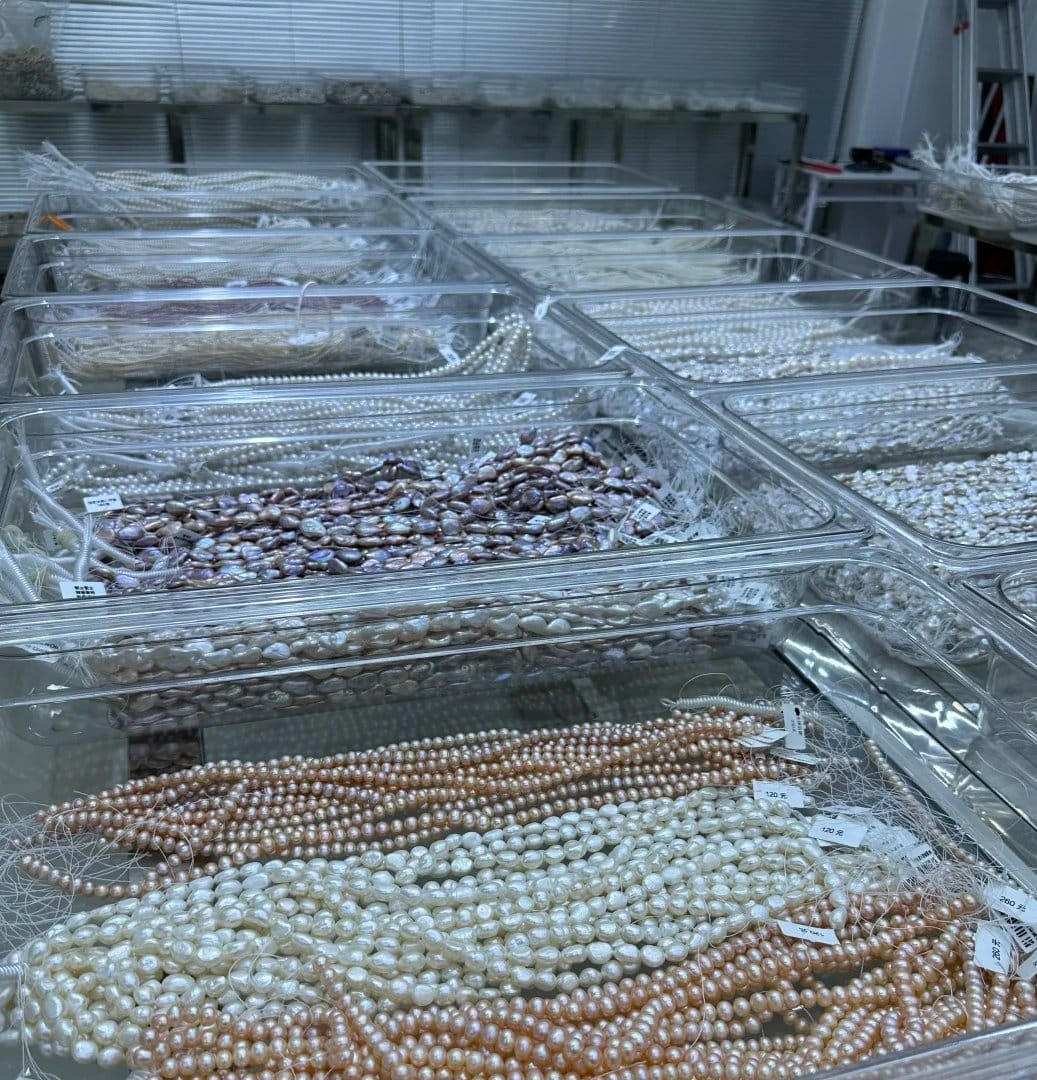
Not every style works for every wrist. Here is the honest breakdown.
1. Classic Single-Strand Stretch Bracelet
The most common and cheapest style. Pearls strung on elastic cord, no clasp, just slide it on.
Best for: Small wrists (under 6 inches), casual wear, stacking.
Problems: Elastic degrades within 1-2 years. The cord snaps and pearls scatter. Also, no clasp means no rotation control. The pearls drift wherever they want.
Sizing tip: Measure your wrist, add 0.5 inches. That is your ideal stretch bracelet length. Too tight = cord breaks faster. Too loose = pearls slide around.
2. Single-Strand Clasp Bracelet (Pearl-Keeper Style)
One strand of pearls with a metal clasp and a pearl keeper, a short bar next to the clasp that acts as a counterweight. This keeps the clasp on the underside of your wrist and the pearls on top.
Best for: Most wrists, everyday to semi-formal wear.
Problems: Slightly more expensive than stretch. The keeper must be positioned correctly during sizing. If the bracelet is too loose, the keeper drifts and the whole thing rotates anyway.
Why this is the best starter bracelet: It solves the rotation problem, lasts longer than elastic, and looks polished. If you are buying your first freshwater pearl bracelet, start here.
3. Multi-Strand Bracelet (2-3 Strands)
Two or three strands of pearls woven together, typically with a box clasp. The multiple strands create visual weight that keeps the bracelet from rotating as much.
Best for: Medium to large wrists, formal occasions, when you want the bracelet to be the focal piece.
Problems: Can look bulky on small wrists. More pearls = higher price. Box clasps can be fiddly to fasten with one hand.
Sizing tip: Multi-strand bracelets should fit snugger than single-strand. Add only 0.25 inches to your wrist measurement. Loose multi-strands slide and tangle against each other.
4. Baroque Pearl Bracelet
Irregularly shaped freshwater pearls, either stretch or clasp style. No two pearls look alike, which gives the bracelet an organic, artistic feel.
Best for: Creative personalities, casual to semi-formal, anyone bored by perfectly round pearls.
Problems: Quality range is extreme. Some baroque bracelets look intentional and artistic. Others look like the seller dumped their rejects into a bag and called it “baroque.” Check our freshwater pearl types guide for what good baroque actually looks like: smooth surface, strong luster, interesting shape (not just lumpy).
Honest note: Baroque pearls are cheaper than round ones, but a well-selected baroque bracelet from a reputable seller costs more than a mediocre round bracelet from a mass-market retailer. The value is in the curation, not the shape.
5. Pearl and Chain Bracelet
Pearls interspersed with metal chain links, gold, silver, or vermeil. The chain segments act as rotation anchors (metal is heavier than pearls), so the bracelet stays positioned better.
Best for: Modern-minimalist style, everyday wear, mixing metals with pearls.
Problems: The chain quality determines the bracelet’s lifespan. Thin, hollow chain links bend and break. Solid links last. Also, cheaper versions use plated chain that flakes within months.
What to check: Ask the seller whether the chain is solid or hollow, and whether the metal is plated or solid. If they cannot answer, walk away.
6. Stretch Stack Set (3-5 Thin Bracelets)
Multiple thin elastic bracelets worn together, each with small pearls (4-6mm). The trend version of pearl bracelets, very popular on social media.
Best for: All wrist sizes (thin bands adapt well), casual wear, the “effortless” look.
Problems: Same elastic lifespan issue as style #1. Multiple bracelets mean multiple cords that will eventually snap. Also, the look ages fast. What feels trendy today may feel dated in two years.
Budget tip: Buy one high-quality clasp bracelet (style #2) instead of five cheap stretch bracelets. One good bracelet outlasts five cheap ones and always looks appropriate.
7. Pearl Bangle (Rigid Band)
A rigid metal bangle with freshwater pearls set along the outer edge. No cord, no elastic, no clasp. It slides over your hand and stays in place.
Best for: Large wrists, dramatic evening wear, collectors who want something unusual.
Problems: Cannot be resized. If it does not fit your hand width (not wrist, you slide it over your knuckles), it will not work. Pearls set into metal cannot be re-strung if the setting fails. And the rigid shape means the pearls face outward at all times. No rotation, but also no flexibility.
Honest verdict: Beautiful but impractical for daily wear. Save this for special occasions.
Freshwater Pearl Bracelet Sizing: The Formula Nobody Shares
Most guides say “add 1 inch to your wrist measurement.” That is wrong for bracelets.
The correct formula:
| Stretch (elastic) | +0.5 inches |
| Single-strand clasp | +0.75 inches |
| Multi-strand | +0.25 inches |
| Pearl bangle | Measure knuckle width, not wrist |
How to measure your wrist: Use a soft measuring tape (or a strip of paper + ruler). Wrap it snugly around your wrist bone, not loose, not tight. That number is your base.
Example: Your wrist measures 6.5 inches. For a single-strand clasp bracelet, buy 7.25 inches (6.5 + 0.75).
Why the formula differs from necklaces: A necklace has slack. It can hang 1-2 inches longer than your neck and still look right. A bracelet sits flat. Too much slack = rotation and sliding. Too little = discomfort and cord strain.
Freshwater Pearl Size on Wrist: The Visual Ratio
The same pearl size looks different on different wrists. Here is the honest visual guide:
| Under 6″ (petite) | 5-6mm | 7mm+ looks bulky; 4mm looks like seed beads |
| 6-7″ (average) | 6-7mm | The universal sweet spot |
| 7-8″ (larger) | 7-8mm | Smaller pearls visually disappear |
| Over 8″ | 8-9mm | 10mm+ exists but gets heavy for daily wear |
One more thing: Oval and baroque pearls read as “smaller” visually than round pearls of the same millimeter measurement, because their width is less than their length. If you have a small wrist and want a 7mm look, a 7-8mm oval pearl bracelet will achieve that visual without the bulk.
What to Skip: 3 Red Flags in Freshwater Pearl Bracelets
- “AAA Grade” without specifics. Sellers slap “AAA” on everything. Real AAA means sharp luster (you can see your reflection), smooth surface (under 5% blemishes), and near-round shape. If the photo shows cloudy pearls with visible bumps, that is not AAA, regardless of what the listing says. Our freshwater pearl grading guide explains what each grade actually means. The Gemological Institute of America (GIA pearl guide) also defines luster grades differently from most retailers, which is worth checking before you trust any seller’s label.
- Dyed pearls sold as “natural color.” Freshwater pearls come naturally in white, cream, peach, and lavender. Any vivid color (deep purple, bright pink, electric blue) is dyed. Dyed pearls are not inherently bad, but they should be priced lower and labeled honestly. If a seller claims “natural lavender” and the color is unnaturally uniform across every pearl, it is dyed. Read our guide on how to tell if freshwater pearls are real for testing methods that also catch dyed pearls. The International Pearl Association (pearl identification standards) provides a reference for natural vs treated color classification.
- Silk-threaded bracelets without knots between pearls. Silk thread is traditional for pearl necklaces and stretches gracefully. On bracelets, silk stretches faster because of constant wrist movement. If the pearls are not individually knotted on the silk, one break = total loss. Clasp bracelets with steel wire or synthetic thread last significantly longer for wrist wear.
Freshwater Pearl Bracelet Care: 3 Rules Specific to Bracelets
General pearl care applies (wipe after wearing, store flat, avoid chemicals; see our pearl cleaning guide). But bracelets need three extra rules:
Take it off before washing your hands. Soap + warm water + friction = the fastest way to degrade nacre on a bracelet. Necklaces rarely touch soap; bracelets touch it every hand-wash.
Store flat, not hanging. Hanging stretches the cord (elastic or thread) over time. Necklaces can hang because gravity pulls them into their natural curve. Bracelets should be laid flat in a soft pouch or lined box.
Rotate between 2-3 bracelets. Pearls need “rest days” to reabsorb ambient moisture. If you wear the same bracelet every day, the nacre dries out and cracks faster. Having two and alternating extends the life of both.
FAQ
Can I wear a freshwater pearl bracelet every day?
Yes, if you choose a clasp style (not stretch), take it off for hand-washing, and follow the care rules above. Stretch bracelets will not survive daily wear for more than a year or two.
How many freshwater pearl bracelets should I own?
Two is ideal: one for daily wear (6-7mm clasp style) and one for occasions (7-8mm or multi-strand). More than three means some sit unworn, which is not bad for the pearls (rest days help) but is unnecessary spending.
Are freshwater pearl bracelets a good gift?
Better than necklaces for gift-giving, because sizing is more forgiving. A bracelet that is 0.25 inches too loose still looks fine, while a necklace that is too long looks sloppy. Just avoid stretch styles as gifts; they look cheap and break fast.
What metal clasp should I choose?
Sterling silver for everyday (affordable, durable). 14K gold for special pieces (won’t tarnish, matches gold-tone pearls). Avoid plated clasps. They tarnish within months and the flaking metal can scratch the pearls beside the clasp.
Why are freshwater pearl bracelets cheaper than Akoya bracelets?
Two reasons: freshwater pearls cost less per piece (higher production volume, as we explain in our pearl price guide), and freshwater pearls have thicker nacre so they survive wrist friction better. You are not paying extra for fragile gems that need delicate handling.
Choosing a freshwater pearl bracelet is not about finding the prettiest photo online. It is about matching the right style to your wrist size, your daily habits, and your actual wearing conditions. A 6mm clasp bracelet with a pearl keeper will serve you better than three stretch bracelets that snap within two years. Start simple, buy once, and let the bracelet earn its place on your wrist every day.
Related Articles
- Best Pearl Stud Earrings: 7 Picks That Actually Look Expensive
- Best Freshwater Pearl Earrings Guide
- Best Freshwater Pearl Necklace: Avoid These 5 Costly Mistakes
- Can Freshwater Pearls Get Wet?
- How to Clean Your Pearl Jewelry
Authoritative Resources
Get the Free Pearl Buying Checklist
7 quality checks, real price benchmarks, 5 traps to avoid , one 16-page PDF.
Free download. No spam. Unsubscribe anytime.