You have roughly $100 and want a pearl necklace under $100 that looks genuine without breaking the bank. The worry is fair enough: at this price point the market fills up fast with dyed freshwater passed as premium, glass beads dressed in nacre-speak, and grade labels that mean nothing outside one shop. This guide cuts through that noise and shows what $100 actually buys you, where the shortcuts hide, and how to spend so the strand on your neck is genuine and worth every dollar. By the end you will know which tier fits your budget, which red flags make you walk away, and how to get the best possible strand without paying for hype.
At a Glance: What $100 Actually Buys You
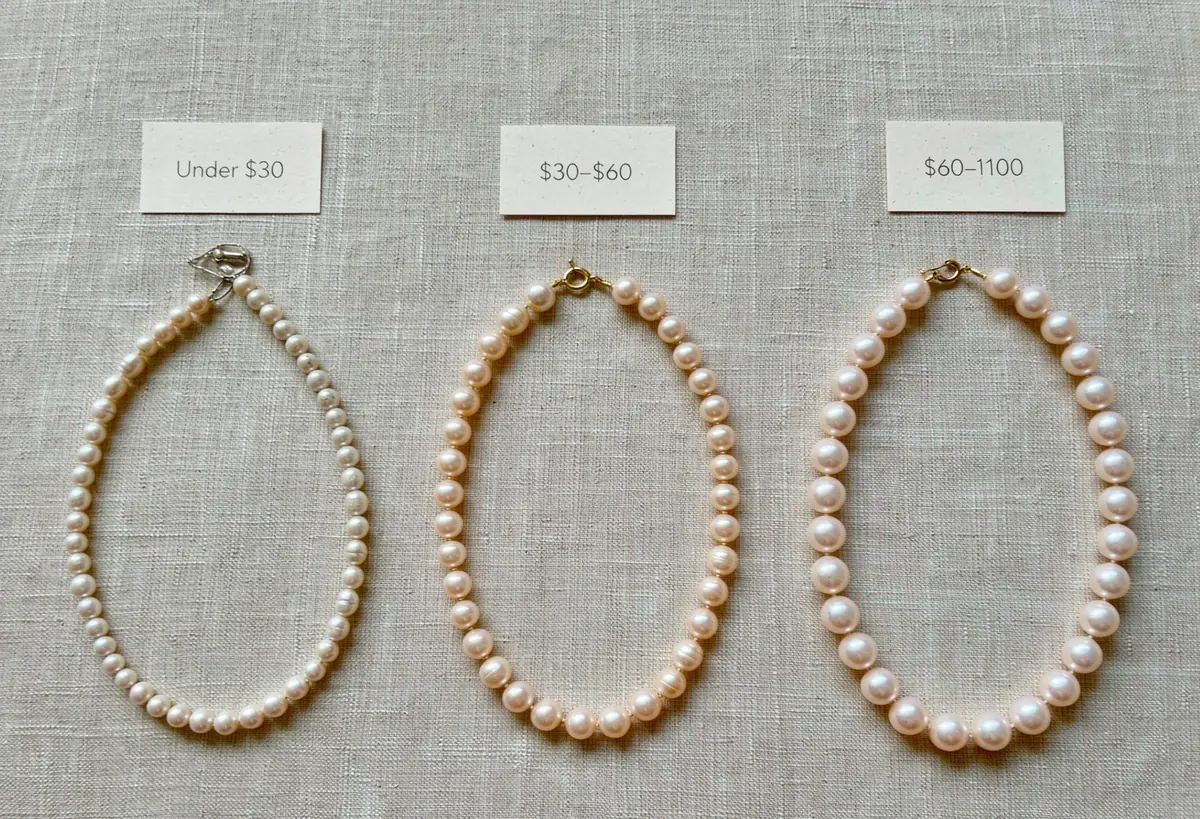
The fastest way to set expectations is a tiered view. Under $100, pearl necklaces split into three rough bands. Each band trades off size, luster, shape, and design against price. The table below shows what shifts as you move from entry-level to near-premium within this budget.
Price Tier
Bead Size
Luster & Shape
What to Expect
< $30
4 to 6 mm
Weak to moderate; baroque or off-round
Wearable from a distance; not for close inspection
$30 to $60
6 to 8 mm
Decent luster; near-round common
Daily-wear quality; good value zone
$60 to $100
8 to 9+ mm
Strong luster; near-round to round
Near the quality line entry; best this budget offers
The Honest Truth About $100 Pearl Necklaces
What This Budget Cannot Buy
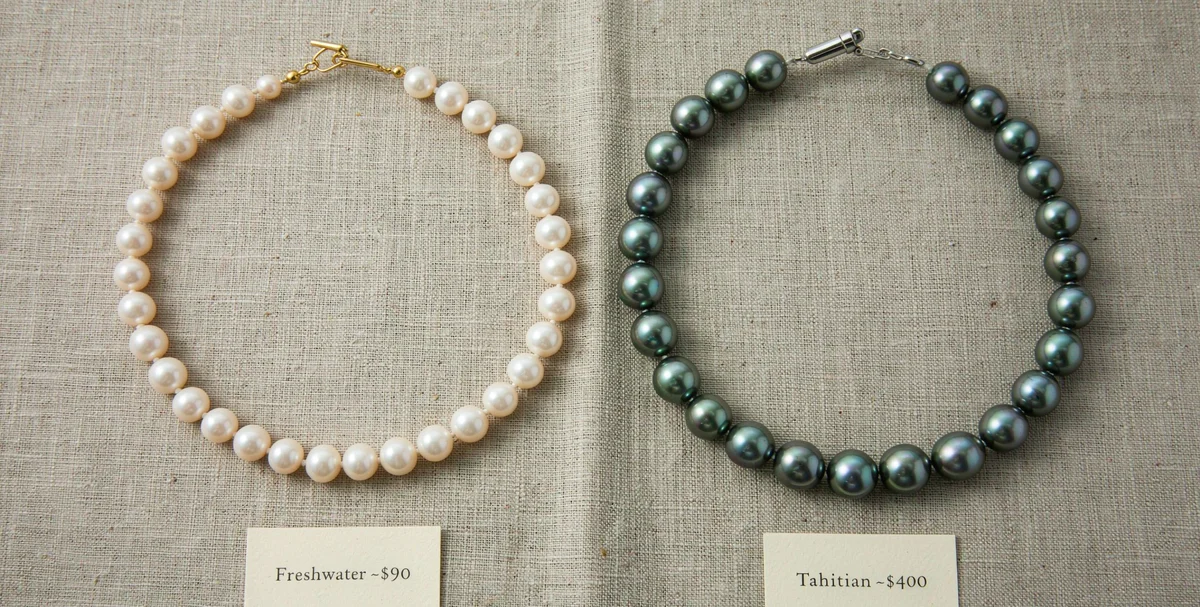
Be clear on the ceiling first. At $100 you will not find 10 mm or larger round pearls with strong mirror-like luster. You will not find seawater pearls, whether Akoya or South Sea, in any meaningful size or grade. You will not find top-tier laboratory-certified strands with matching scores per pearl. Any listing that promises those specs at this price is either mislabeled, treated, or not what it claims. For a broader look at how pearl types compare beyond this budget, the freshwater versus saltwater basics covers the full spectrum.
What You Can Buy
What $100 does buy is solid freshwater pearl territory. Expect 6 to 8 mm beads in near-round to slightly off-round shapes, with moderate to good luster suitable for daily wear. Most strands at this price are non-nucleated freshwater pearls, meaning the entire bead is solid nacre from surface to center. China dominates global freshwater output at around 95 percent, according to trade data, and the trading hub of Zhuji (Shanxiahu town) handles roughly 70 percent of that production, per Xinhua and China Daily reporting. That concentration means supply is deep and prices stay competitive, but it also means quality varies widely unless you know what to inspect.
Expectation Management
Treat $100 as the quality-line entry point, not the collector line. A strand in this range should look good at arm’s length, hold up to regular wear, and give you the feel of real pearls without the investment-grade price tag. It is not heirloom jewelry, and it is not the strand you pass down for generations. It is honest, everyday adornment at an honest price. Set that frame before you shop and the buying decisions become much clearer.
Price Tiers: What Each Budget Level Really Gets
Entry Tier: Under $30
The under-$30 band is dominated by small-bead strands, baroque shapes, and fashion-forward designs that use pearls more as accents than as the star. Beads typically run 4 to 6 mm. Luster ranges from weak to acceptable. Shapes lean heavily toward baroque, rice, or irregular. These pieces work well for casual layering, gifts where presentation matters more than gemological rigor, or first-time pearl wearers who want to test the look without commitment. The trade-off is durability and refinement: clasps tend to be base metal, stringing may be basic, and close inspection reveals surface blemishes that higher tiers would reject. Wearable, yes. Investment-grade, no.
Main Tier: $30 to $60
This is the sweet spot for most first-time buyers. Beads land in the 6 to 8 mm range. Near-round shapes become common, and luster reaches a level that catches light pleasingly. Strands in this band look like proper pearl necklaces at conversational distance. The value proposition here is strong: you get real freshwater pearls, decent sizing, and enough luster to signal “this is jewelry” rather than “this is costume.” For a structured inspection checklist that works at any price point, the pearl quality checklist walks through exactly what to examine on any strand before you pay.
Advanced Tier: $60 to $100
Spend closer to $100 and you enter the upper end of what freshwater can deliver at retail. Beads push toward 8 mm and occasionally beyond. Luster shifts from “decent” to genuinely attractive, with some strands showing warm orient or color play that surprises buyers who expected dullness at this price. Shape consistency improves, with near-round to round becoming the norm rather than the exception. Design options broaden too: graduated strands, multi-color arrangements, and pieces with better metalwork (sterling silver clasps, silk-knotted threading). This tier sits right at the quality line. It is not South Sea territory, but it is the best freshwater has to offer before the price jumps into a different category entirely.
How to Maximize Value at $100
Luster Over Certificate
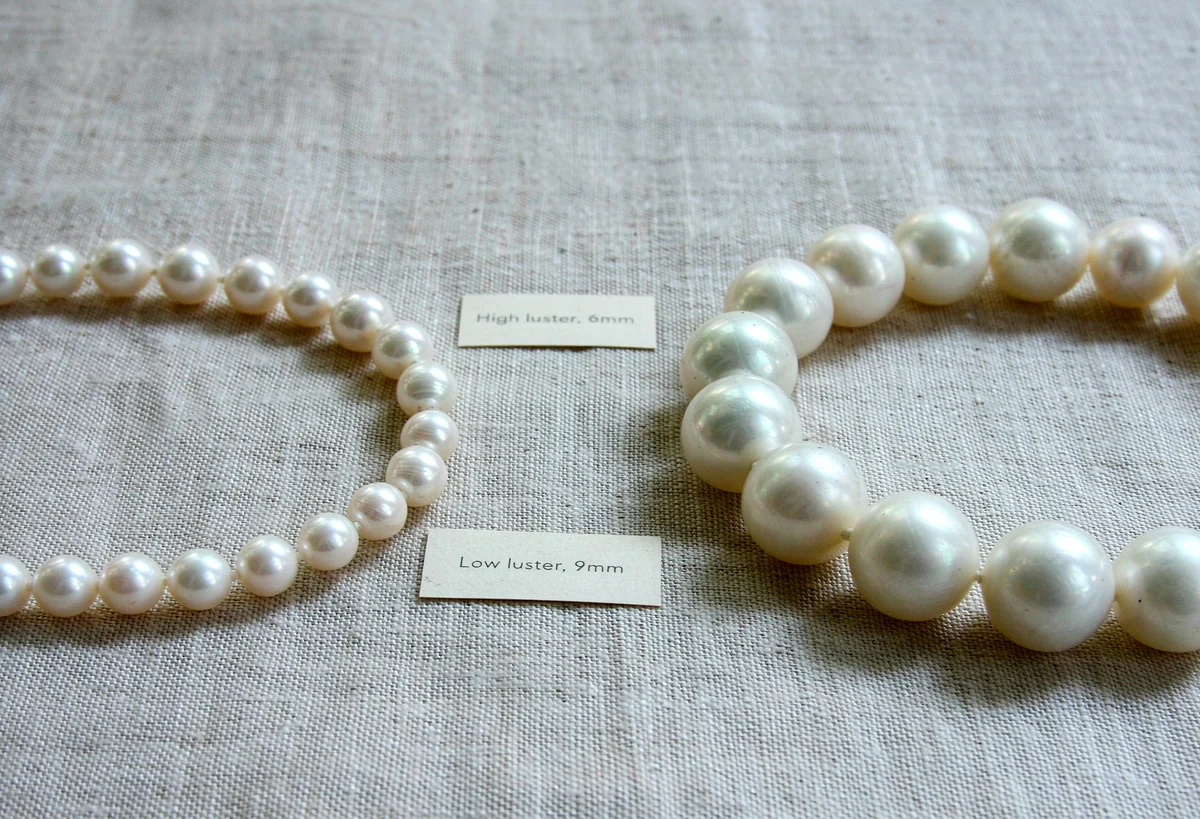
At this price, a laboratory certificate adds cost but rarely adds decision-making power. Most sub-$100 strands are sold without certs because the grading cost would exceed a meaningful share of the necklace price. What actually tells you quality is luster: hold the strand under natural light and watch how it reflects. Sharp, bright reflections that seem to glow from within indicate solid nacre and careful processing. Flat, cloudy reflections suggest either low-grade material or surface treatment. Trust your eyes more than a paper that may or may not accompany the strand. For deeper reading on how nacre and origin affect what you see, the South Sea versus freshwater comparison breaks down the visual differences in detail.
Size Versus Luster Trade-off
A common mistake is chasing bead diameter at the expense of luster. An 8 mm strand with weak, hazy luster looks cheaper than a 6.5 mm strand with bright, mirror-like reflection. In the under-$100 market, smaller beads with strong luster almost always outperform larger beads with dull ones in terms of perceived quality and wearing satisfaction. If you must choose between “bigger” and “brighter,” pick brighter. The size difference of 1 or 2 mm is barely noticeable to anyone but the wearer, while the luster difference is visible across a room.
Channel Choice: Reliable White-Label vs Brand Premium
Branded pearl jewelry carries a markup that often has little to do with the pearls themselves. A white-label strand sourced directly from a Zhuji-based wholesaler and sold through a reputable online platform frequently matches or beats branded quality at half the price. The key filters are seller reputation (consistent reviews over time, not just five-star blasts), return policy (at least 14 days, no restocking fee), and photo authenticity (unfiltered images under neutral lighting). Avoid listings where every photo looks like it was shot through a soft-focus filter with studio lighting cranked to maximum warmth. Those photos hide more than they reveal.
Where $100 Necklaces Fall Short
Dyed Freshwater Passed as Premium
The single most common trap in this price range is dyed freshwater pearls marketed as natural-color or even misidentified as a more expensive type. Dye processes have become sophisticated enough that casual buyers cannot always tell by eye. The telltale signs are flat, uniform color saturation (natural pearls show depth and gradient), dye pooling near drill holes or in surface cracks, and pricing that seems too good for the claimed type. A strand advertised as “golden South Sea style” at $89 is almost certainly dyed freshwater. Legitimate golden South Sea strands start well above $300 and climb steeply from there. The GIA pearl education section provides reliable reference images for natural versus treated color if you want to train your eye.
Accessory Quality: Clasps, Chain, and Thread
The pearls themselves are only part of the equation. At budget price points, manufacturers cut costs on everything that is not the bead. Clasps may be plated base metal that tarnishes or irritates sensitive skin within weeks. Threading may be simple knotting rather than silk-knotted restringing, meaning one broken thread scatters beads across the floor. Chain sections in mixed-metal designs (common in fashion pearl pieces) may be thin and prone to kinking or breakage. Inspect the hardware as carefully as the beads. A beautiful strand with a cheap clasp is a repair waiting to happen. Budget an extra $15 to $25 for professional restringing and clasp upgrade if you plan to wear the piece regularly.
How to Avoid Getting Ripped Off Under $100
The under-$100 market has more genuine deals than scams, but the scams exist and they follow predictable patterns. Know the three most common pitfalls before you click buy.
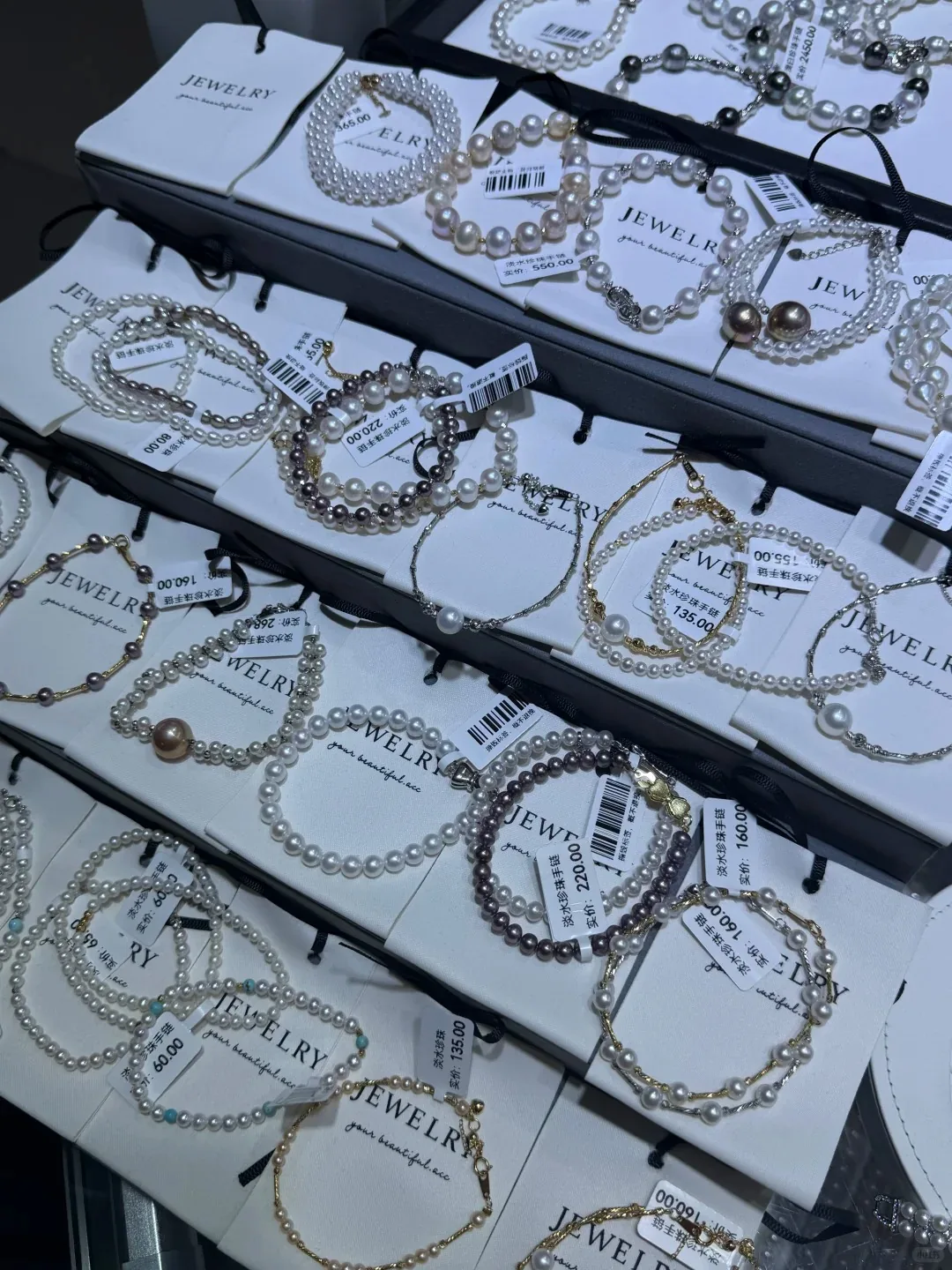
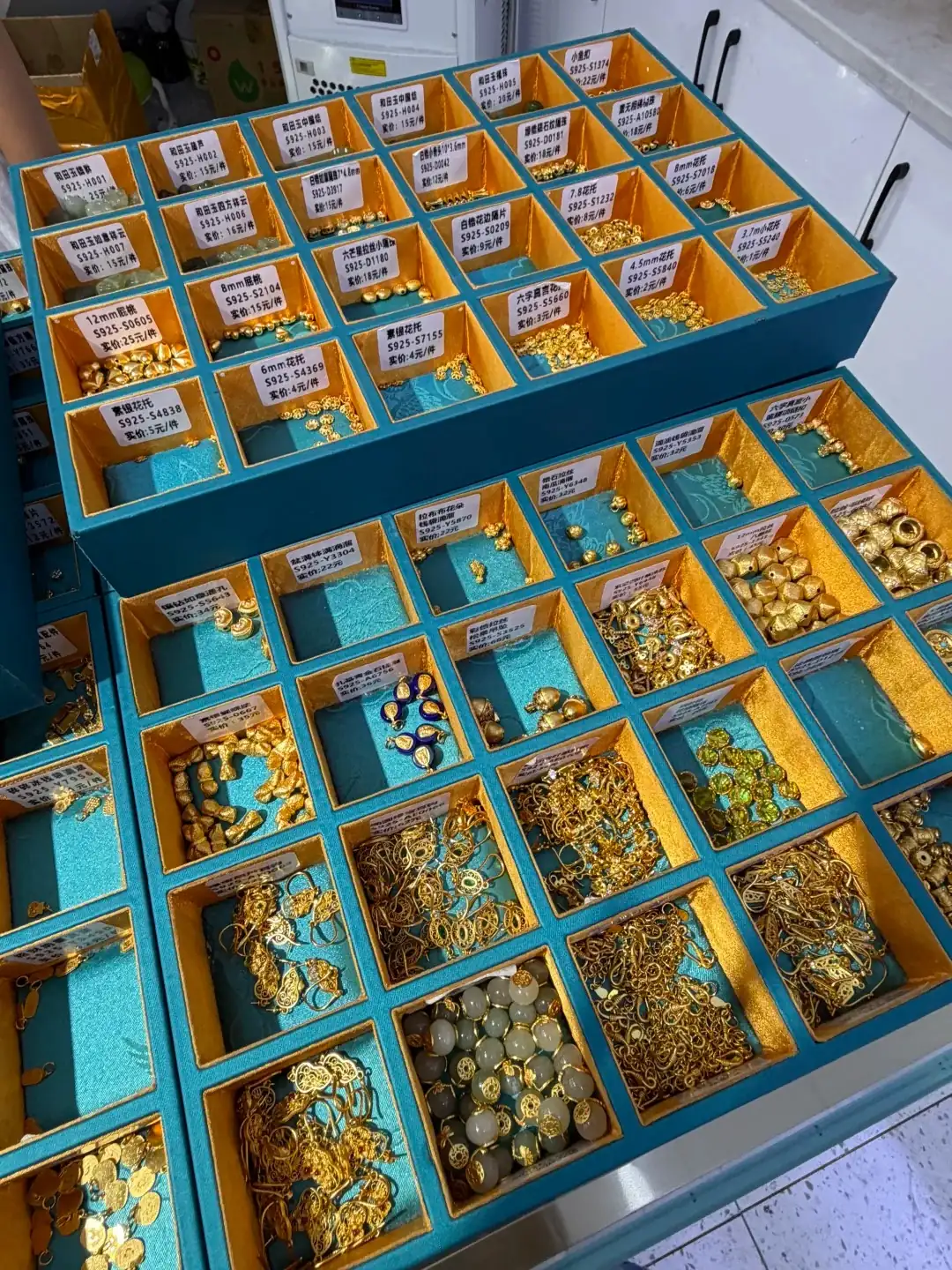
Pearl Decoded / Zhuji marketPearl Decoded / Zhuji market
Zhuji Market Notes: Three Pitfalls Under $100
Zhuji trading-floor experience points to three recurring traps that catch first-time buyers. First is inflated grading: a seller lists “AAA” or “6A” quality on a strand that would rate mid-range at best under any independent standard. Grade labels at this price are marketing tools, not laboratory assessments. Treat them as relative indicators within one seller’s own stock, not as cross-shop comparables. Second is undisclosed dye: freshwater pearls dipped in golden, pink, or “peacock” dye baths to mimic rarer natural colors. The dye job wears unevenly over time and can transfer to skin or clothing in humid conditions. Third is glass or shell beads coated with pearlescent paint and sold as “pearl necklace.” These weigh wrong (too light or too uniform), feel cold to the touch immediately, and show no depth when tilted under light. These notes reflect broad market patterns observed across multiple wholesale sessions, not accusations against any single seller.
Online Buying: Photo Traps and Return Policies
E-commerce adds two more layers of risk. Filtered photography is the first: heavy warm filters, ring lights positioned to maximize surface reflection, and post-processing that smooths out blemishes all make strands look better than they arrive. The defense is simple: ignore the hero image, scroll to customer photos (if available), and read reviews that mention actual luster and size upon arrival. Return policy is the second: sellers who offer 7-day returns with restocking fees, or who require the item back in “original resalable condition” after you have opened the package, are shifting risk onto you. Prefer platforms and sellers with unconditional 14-to-30 day windows and prepaid return shipping. If a seller makes returns hard, assume the product has something to hide.
Real Examples: Three Necklaces You Can Trust at Each Tier
Below is a selection framework rather than a shopping list. Each example describes the logic of a trustworthy choice at its price point, based on what the market actually delivers.
$25 Tier Example: Look for a 5 to 6 mm baroque freshwater strand on a simple chain or leather cord, sold by a seller with consistent 4-star-plus reviews over 50+ transactions. Baroque shapes at this size keep costs down while still reading as “real pearls” to the naked eye. The luster will be modest, the shape intentionally organic, and the overall impression casual and wearable. Avoid anything claiming roundness or certification at this price. Target use: everyday casual wear, gift for a young person, first pearl purchase to test comfort.
$50 Tier Example: Seek a 7 to 8 mm near-round freshwater strand on a sterling silver clasp, with customer photos showing actual luster variation. This is the workhorse tier: versatile enough for office wear, nice enough for dinner out, and priced so that loss or damage stings but does not devastate. Prioritize sellers who disclose bead size range honestly (e.g., “7 to 8 mm” rather than “8 mm”) and who show unfiltered video or multiple-angle photos. Target use: daily signature piece, milestone gift (graduation, birthday), wardrobe anchor.
$90 Tier Example: Aim for an 8 to 9 mm near-round to round freshwater strand with noticeably stronger luster than the $50 tier, preferably with silk knotting and a branded clasp (even a small brand). At this price you are approaching the quality ceiling for untreated freshwater. Some strands may show subtle natural color (soft pink or cream tones) that comes from the mussel itself, not a dye bath. Verify the seller’s return window and check whether the strand ships with any form of authenticity statement, however basic. Target use: dressy-casual upgrade, special occasion jewelry without the luxury markup, the “best freshwater can do” reference piece.
Frequently Asked Questions
Can you get a real pearl necklace under $100?
Yes. Real freshwater pearl strands are readily available under $100, typically in the 6 to 9 mm range. They will not be seawater pearls, they will not be laboratory-certified investment grade, and they will show minor surface characteristics. But they are genuine cultured pearls, not imitations, and they deliver the look and feel of real pearl jewelry at an accessible price.
What size pearls can you expect for $100?
In the $60 to $100 range, expect 8 to 9 mm near-round to round freshwater pearls with good luster. In the $30 to $60 range, expect 6 to 8 mm near-round beads with moderate luster. Below $30, expect 4 to 6 mm baroque or off-round beads with weaker luster. Size scales predictably with price within the freshwater category.
Are cheap pearl necklaces real pearls?
Many are, but not all. Genuine freshwater cultured pearls can sell for $20 to $40 because mass production keeps unit costs low. However, some budget listings sell glass beads, shell beads, or plastic with a pearlescent coating. The weight test (real pearls feel heavier than fakes of the same size), the tooth-rub test (real pearls feel gritty, fakes feel smooth), and the drill-hole inspection (real pearls show clean holes, coated fakes show chipped edges) separate real from fake in under a minute. The Wikipedia pearl overview covers basic identification methods for further reading.
Freshwater versus Akoya under $100: which is better?
Under $100, you are almost certainly looking at freshwater pearls, not Akoya. Genuine Akoya strands (seawater, from Japan) start above $150 even for small sizes and lower grades. Any “Akoya” listing under $100 is either mislabeled, a single loose pearl on a chain, or not what it claims. Within the freshwater category, focus on luster and shape rather than chasing an Akoya label that cannot be authentic at this price point.
How to judge quality without a certificate?
Luster is your primary tool. Hold the strand under daylight or soft indoor light and watch how the surface reflects light. High-quality pearls show sharp, bright reflections that seem to come from inside the bead. Low-quality pearls look flat, cloudy, or like they are covered in a matte film. Surface blemishes are normal at this price point (tiny spots, tiny rings, or slight shape variations), but avoid strands with obvious cracks, chips, or large discolored areas. Roundness matters less than luster for daily wear: a slightly off-round strand with brilliant luster outperforms a perfectly round dull one every time.
Do you need a certificate for a sub-$100 necklace?
No. Laboratory certificates from GIA, SSEF, or similar bodies add value primarily for investment-grade or high-value strands ($500+). At the $100 price point, certificate cost would represent an unreasonable share of the total price, and most retailers do not offer them for this tier. Judge by eye using luster, weight, and surface inspection instead. Save certificate requests for purchases above $300 where the added cost and effort are proportional to the asset value.
Conclusion: Set Expectations, Not Hype
A $100 pearl necklace is worth buying when you understand what it is and what it is not. It is a quality-line entry point: real cultured freshwater pearls, sized between 6 and 9 mm, with luster ranging from decent to genuinely attractive, suitable for daily wear and casual occasions. It is not a collector piece, not a seawater strand, and not something to insure. The buyers who are happiest at this price point are the ones who pick the right tier (match size and luster to their tolerance for imperfection), avoid the common traps (dyed imposters, inflated grades, glass fakes), buy from sellers with solid return policies, and treat the strand as everyday adornment rather than investment. Spend smart within the $100 ceiling and you get a piece that earns compliments, holds up to regular wear, and reminds you why pearls have stayed desirable for thousands of years. For readers ready to explore beyond the freshwater category, the Chinese freshwater pearls guide covers newer cultivation techniques and color developments that are pushing freshwater quality upward year by year.
Get the Free Pearl Buying Checklist
7 quality checks, real price benchmarks, 5 traps to avoid, one 16-page PDF.